Dalit sanitation worker’s death exposes caste exploitation, institutional apathy in Modi’s India
New Delhi: The tragic death of a 32-year-old Dalit sanitation worker in Delhi has once again exposed the grim reality of caste-based labour exploitation and the continued practice of banned manual scavenging under the government of Indian Prime Minister Narendra Modi.
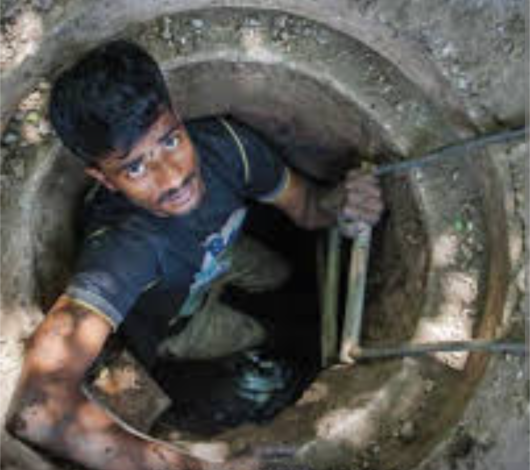
According to Kashmir Media Service, Rahul, a contractual sanitation worker from the Valmiki community, died on March 30 while manually cleaning a deep drain in the Tahirpur area of the Indian capital, without any safety gear, supervision, or mechanised support.
The incident, which falls under the jurisdiction of the Public Works Department, has triggered outrage, raising serious concerns about illegal manual scavenging, caste-based coercion, and lack of institutional accountability. A fact-finding report by Dalit Adivasi Shakti Adhikar Manch (DASAM) revealed that Rahul had gone to collect two months of unpaid wages but was instead forced to clean the hazardous drain, with payment made conditional upon completing the task.
Eyewitnesses and family members said that he was pushed into the toxic environment without protective equipment, exposing him to deadly gases such as methane and hydrogen sulphide. His family maintains that his death was not accidental but a direct result of unsafe and exploitative working conditions.
Police initially failed to invoke key legal provisions, including the anti-manual scavenging law and the SC/ST (Prevention of Atrocities) Act, only adding them later under pressure from the family and civil society groups. Although a case has been registered under negligence provisions, no arrests have been made so far.
Adding to the controversy, family members have alleged evidence tampering, noting that Rahul’s body was found in clean clothes, raising suspicions about attempts to conceal the circumstances of his death.
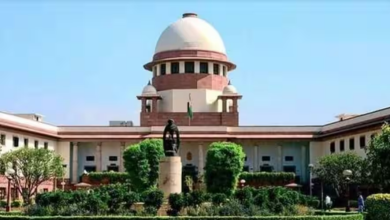
The incident has once again drawn attention to the persistence of manual scavenging despite its legal ban and repeated judicial directives. In a 2023 ruling, the Supreme Court of India mandated Rs 30 lakh compensation for sewer deaths and reiterated the state’s obligation to eliminate the practice.
Activists argue that Rahul’s death highlights a deep disconnect between legal safeguards and ground realities, where a nexus of contractors and officials continues to evade accountability. They have demanded immediate arrests, full compensation, and strict enforcement of laws to end what they describe as a systemic pattern of caste-based exploitation in India.