Melting glaciers in Kashmir signal deepening climate crisis
Unchecked deforestation, industrial emissions, yatra cited as main reasons
Srinagar: Glaciers across Indian illegally occupied Jammu and Kashmir have shrunk rapidly over the past several decades due to human-induced climate change, with rising temperatures, reduced snowfall and erratic weather patterns accelerating ice loss in the region.
According to Kashmir Media Service, recent scientific studies indicate that some glaciers, including the Thajiwas Glacier in Sonamarg, have lost nearly 88 percent of their ice volume. Broader research suggests Kashmir has lost nearly 25-30 percent of its glaciers over the last six decades.
Experts and international reports warn that the rapid retreat of Himalayan glaciers, driven largely by deforestation, industrial emissions, unchecked tourism, Amarnath Yatra and other human activities, is threatening rivers, agriculture, ecosystems and water supplies for millions across South Asia.

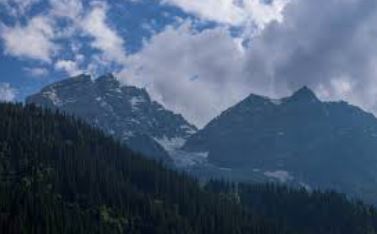
A recent view from Sonamarg on July 3 showed the Sindh River flowing below snow-capped peaks and meadows, a landscape now increasingly vulnerable as glacial melt intensifies.
Climate experts have cautioned that without urgent action to curb emissions and protect fragile mountain ecosystems, the continued loss of glaciers will deepen water and environmental crises in Indian illegally occupied Jammu and Kashmir and the wider region.