Delhi protest injuries revive memories of Kashmiris blinded by pellet guns
Amritsar doctor recalls horror of treating hundreds of pellet victims from IIOJK
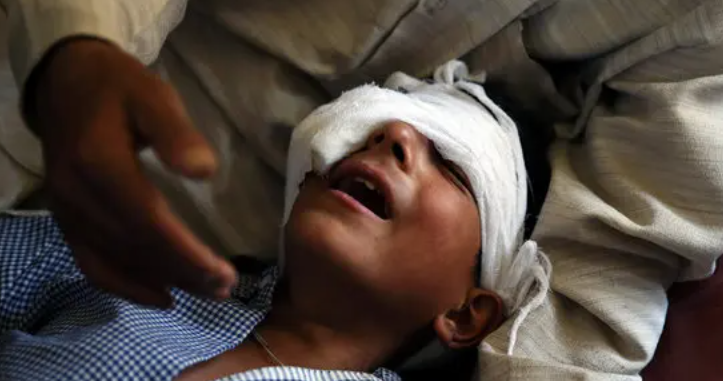
Amritsar: A veteran ophthalmologist has recalled the harrowing experience of treating hundreds of pellet gun victims from Indian illegally occupied Jammu and Kashmir, saying the recent pellet injuries suffered by a student during a protest in New Delhi brought back painful memories of the human cost of India’s crowd-control tactics.
According to Kashmir Media Service, Dr. Indu Singh of the Daljit Singh Eye Hospital in Amritsar said the July 20 incident at Jantar Mantar, in which a 19-year-old student sustained pellet injuries, including damage to an eye, reminded her of the hundreds of young Kashmiris who arrived at her hospital with similar injuries during the widespread use of pellet guns in the occupied territory.
She said the hospital treated nearly 450 pellet victims from Kashmir, many of them young boys whose lives were permanently altered by the injuries. “Those were mentally traumatic times for all of us. Groups of five or six young patients with pellet injuries would arrive together, indicating that another major incident had taken place in Kashmir,” she recalled.

Dr. Singh said pellet injuries presented an unprecedented medical challenge, forcing doctors to redesign surgical instruments because conventional equipment used for removing metal or glass fragments proved ineffective. She noted that many of the surgeries lasted more than two hours and often involved removing multiple pellets embedded in a single eye.
Describing the suffering of the victims, the eye surgeon said it was heartbreaking to witness young people losing their eyesight at the beginning of their lives. She added that many of the patients belonged to poor families, prompting the hospital to provide financial assistance for treatment and accommodation.
Pellet guns, first introduced by Indian forces in Kashmir in 2010 and used extensively during the 2016 uprising, have left thousands of Kashmiris with severe eye injuries, permanent blindness and lifelong disabilities. Human rights organizations have repeatedly condemned their use against civilian protesters, describing them as indiscriminate weapons that have caused irreversible harm to countless young Kashmiris.