In IIOJK’s forgotten villages, disabled children carried on shoulders to reach healthcare
Srinagar: In remote villages of Indian illegally occupied Jammu and Kashmir, the greatest obstacle for families raising children with disabilities is not the disability itself, but the broken roads, distance and the absence of basic healthcare access.
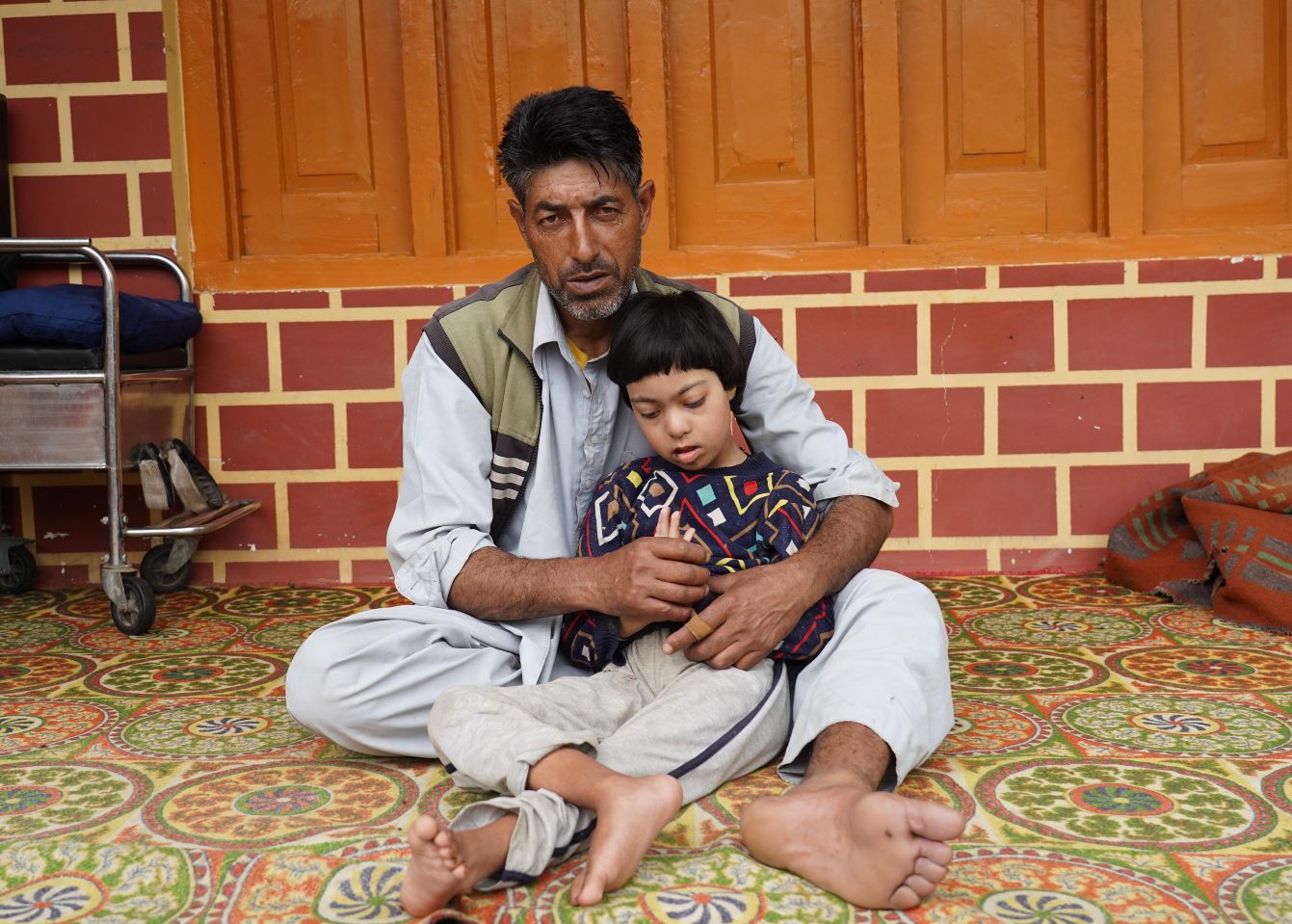
According to Kashmir Media Service, in Chill Brass village of central Kashmir’s Budgam district, 49-year-old Ghulam Nabi Lone carries his 12-year-old daughter Insha Nabi in his arms to reach the nearest road for any medical visit.
Insha, who developed a disability at six months of age, cannot speak. Her home is connected only by a narrow, uneven footpath that no vehicle can reach. During rains it turns to mud, and in winter snow makes it treacherous.“There is no ambulance that can reach her doorstep, no wheelchair-accessible pathway and no transport system designed around her needs,” Lone said.

“When we have to take her for treatment, I first carry her to the road. Only after that can we find transport.”For Lone, a daily-wage labourer supporting a family of seven, each hospital visit costs between INR 500 and INR 1,000 for transport alone, excluding consultation fees and medicines. “There were many times doctors advised CT scans and other tests. We simply couldn’t afford everything,” he said.
During winters, families often carry patients on wooden cots across snow-covered terrain until they reach a point where vehicles can take over.Nearly 30 km away, Mohammad Rafiq Tali faces a similar ordeal with his 15-year-old son Meraj, who developed a disability at age one.
With no transport available, the family carries him on shoulders or on a charpoy through uneven paths. “Reaching a hospital is often as exhausting as the treatment itself,” Rafiq said. A single trip to Srinagar costs INR 1,000 to INR 1,500, while he earns only around INR 400 a day when work is available. “Whatever income I earn is quickly consumed by medicines, transport and treatment.”He said he applied for a scooter to ease hospital visits but never received it.
A wheelchair was provided, but the lack of accessible infrastructure makes it unusable.The emotional toll is equally severe.
Rafiq’s wife now takes medication for heart problems and anxiety. “I have not visited relatives for years. We cannot leave him alone,” he said.While officials claim welfare measures like disability pensions, UDID cards and assistive devices are being implemented under the J&K Social Welfare Department, residents say these schemes fail to reach remote areas.
A Roads and Buildings department official said a Detailed Project Report for road connectivity to Chill Brass has been submitted, but work is yet to begin.
For families like Lone and Tali, every journey for treatment, certificates or even school begins the same way — with a father lifting his child and walking kilometers on foot.“Some days, the journey is for treatment. On others, it is for a disability certificate or a government office. For Insha, every journey begins the same way,” Lone said.