Former Indian vice president flags rise of Hindutwa politics, polarization
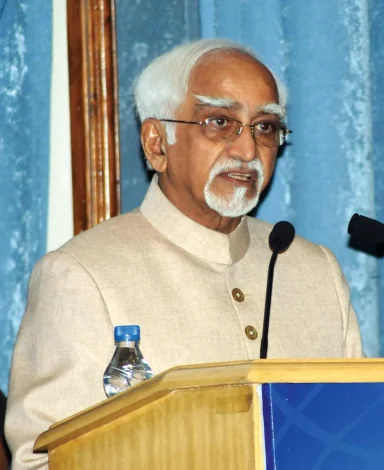
New Delhi: Former Indian Vice President Hamid Ansari has warned of growing Hindu right-wing communalism, known as Hindutva, and a shift from civic to cultural nationalism in India, triggering a political debate over the country’s secular character and treatment of religious minorities.
Speaking at the A.G. Noorani Memorial Lecture in New Delhi, Ansari cited a warning attributed to former Prime Minister Jawaharlal Nehru that the danger to India was not communism but “Hindu right-wing communalism.” Ansari said emerging trends risk presenting an electoral majority as a religious majority and distinguishing citizens on the basis of faith.
His remarks come amid documented international concerns over religious freedom and minority rights in India. The US Commission on International Religious Freedom (USCIRF), in its 2026 Annual Report, said religious-freedom conditions deteriorated in 2025 and again recommended India for designation as a Country of Particular Concern. It cited attacks on Muslims and Christians, discriminatory legislation and violence against religious minorities.


Human Rights Watch (HRW) similarly reported increased vilification of Muslims during 2025 and said at least 64 anti-Muslim hate-speech incidents were recorded in the first 10 days after the April 2025 Pahalgam attack. It also cited National Human Rights Commission figures showing 113 deaths in police custody, 1,535 deaths in judicial custody and 132 alleged extrajudicial killings during the first eight months of 2025.
The situation occupied Jammu and Kashmir has also drawn concern from UN experts. In a 2025 communication, UN special procedures said they were “gravely alarmed” by reported mass arrests and detention of around 3,000 people following the Pahalgam attack, including journalists and human rights defenders, and stressed that counter-terrorism measures must comply with international human rights law.
Concerns over India’s conduct beyond its borders have also been raised by Canada’s Canadian Security Intelligence Service (CSIS). Its 2025 public report said India had historically used covert relationships, surveillance and other coercive tactics in Canada as part of transnational repression aimed at suppressing criticism. CSIS also said peaceful advocacy for Khalistan remains lawful in Canada while identifying a small group involved in violence as a security threat.
Ansari’s intervention has therefore added to an ongoing debate within India over majoritarian politics, minority protections, secularism and the influence of Hindu nationalist organisations.