Indian farmers announce march to New Delhi on Oct 23 against CEC
New Delhi:: In India, various farmers’ organizations, under the banner of the “Samyukt Kisan Morcha” (SKM), have announced a march to New Delhi for October 23.
According to the Kashmir Media Service, they intend to demand the resignation of Indian Chief Election Commissioner Gyanesh Kumar, citing irregularities in the Special Intensive Revision (SIR) (likely referring to the electoral process/voter registration system).
Farmers will hold simultaneous demos at local level


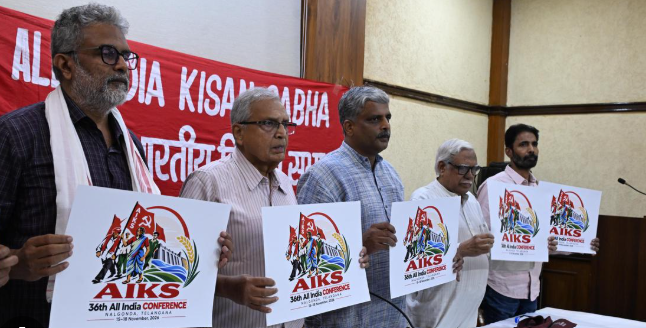
Farmers will also hold simultaneous demonstrations at district, tehsil, and block headquarters across India in support of this demand. This announcement was made by Ashok Dhawale, a senior leader of the Samyukt Kisan Morcha and president of the All India Kisan Sabha (AIKS), while speaking to journalists. He stated despite the restrictions on protests in the vicinity of Jantar Mantar, the farmers are prepared for a major movement.
According to The Hindu, Dhawale remarked that this is set to be one of the most significant struggles against the current system. He emphasized that the farmers will not be intimidated by oppression. Dhawale added that the demonstration will also see the participation of students, youth, women, civil society organizations, and members of trade unions.
Protests from Nov 26 against trade agreement with US
Ashok Dhawale further stated that the Samyukt Kisan Morcha has decided to launch large-scale protests starting November 26 to oppose a proposed trade agreement with the United States. He stated that various free trade agreements, including a potential India-US trade deal, could pit Indian farmers against corporate agricultural entities that benefit from massive government subsidies.
He expressed concern that the influx of foreign agricultural products, unhindered by import tariffs, could drive down prices in the domestic market. This, he warned, would adversely affect farmers, dairy producers, horticulturists, fishers, and workers associated with the fishing industry.
He added that such agreements pose a grave threat to the livelihoods and employment of Indian farmers and the rural poor, and could also have a significant impact on the future of the nation’s agriculture.