79 Years On, Oppressed Kashmiris Remain Victims of an Unresolved Dispute
October 27: The Beginning of a Long and Unfinished Tragedy
Raies Mir
 October 27, 1947, is observed by Kashmiris as a Black Day, marking the arrival of Indian troops in Srinagar and the beginning of India’s military occupation of Jammu and Kashmir. Seventy-nine years later, the Kashmir dispute remains unresolved, while the people of the territory continue to bear its political, humanitarian and security consequences.
At the end of British suzerainty over the Indian subcontinent in 1947, more than 550 princely states were given the option of acceding to either India or Pakistan, with geographical contiguity and the wishes and interests of their populations forming important considerations. Most princely states acceded to one dominion or the other without prolonged dispute. However, India also illegally annexed Hyderabad and Junagadh through political manipulation and the use of force.
Jammu and Kashmir, a Muslim-majority princely state with close geographical, economic and cultural links to Pakistan, became the centre of a major conflict. While the people largely favoured accession to Pakistan, but the sinister designs of its Hindu ruler Maharaja Hari Singh, and Indian National Congress leaders, backed by the British, shattered their aspirations.
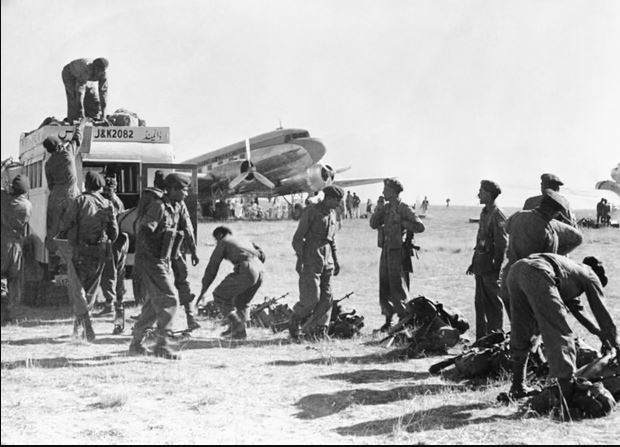
On October 27, 1947, Indian troops were airlifted to Srinagar. From the very first day, Kashmiris rejected the Indian military intervention and launched an armed and political resistance, succeeding in liberating a vast area now known as Azad Jammu and Kashmir, while the remainder remained under Indian occupation.
For Kashmiris, October 27 therefore marks not merely a historical event, but the beginning of a conflict whose political and human consequences continue to this day.
Jammu Massacre and Forced Displacement
The events of October and November 1947 left a particularly devastating legacy in the Jammu region. Large numbers of Muslims were killed, displaced or forced to flee amid widespread communal violence. The killings were carried out by extremist Hindutva Rashtriya Swayamsevak Sangh (RSS) and Sikhs, aided and abetted by the forces of Maharaja Hari Singh. The activists of the RSS played a key role in planning and executing the riots. An estimated over 350,000 Muslims were massacred in the Jammu region alone.
Historical accounts have documented attacks on Muslim villages and localities across Jammu, Kathua, Udhampur, Akhnoor, Samba, Chenani, Ramnagar, Reasi and other areas. Scholars and journalists, including Ian Copland, Ilyas Chattha and Ved Bhasin, have examined the role of the state administration, armed forces and communal groups in the violence and mass displacement.
Accounts cited by historians describe Muslim communities being attacked, homes being looted and burned, and large numbers of people were driven towards Pakistan. Some accounts also describe Muslims being transported from Jammu under military escort and subsequently attacked outside the city, with women abducted.
In his book Kashmir: The Unwritten History, Christopher Snedden cites accounts of large-scale killings in areas including Akhnoor and Samba. The scale of the violence and displacement remains an enduring and deeply painful chapter in Kashmir’s modern history.
According to Ian Copland, the Jammu and Kashmir administration carried out a pogrom against its Muslim subjects in Jammu partly, partly out of revenge for the Poonch rebellion that started earlier. Other observers have argued that the aim of Hari Singh and his administration was to alter the demographics of the region by eliminating the Muslim population in order to ensure a Hindu majority in the region.
The human cost of displacement extended far beyond 1947. Reportedly, more than 3.5 million Kashmiris have been displaced from their homes over the decades, including those who migrated to Azad Jammu and Kashmir, Pakistan and other parts of the world. Since the late 1980s, at least 8,601 families, comprising over 40,000 individuals, are reported to have migrated to AJK and Pakistan due to Indian state terrorism.
The Kashmir Question Goes to the United Nations
The conflict between India and forces supporting accession to Pakistan soon developed into an India-Pakistan war. Sensing imminent defeat, India brought the Kashmir issue before the United Nations Security Council in January 1948, seeking international intervention.
On April 21, 1948, the Security Council adopted Resolution 47, which called for measures to restore peace and order and provided a framework for determining the future of Jammu and Kashmir through a free and impartial plebiscite to determine whether the people wished to accede to Pakistan or India.
The UN framework subsequently became a central part of the international history of the Kashmir dispute. A ceasefire eventually came into effect, leaving the territory divided between areas under Indian and Pakistani administration. The area under Indian control came to be known as Indian occupied Jammu and Kashmir, while the area under Pakistani administration came to be known as Azad Jammu and Kashmir (AJK).
Nearly eight decades later, the Kashmir dispute remains unresolved, and the political settlement envisaged under the UN framework has yet to materialise.
India’s continued refusal to accept a settlement based on the wishes of the Kashmiri people has remained one of the central obstacles to resolving the dispute. The issue has consequently persisted as one of South Asia’s longest-running conflicts.
Promises Made, Plebiscite Denied
The commitment to allow the people of Kashmir to determine their future was also repeatedly articulated by senior Indian leaders.
Mohandas Karamshand Gandhi, while addressing a prayer meeting on July 29, 1947, said: “The people of Kashmir should be asked whether they want to join Pakistan or India. Let them do as they want. The ruler is nothing. People are everything.”
On October 26, 1947, Gandhi reportedly stated: “If the people of Kashmir are in favour of opting for Pakistan, no power on earth can stop them from doing so. They should be left free to decide for themselves.”
India’s first Prime Minister, Jawaharlal Nehru, also repeatedly affirmed that the ultimate decision concerning Kashmir belonged to its people.
In a radio broadcast on November 2, 1947, Nehru stated: “We have decided that the fate of Kashmir is ultimately to be decided by the people of the state.”
In a telegram to the UN Representative for India and Pakistan on August 16, 1950, he reiterated: “It has always been our view that, in the event of a plebiscite, the people of Kashmir should decide their future for themselves.”
Addressing the Indian Parliament on February 12, 1951, Nehru further said: “We had given our pledge to the people of Kashmir and subsequently to the United Nations; we stood by it and we stand by it today. Let the people of Kashmir decide.”
Speaking in Srinagar on June 4, 1951, he again maintained that the Government of India would stand by its pledge that the people of Kashmir should decide their fate without external interference.
These statements form an important part of the historical record of the Kashmir dispute. Yet the political commitment they represented has never resulted in the promised plebiscite.
Decades of Human Suffering
The unresolved dispute has exacted a heavy human cost.
According to data compiled by the Research Section of Kashmir Media Service for the period from January 1989 to October 2026:
Total killings: 96,507
Custodial/fake-encounter killings: 7,426
Civilians arrested: 184,756
Structures/houses destroyed or damaged: 110,614
Women widowed: 22,993
Children orphaned: 108,011
Women reportedly gang-raped/molested: 11,285
For Kashmiris, the dispute is therefore not merely a question of competing territorial claims. It is also a story of lives lost, families shattered, homes destroyed, political freedoms curtailed and generations growing up amid prolonged uncertainty.
The unresolved dispute has also carried serious implications for regional security. Since India and Pakistan became overt nuclear powers in 1998, Kashmir has remained a potential flashpoint between the two countries, making its peaceful settlement important not only for Kashmiris but for wider South Asian stability.
August 5, 2019: A New Phase of the Dispute
The constitutional changes imposed by India on August 5, 2019, marked another major turning point.
The Indian government revoked occupied Jammu and Kashmir’s special constitutional status and subsequently reorganised the former state into two Union Territories. The measures fundamentally altered the territory’s constitutional and administrative position without the consent of its people.
They were followed by a series of legislative and administrative changes concerning land ownership, residency, political representation and governance.
On October 27, 2020, the Indian Ministry of Home Affairs introduced changes to land laws that removed longstanding restrictions on the purchase and transfer of land in Jammu and Kashmir. The Jammu and Kashmir Reorganisation (Adaptation of Central Laws) Third Order, 2020, repealed or amended a number of existing laws, including provisions governing land and property.
Critics have viewed these measures as part of a broader effort to alter the political, economic and demographic character of the disputed territory. The introduction of new domicile rules further expanded eligibility for certain rights and opportunities that had previously been linked to permanent residency.
For Kashmiris, these changes generated renewed concerns about their political identity, land rights, economic opportunities and the demographic future of the territory.
Silencing Political Voices
After failing to subjugate the Kashmiris through use of brute force for decades, the India’s Hindutva BJP government, alongside constitutional and administrative changes, has intensified restrictions on political and religious activities in IIOJK.
A number of political and religious organisations have been banned, while offices and properties belonging to some groups have been sealed or attached. Among the organisations facing bans or restrictions are the Jammu and Kashmir Democratic Freedom Party, Jammu and Kashmir Muslim League, Tehreek-e-Hurriyat Jammu and Kashmir, Jammu and Kashmir Liberation Front, Dukhtaran-e-Millat, Jamaat-e-Islami Jammu and Kashmir, Awami Action Committee, Muslim Conference Jammu and Kashmir, Jammu Kashmir National Front, Jammu Kashmir Peoples League, Jammu and Kashmir Peoples Freedom League and Jammu and Kashmir Ittihadul Muslimeen.
The headquarters of the All Parties Hurriyat Conference has also been sealed.
Notwithstanding that these organizations are striving for the realization of Kashmiris’ UN-acknowledged right to self-determination, the BJP regime is hell bent on strangling every voice representing the true aspirations of the people of the occupied territory. It goes without saying that New Delhi’s reprehensible move to ban political and religious parties and sealing their offices in IIOJK is in blatant violation of democratic norms, UN resolutions and international laws. Banning organizations whose legal demand is UN resolution on Kashmir dispute is a proof that the Indian BJP government has failed to subdue the Kashmiris.
Critics argue that India’s BJP government led by Narendra Modi can’t win the Kashmiris’ hearts and minds by banning parties representing their sentiments, and that the only way to soothe their anger towards India is to respect their fundamental rights and freedoms, including the right to self-determination. The experience of the past decades also demonstrates that political aspirations cannot be permanently addressed through coercive measures.
Kashmir Needs a Political Solution
After 79 years, the Kashmir dispute remains unresolved. Military deployments, restrictions, arrests and political bans may provide temporary administrative control, but they cannot eliminate the underlying political question.
Kashmiris have consistently maintained that dialogue and negotiations remain an important instrument for achieving a peaceful and lasting settlement, provided that all three principal parties — India, Pakistan and the people of Jammu and Kashmir — are meaningfully involved.
Creating conditions conducive to dialogue requires concrete measures to reduce fear, restore political space and rebuild public confidence.
These should include:
• Genuine demilitarisation and a reduction in the excessive Indian military presence in Jammu and Kashmir.
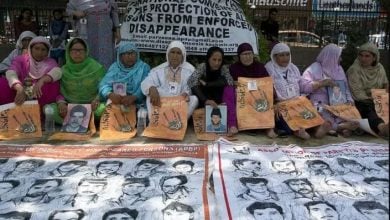
• Release of political prisoners and detainees held for peaceful political activities and expression.
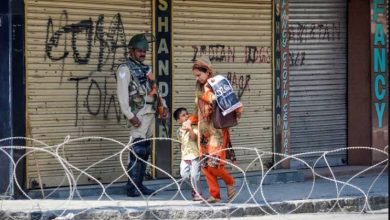
• An end to arbitrary arrests and excessive use of coercive measures.
• Review and withdrawal of draconian laws, including the Armed Forces (Special Powers) Act, Public Safety Act and Unlawful Activities (Prevention) Act, to ensure their application conforms with fundamental rights and due process.
• An end to restrictions on the media, allowing journalists and newspapers to report freely and independently.
• Restoration of political and civil liberties, including freedom of expression, assembly and peaceful political activity.
• Establishment of the rule of law and accountability, with credible and impartial investigations into human rights violations by Indian troops.
• Meaningful and sustained dialogue involving India, Pakistan and the people of Jammu and Kashmir, aimed at achieving a peaceful settlement consistent with international commitments and the aspirations and rights of the people.
Seventy-Nine Years On
October 27 is not merely a date in Kashmir’s history. For Kashmiris, it represents the beginning of a political and humanitarian crisis that has endured for 79 years.
The passage of time has not erased the dispute. Nor have Indian military measures, constitutional changes, administrative restructuring or restrictions on political activity resolved it.
The central question remains: How can lasting peace be achieved without addressing the political aspirations, rights and dignity of the people of Jammu and Kashmir?
A durable solution cannot be imposed indefinitely through force or administrative measures. It requires political courage, meaningful dialogue, respect for human rights and a process through which the people of Kashmir can have meaningful voice in determining their future.
Seventy-nine years after October 27, 1947, Kashmir needs not another generation of conflict, but for a credible path towards peace, justice and a lasting political settlement of the Kashmir dispute.