BMC removes Indian actress Dia Mirza’s anti-cracker video following BJP objection in Mumbai
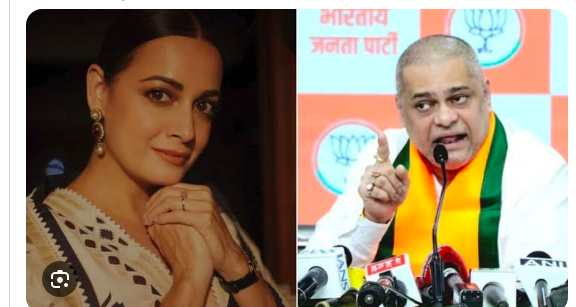 Mumbai: The Brihanmumbai Municipal Corporation (BMC) has removed a video featuring Bollywood actress Dia Mirza from its social media platforms following objections from Bharatiya Janata Party (BJP) Mumbai chief Ameet Satam.
The video, part of an awareness campaign promoting an environmentally friendly Diwali, urged Mumbai residents to avoid bursting firecrackers to reduce air and noise pollution.
BJP leader objects to environmental awareness campaign
The BMC removed Mirza’s video after Satam publicly objected to its message and her involvement in the campaign. Satam raised his objections in a post on X, tagging the civic body’s official account.
Mirza had appealed to citizens to celebrate Diwali responsibly by avoiding activities that contribute to air and noise pollution. Her message was part of a broader BMC awareness initiative promoting a cleaner and healthier festive environment.
Selective removal raises questions
Following the controversy, Mirza’s video was removed, while other campaign videos featuring actors Madhuri Dixit and Nishigandha Wad, as well as cricketer Ajinkya Rahane, reportedly remained available on the BMC’s official X and Instagram accounts.
The selective removal of Mirza’s video raised questions about the rationale behind the decision and whether political objections had influenced the functioning of the civic administration.
Opposition leaders criticise the decision
According to reports published by The Hindu, opposition leaders criticised the removal and questioned why Mirza’s video had been singled out when other celebrities had made similar appeals.
Congress leader Vijay Wadettiwar said, “Dia Mirza has done nothing wrong. This reflects a perverted mindset aimed at disrupting the country’s unity.”
AIMIM leader Waris Pathan also questioned the selective outrage, pointing out that other celebrities had made similar appeals for environmentally responsible Diwali celebrations.
Dia Mirza defends her environmental message
As reported by Hindustan Times, Dia Mirza clarified that her video was recorded purely in the interest of public awareness and with the intention of encouraging healthier and more responsible celebrations.
“The video was recorded in the interest of public awareness, with the intention of encouraging a healthier and more mindful celebration. Air pollution is a matter of public health, and every effort towards reducing it is a step towards a better environment for all,” Mirza stated.
She further clarified that she had not received any payment for participating in the campaign and reiterated her commitment to environmental protection.
Political controversy intensifies
The controversy reportedly intensified after Mumbai Mayor Ritu Tawde described Mirza as “anti-Hindu” and claimed that she had been blacklisted.
Political representatives associated with Shiv Sena and the Maharashtra Navnirman Sena (MNS) also reportedly criticised the BMC’s decision and questioned the extent of political influence over the civic administration.
The episode has consequently sparked a wider debate about political interference in public institutions and the freedom of individuals to express views on environmental and social issues.
A wider question about freedom of expression in India
The removal of Dia Mirza’s video raises broader concerns about the increasingly contested space for independent voices and freedom of expression in India under the BJP-led government and the political influence of the Rashtriya Swayamsevak Sangh (RSS) and its Hindutva ideology.
Critics have repeatedly expressed concerns about the treatment of religious minorities, particularly Muslims and Christians, as well as Dalits and other marginalised communities. Journalists, activists, artists and ordinary citizens who question or oppose the BJP’s political positions and Hindutva ideology have also raised concerns about intimidation, censorship and restrictions on dissent.
Although the Dia Mirza controversy concerns an environmental awareness campaign, it highlights an important democratic question: Should a public institution remove a public-awareness message simply because a political leader objects to its content or the person delivering it?
Democracy must protect the right to disagree
A democratic society must provide space for citizens to express different opinions, question political authority, challenge dominant ideologies and advocate social change without fear of intimidation, censorship or retaliation. No political party, religious ideology or organisation should dictate how citizens think, speak, celebrate festivals or express their opinions.
Environmental protection and public health should not become political battlegrounds. Equally, the right to celebrate religious festivals must coexist with the responsibility to protect the health and well-being of others.
Democracy is not about demanding conformity; it is about protecting the freedom to disagree.
The removal of Dia Mirza’s video may appear to be a limited controversy, but it raises significant questions about political influence, institutional independence, selective censorship and the protection of fundamental freedoms in the world’s largest democracy.