27 Muslims killed in India in 2026 amid rising anti-Muslim violence: Report
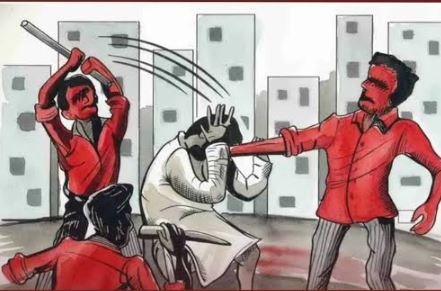
New Delhi: Violence against Muslims under the Bharatiya Janata Party in India has claimed at least 27 lives in 2026, the highest annual toll recorded since 2022, according to data compiled by the South Asia Justice Campaign (SAJC).
The organisation’s India Persecution Tracker (IPT), in its latest assessment, points to a pattern of deaths involving law enforcement personnel as well as attacks by Hindutva groups, including cow vigilantes. It also draws attention to the treatment of Muslim communities through policing, electoral processes and citizenship-related measures.
Killings between August and October
Between August and October, at least eight Muslims were killed by Hindutva groups or state actors in six states, three in police ‘encounters’ and five in custody or prison, bringing the year’s toll to at least 27, South Asia Justice Campaign’s India Persecution Tracker documented.
The figures for the August-October quarter show that eight Muslims died in incidents involving state authorities across six states. Three were killed in Indian police personnel shootings, while five others died in police custody or inside prisons.
A further eight Muslims were killed in attacks attributed to cow vigilantes and other non-state Hindutva groups across four states during the same period. West Bengal and Uttar Pradesh reported three deaths each.
The campaign said the number of Muslims killed by non-state actors this year had already surpassed the annual figures recorded since it began tracking such incidents in January 2022.
Uttar Pradesh at centre
Figures from BJP-ruled Uttar Pradesh raise questions over police action, as the state accounted for a particularly large share of the incidents recorded in the report. Of the 146 cases documented across India during the three-month period, 103 were reported from the state.
The tracker drew attention to police shootings involving Muslim men, particularly during operations connected with alleged cattle business. It said more than 100 Muslim men were shot by police in Uttar Pradesh during the reporting period.
Figures released by the state police in October showed that Muslims accounted for 110 of the 316 people killed in police encounters since 2017. In other words, Muslims made up roughly 35 per cent of those killed, despite constituting about 19 per cent of Uttar Pradesh’s population.
Half-encounters and accountability
The report also examined shootings that take place before suspects are formally arrested, commonly referred to as ‘half-encounters’. It recorded at least 118 Muslim men being shot and injured in such incidents between August and October, including 105 cases in Uttar Pradesh.
The findings also draw attention to an Associated Press investigation published last month. Examining approximately 650 people shot by Uttar Pradesh Police in cases involving alleged cow smuggling since 2020, the investigation found that nearly 93 per cent of those whose identities could be established were Muslims.
Questions surrounding police accountability were also raised through an Allahabad High Court order dated August 13. The court directed a federal inquiry into a police shooting and noted that all 23 officers involved had received rewards for what authorities described as their ‘good work’.
Electoral rolls under scrutiny
Apart from violence and police action, the tracker examined developments that could affect the political and civic rights of Muslim communities, particularly Bengali-speaking Muslims who are frequently accused of being undocumented immigrants from Bangladesh.
One area of concern is the Special Intensive Revision (SIR) of electoral rolls, which has involved large-scale scrutiny of voter registrations across several states.
By mid-October, more than 61 million names had been removed from draft electoral lists during the third phase of the exercise, which covered 18 states and Union territories. When deletions from earlier phases are included, the number of names removed since the exercise began in another BJP-ruled Bihar state in 2025 had crossed 133 million.
The SAJC raised questions over the use of Form 7, the procedure through which objections can be filed against a person’s inclusion in the voter list. According to the tracker, bulk objections seeking the removal of Muslim voters had been submitted in at least five states.
West Bengal presented another concern. By mid-September, appeals tribunals had reportedly resolved only 126,194 out of 3.83 million appeals, leaving millions of cases pending.
The report also examined the renewed political discussion around a nationwide National Register of Citizens (NRC).
The third quarterly review report in 2026 also stated that at least eight Muslims were killed by cow vigilantes and other non-state actors across four states.
West Bengal and Uttar Pradesh recorded the highest number, three each. With two months of the year remaining, 2026 is already the deadliest year for such killings in the IPT’s data, which begins in January 2022.
Uttar Pradesh accounted for 103 of the 146 incidents documented in this edition of IPT. The poll-bound state saw an increase in violence against Muslims alongside the institutionalisation of coercive policing and anti-Muslim rhetoric. Police shot more than a hundred Muslim men, most of them under the guise of cattle-related enforcement, and the Chief Minister himself made nearly half of the hate speeches recorded in the state.
Exclusion through law and evictions
BJP-governed states continued to build the legal and administrative architecture of exclusion.
At least six mosques in four states were fully or partly demolished in September alone. In West Bengal, the new BJP government ordered 252 madrasas (Islamic schools) closed and took down 5,299 loudspeakers, about 4,200 of them from mosques, by the Chief Minister’s own count.
Anti-conversion laws came into effect in Chhattisgarh and Maharashtra, and the President assented to Uniform Civil Code bills in Gujarat and Assam, overriding Muslim personal law.
In Assam, more than 1,100 families, mostly Bengali-speaking Muslims, were evicted in three districts in mid-October. A New Humanitarian investigation counts 20,387 families displaced in at least 33 evictions under Chief Minister Himanta Biswa Sarma since 2021.
Maharashtra’s Special Intensive Revision (SIR) of electoral rolls left 2.068 crore names off the 2026 draft electoral roll, accounting for 21.1 per cent of the 9.785 crore electors registered before the exercise, according to a preliminary report by the Sabar Institute.
The report’s analysis of names classified as Muslim found that these electors accounted for 3,020,173 deletions, or 14.6 per cent of the total. This was higher than the 12.1 per cent share estimated by the researchers using district-level population figures from Census 2011.