Houthi attacks on Saudi Arabia threaten regional, global economic stability: Masood Khan
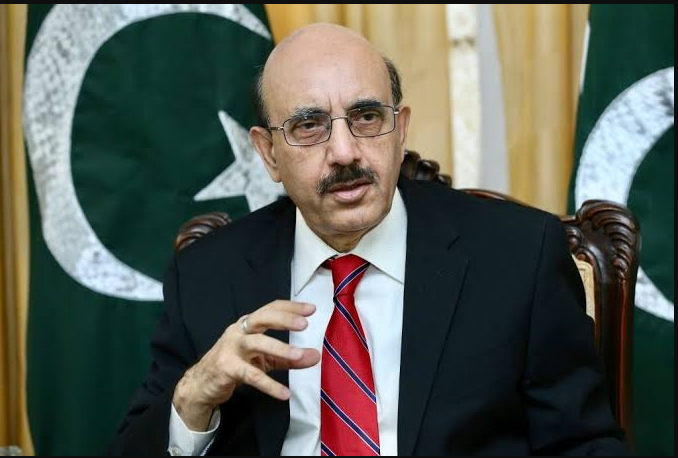 Islamabad: Former president of Azad Jammu and Kashmir Sardar Masood Khan has said that continued Houthi attacks against Saudi Arabia are heightening regional instability, threatening critical economic infrastructure and disrupting international supply chains.
In a television interview, Sardar Masood Khan said the Houthi strikes appeared intended to make Saudi Arabia insecure and push the region towards another theatre of war. He welcomed Pakistan’s condemnation of these attacks, stressing that their consequences extend far beyond Saudi Arabia, affecting international markets, maritime trade and energy supplies, particularly around Bab al-Mandab and the Red Sea.
He emphasised that Pakistan, as a founding member of the Makkah Alliance alongside Saudi Arabia and Türkiye, has important responsibilities towards the defence of Saudi Arabia’s sovereignty and territorial integrity. While Pakistan remains committed to supporting Saudi Arabia’s security, it is equally pursuing diplomacy to prevent further escalation. He reiterated that a lasting solution to the conflict in Yemen must be political, Yemeni-led and inclusive of all relevant stakeholders, ensuring ownership of the settlement by the Yemeni people.
Nature of Houthi campaign evolved beyond conventional military confrontation

Masood Khan observed that the nature of the Houthi campaign had evolved beyond conventional military confrontation. By targeting economic installations, energy facilities and maritime routes, the Houthis were pursuing asymmetric warfare designed to undermine Saudi Arabia’s economic capabilities and international reputation. He noted that attacks affecting facilities such as Aramco installations and Yanbu, alongside critical shipping routes, threatened Saudi Arabia’s economic transformation under Vision 2030.
He cautioned that disruption in the Red Sea and Strait of Hormuz, two critical global maritime and energy corridors, could have serious consequences for the Gulf countries, the broader Middle East and the world economy. Existing volatility in international energy markets and supply deficits could be further aggravated by sustained attacks.
Referring to the Makkah Alliance, Masood Khan said recent regional conflicts had demonstrated that even sophisticated and expensive defence systems cannot guarantee complete protection against asymmetric threats. He noted Pakistan’s commitment to supporting Saudi Arabia through defence cooperation, including the deployment of JF-17 aircraft, drones and air defence systems. However, he stressed that military preparedness must complement diplomatic efforts rather than replace them.
On the wider regional conflict, he expressed the view that the prospects for renewed diplomacy between Washington and Tehran were stronger than the likelihood of another military confrontation. He referred to the Islamabad Memorandum of Understanding and ongoing Qatar-mediated diplomatic efforts as important foundations for negotiations.
He also highlighted Pakistan’s engagement with Iran, urging Tehran to use its influence over the Houthis to stop attacks against Saudi Arabia. Khan concluded that diplomacy remains the most viable path to ending the conflict, protecting regional stability and preventing further divisions within the Muslim world.