Kashmir dispute remains central obstacle to lasting peace in South Asia: Sardar Masood
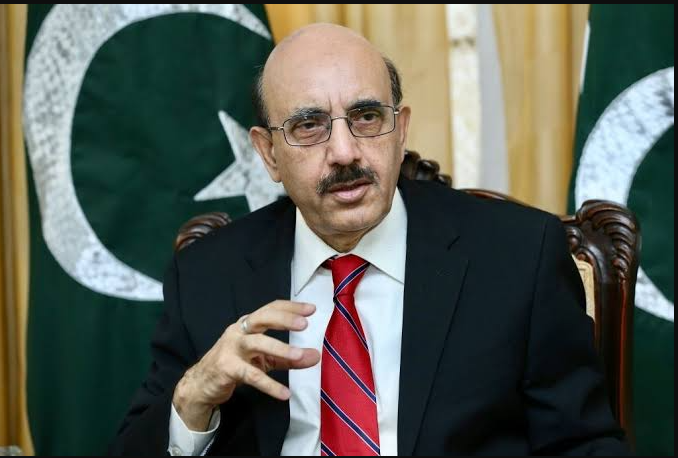
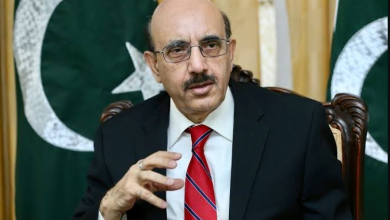
Rawalpindi: The Jammu and Kashmir dispute remains the central unresolved issue between Pakistan and India, and lasting peace and stability in South Asia cannot be achieved without respecting the right of the Kashmiri people to self-determination, said Sardar Masood Khan, former Ambassador of Pakistan to the United States, China and the United Nations, and former President of Azad Jammu and Kashmir.
Addressing students and faculty at Rawalpindi Law College, Khan delivered an extensive lecture on the historical, political and legal dimensions of the Jammu and Kashmir dispute. He congratulated the institution on its longstanding contribution to legal education, appreciating the dedication of its leadership and faculty and the achievements of its graduates serving in the judiciary, bar councils and other legal institutions.
Tracing the origins of the dispute to the partition of British India in 1947, Khan explained that the Indian Independence Act provided for the accession of princely states to either India or Pakistan, taking into account geographical contiguity and the demographic composition of their populations. He recalled that the Muslim Conference, representing the people of Jammu and Kashmir, adopted a resolution on July 19, 1947, in favour of accession to Pakistan.
He discussed the subsequent political developments, the accession of Jammu and Kashmir to India, and the events surrounding October 1947. He also highlighted the Jammu massacre, describing it as one of the gravest tragedies in the history of the region, and referred to the displacement and abduction of thousands of Muslims. He emphasised that these events remain an important but insufficiently understood part of Kashmir’s history, particularly among younger generations.
Khan underscored that the right to self-determination of the people of Jammu and Kashmir was recognised through the United Nations Security Council’s consideration of the dispute. He recalled India’s commitment to a plebiscite and stressed that the people of the territory must be allowed to determine their political future.
Referring to developments since 2019, he spoke about restrictions, detentions, enforced disappearances and the use of pellet guns against civilians in Indian-administered Jammu and Kashmir. He urged students to understand the dispute not merely as a political disagreement but also through its humanitarian and international legal dimensions.
Addressing the May 2025 military confrontation between India and Pakistan, Khan referred to a collective statement by five UN Special Rapporteurs, which, according to his account, questioned the legality of India’s actions and its invocation of self-defence. He also warned about the continuing risks of conventional confrontation and alleged proxy warfare against Pakistan.
Concluding his remarks, Khan encouraged students to develop a deeper understanding of Kashmir’s history, international law and regional security. He emphasised that the future of South Asia is closely linked to a peaceful and just resolution of the Jammu and Kashmir dispute, while urging the younger generation to recognise its responsibility towards humanity, justice and peace.