Indian govt admits prolonged conflict driving mental health crisis in IIOJK
Raids, arbitrary arrests, demolitions blamed for growing drug addiction
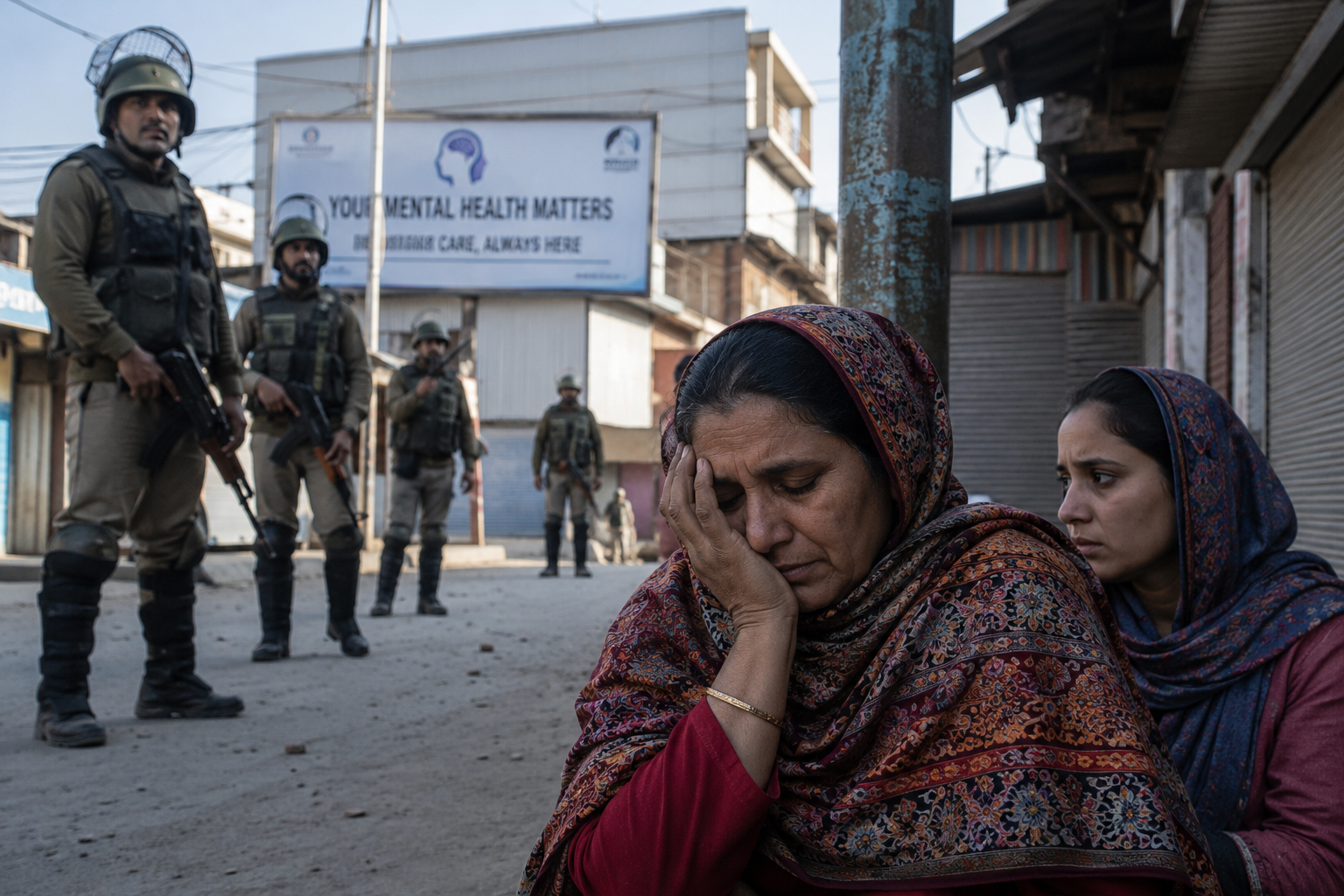
Srinagar : The Indian government has acknowledged that prolonged conflict has significantly contributed to the growing mental health crisis in Indian illegally occupied Jammu and Kashmir, as rights observers say the situation has been further aggravated by New Delhi’s continuing campaign of repression.
According to Kashmir Media Service, responding to a question raised by National Conference Rajya Sabha MP Sajjad Ahmad Kichloo, Indian Minister of State for Health and Family Welfare Prataprao Jadhav informed the upper house of Indian parliament that prolonged conflict and recurring disasters has sharply increased the demand for psychiatric care across the occupied territory. He said the National Mental Health Survey-2 is being conducted to assess the prevalence of mental illnesses, particularly among vulnerable communities.
New Delhi claimed it has expanded mental healthcare facilities, addiction treatment centres and counselling services across IIOJK to address the worsening situation.

However, political analysts and human rights observers said the authorities continue to ignore the root causes of the psychological distress affecting Kashmiris. They said decades of military occupation, frequent cordon and search operations, arbitrary arrests, house raids, property demolitions, land confiscations, internet shutdowns and prolonged detentions under draconian laws have created an atmosphere of constant fear and insecurity.
They maintained that repeated crackdowns, intimidation of youth, harassment of families and restrictions on civil liberties have inflicted deep psychological scars on the population, particularly children and young people, who are increasingly turning to drug addiction further compounding the crisis.
Observers said the alarming rise in mental health disorders cannot be viewed in isolation from the prevailing political and human rights situation in the occupied territory. They urged the international community to address not only the humanitarian consequences of the conflict but also the policies of repression that continue to fuel trauma, hopelessness and substance abuse among the Kashmiri population.