NIA court prolongs detention of six Kashmiris despite delayed trial
Bail denied on "gravity" grounds as court ignores prolonged incarceration
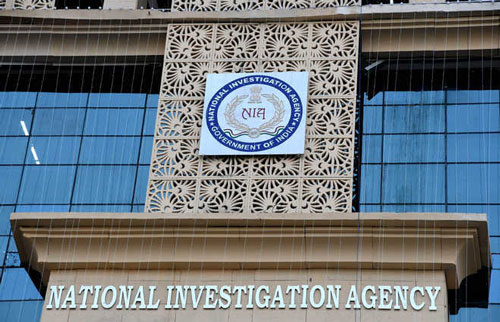
Jammu: A Special NIA Court in Jammu has rejected the bail pleas of six Kashmiri detainees, a decision that rights observers say reflects the continued misuse of India’s draconian laws to prolong incarceration and deny justice in Indian illegally occupied Jammu and Kashmir.
According to Kashmir Media Service, Special Judge for NIA Cases Prem Sagar dismissed the bail applications of Mohammad Mustafa Khan, Mohammad Nakeem Khan, Mohammad Yaseen Khan, Mohammad Ibrar Khan, Mohammad Farooq and Sher Ali Choudhary, all of whom are facing trial under the black law, the Unlawful Activities (Prevention) Act (UAPA), and other stringent provisions.
The court refused to grant bail, citing the “gravity” of the allegations and observing that some prosecution witnesses were yet to be examined, despite the defence highlighting the prolonged delay in the trial and the continued incarceration of the accused for years without conclusion of proceedings.


The defence also pointed out that the principal prosecution witness had already turned hostile, arguing that the prolonged detention violated the accused’s right to a speedy trial. However, the court held that delay alone could not justify bail in cases registered under the UAPA.
Political analysts and human rights observers said the ruling exposes the growing mockery of justice in IIOJK, where courts routinely rely on the seriousness of allegations rather than proven guilt to justify continued imprisonment. They said such decisions effectively facilitate the authorities’ policy of prolonged detention, allowing Kashmiris to remain behind bars for years while trials move at a sluggish pace.
They maintained that the repeated denial of bail under draconian laws has turned the judicial process itself into a form of punishment, reinforcing concerns that legal institutions in the occupied territory are increasingly being used to serve political objectives rather than uphold justice.