Black Day calls across IIOJK, northeast India challenge New Delhi’s I-Day narrative
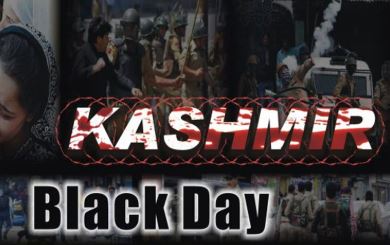
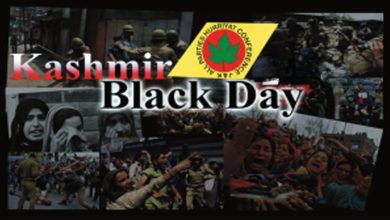
Srinagar: Kashmiris observe August 15, India’s Independence Day, as a Black Day to draw the world’s attention to the unresolved Kashmir dispute, continued denial of their right to self-determination and prolonged Indian repression in Indian illegally occupied Jammu and Kashmir (IIOJK).
According to Kashmir Media Service, the observance reflects widespread opposition to India’s control over the territory, where political freedoms, freedom of expression and other fundamental rights have remained under severe restrictions. Human rights organisations and independent monitors have continued to raise concerns over arbitrary detentions, the use of security laws, restrictions on communications, demolitions and curbs on media and political activities.
The Kashmir dispute remains an unresolved issue stemming from the partition of British India. On July 19, 1947, representatives of the All Jammu and Kashmir Muslim Conference passed a resolution at a meeting in Srinagar calling for the accession of Jammu and Kashmir to Pakistan, citing the region’s religious, geographical, cultural and economic links with Pakistan.
Following the outbreak of the conflict in 1947, India took the Kashmir dispute to the United Nations. The UN Security Council subsequently adopted resolutions calling for a ceasefire and a plebiscite to enable the people of Jammu and Kashmir to determine their political future.
Kashmiris maintain that India has failed to honour its commitments and has instead relied on military and administrative measures to consolidate its control over the territory.
The situation further deteriorated after August 5, 2019, when the Indian government unilaterally revoked Jammu and Kashmir’s special constitutional status and divided the former state into two federally administered territories. Subsequently changes to laws concerning land, property and political representation have fuelled concerns among Kashmiris about demographic and political changes in the territory.
The rejection of India’s Independence Day is also reflected in the histories of other movements that have challenged New Delhi’s claims of an uncontested political union. Naga nationalist organisations commemorate August 14 as Naga Independence Declaration Day, while sections of Manipuri society maintain their own sovereignty narrative.
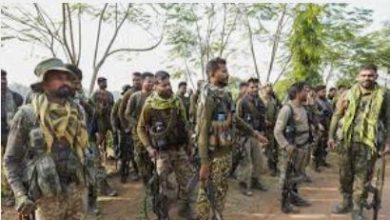
India celebrates its Independence Day on August 15, but the day has also been met with protests and boycott calls in Kashmir, Nagaland, Assam and Manipur. Sikh groups have also called for a boycott of the August 15 celeberatins. The United National Liberation Front of Assam, National Socialist Council of Nagaland and Alliance for Socialist Unity in Manipur have urged people to raise black flags and observe the day as a “Black Day”, citing longstanding political demands and allegations of rights violations. India has heightened security measures in several areas amid the calls for protests.
Assam witnessed a prolonged separatist movement, while the Mizo National Front once pursued independence before the 1986 Mizoram Peace Accord brought its armed insurgency to an end.
These distinct historical experiences, Kashmiris say, challenge the portrayal of India as a political union. They argue that unresolved questions of sovereignty, autonomy and self-determination have continued to shape political movements in several regions.
Since 1989, an armed resistance movement has also emerged in Kashmir against Indian illegal occupation, followed by successive cycles of violence, military operations, killings, arrests and political restrictions. Human rights groups have repeatedly called for accountability and protection of civilians.
The Kashmiris’ observance of August 15 as Black Day is intended to highlight a stark contradiction between India’s projection of itself as a democratic and inclusive state and the conditions prevailing in IIOJK.
They maintain that genuine peace in South Asia can only be achieved through a settlement of the Kashmir dispute in accordance with the aspirations of the Kashmiri people and relevant UN resolutions.