Why India has no moral or political right to celebrate Independence Day in IIOJK
Ahmad Hassan
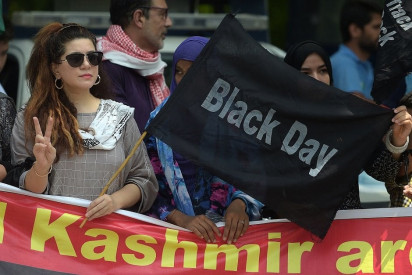
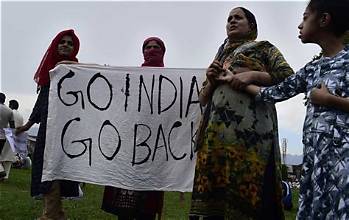
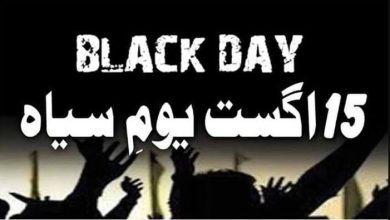
August 15, celebrated by India as Independence Day, carries an entirely different meaning in Indian illegally occupied Jammu and Kashmir, where Kashmiris observe it as a Black Day.
For the people of Kashmir, India’s national celebrations cannot erase the unresolved dispute over the territory or their longstanding demand for the right to determine their political future.
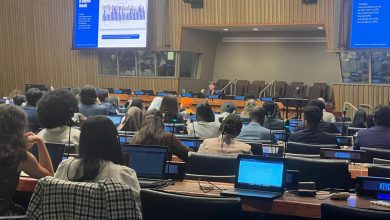
The Kashmir dispute is not merely a bilateral territorial disagreement. The United Nations Security Council addressed the question in Resolution 47 of April 21, 1948, which explicitly dealt with restoration of peace and the holding of a plebiscite in Jammu and Kashmir. Subsequent UN resolutions also envisaged a plebiscite to allow the people of the territory to determine whether Jammu and Kashmir should accede to India or Pakistan.
India’s continued celebration of Independence Day in IIOJK therefore appears, from the Kashmiri perspective, as a celebration imposed upon a people whose political aspirations remain unresolved. The argument is further strengthened by the profound changes imposed on the territory since August 5, 2019, when New Delhi revoked Jammu and Kashmir’s special constitutional status and divided the former state into two union territories.
Freedom House has documented the erosion of political and civil liberties in India and noted the extensive use of security laws allowing detention without charge or on broadly defined grounds.
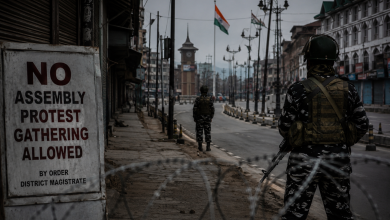
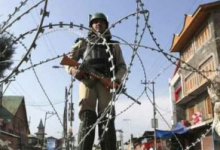
For Kashmiris, the presence of extensive security measures, restrictions on political activity and expression, and the detention of political opponents make the symbolism of August 15 particularly painful. A national celebration presupposes a shared sense of political belonging; where a population continues to contest the legitimacy of the governing authority, such celebrations can instead deepen alienation.
India’s claim to celebrate its sovereignty in IIOJK also sits uneasily with the international character of the Kashmir question. The UN record demonstrates that the territory’s final political disposition was placed within an internationally discussed framework rather than being treated simply as an ordinary internal matter.
For these reasons, Kashmiris regard August 15 not as their day of freedom but as a reminder of a freedom they believe remains denied. Observing the day as Black Day is consequently a political expression of dissent, a rejection of imposed rule and a reaffirmation of their demand for the right to self-determination. India may celebrate its independence within territories whose political status it considers settled, but in IIOJK, Kashmiris maintain that genuine independence and a durable peace cannot be achieved without addressing their aspirations and the unresolved Kashmir dispute.