Jamiat Ulama-i-Hind chief warns Maharashtra anti-conversion law threatens religious freedom
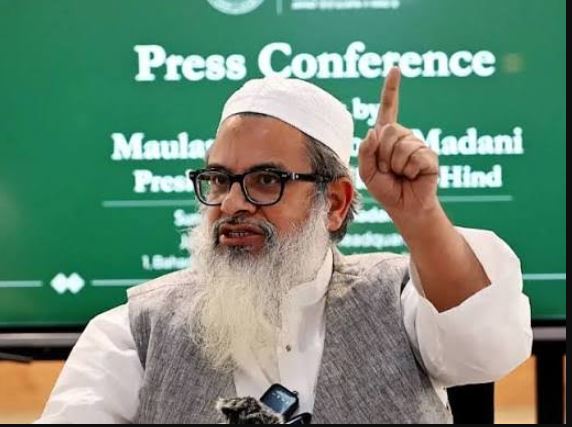
New Delhi: Jamiat Ulama-i-Hind president Maulana Mahmood Madani has voiced strong reservations about the Maharashtra’s new conversion law, warning that several of its provisions could undermine constitutional protections of freedom of conscience, religious liberty, privacy and personal autonomy.
According to Kashmir Media Service, in a statement, Madani said the Maharashtra Freedom of Religion Act, 2026, like similar laws enacted in BJP-ruled Uttar Pradesh, Gujarat and Madhya Pradesh, could place undue restrictions on an individual’s right to choose and practise a religion. He recalled that this right is guaranteed under Article 25 of the Indian Constitution. “If a person is not free to choose his or her religion, Article 25 of the Constitution loses its meaning,” he said.
Madani noted that Jamiat Ulama-i-Hind has challenged similar anti-conversion laws before the Indian Supreme Court. He particularly objected to the vague and expansive definitions of “allurement” and “fraudulent” conversion, arguing that such language could criminalize ordinary religious teaching and propagation. Beliefs about salvation, the hereafter and spiritual rewards, he said, form an essential part of many faiths and should not automatically be treated as inducements. Doing so, he added, would directly threaten the constitutionally protected right to propagate religion.


Madani also criticised the Act’s requirements for formal declarations, police inquiries and disclosure of personal information in cases of religious conversion. These measures, he maintained, place an undue burden on individual liberty and risk making the state the final arbiter of a citizen’s private conscience. Drawing on experience with anti-conversion laws elsewhere, he warned that the provisions could be misused to trigger arbitrary criminal proceedings and arrests.
While affirming that Jamiat Ulama-i-Hind fully supports genuine efforts to prevent coercion, fraud or forced conversion, Madani insisted that a law enacted in the name of protecting religious freedom must not itself become an instrument for restricting that freedom or targeting any community.
He urged courts and democratic institutions to examine not only the stated intent of the Maharashtra law but also the powers it creates and the practical consequences those powers may produce. KMS-7S