Violence continues unabated in Manipur as Indian govt fails to protect civilians
At least 23 civilians, including seven women, killed in one month of Naga-Kuki clashes
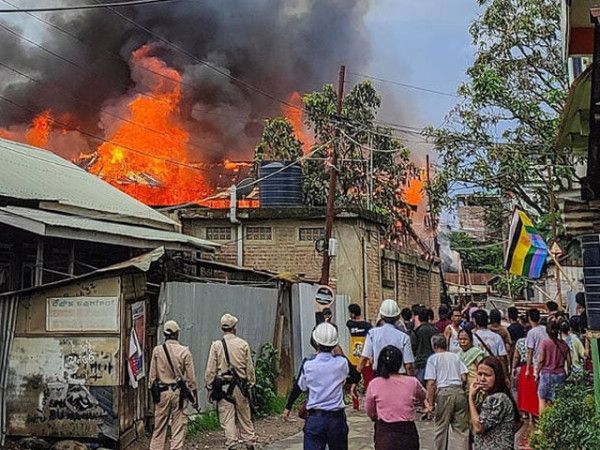
Imphal: Violence continues unabated in the India’s strife-torn state of Manipur, where at least 23 unarmed civilians, including seven women, have been killed in a month, exposing the failure of the BJP-led Indian government and the state authorities to protect vulnerable communities and restore peace.
The killings took place between August 27 and September 27 in the hill districts of Manipur, where Nagas and Kukis have been locked in a cycle of retaliatory attacks, abductions and killings since February this year, Indian news portal Scroll reported. At least 51 people have been killed since the latest Naga-Kuki conflict began, with civilians increasingly becoming targets of armed groups.
The dead include 12 Nagas and 11 Kukis, among them women, elderly people and a 17-year-old boy, who were attacked while going about their daily lives in remote villages, fields and along isolated roads.


On September 13, armed militants attacked the hilltop village of Longpi in Noney district, home to around 320 Kuki residents, shortly after Sunday church services. A group of five women and two men, who were on their way to gather rice and wash clothes, came under fire from 45 to 50 militants armed with automatic weapons. Two villagers, Thangvel Roel Gangte, 43, and Julie Singson, 22, were killed on the spot, while another woman, 22-year-old Ester Gangte, succumbed to her bullet injuries later at a hospital in Churachandpur. On the same day, armed militants attacked a Kuki household in L. Tollen village of Tamenglong district, killing Lhingzangai Singsit, a mother of five, and later her husband, who had sustained injuries in the attack.
On September 15, 76-year-old Phalneichong Sitlhou and another woman were allegedly shot by Naga armed militants while collecting firewood in their jhum fields in Leisangphai village of Tamenglong district, according to a statement by village authorities.
The repeated attacks have spread fear among residents, with many villagers confining themselves to their homes and abandoning routine activities, including farming and travelling between villages.
A Naga resident living along the Imphal-Tamenglong road told Scroll that people had stopped venturing out because armed groups from both sides were targeting civilians travelling to fields or carrying out other essential work. Many residents have been forced to devote their time and energy to guarding their villages.
Residents and community leaders have questioned the failure of the Narendra Modi-led Indian government and the BJP government in Manipur to intervene effectively and prevent the escalating violence.
Anteshang Charanga, leader of the All Naga Students’ Association, Manipur, said both governments had repeatedly been urged to intervene but had largely confined themselves to issuing statements of condemnation instead of ensuring protection and justice for affected communities.
The latest cycle of violence reportedly began with an attack on the Imphal-Tamenglong road, which passes through Kangpokpi district and has become a major flashpoint in the conflict.
On August 27, suspected Kuki armed groups ambushed a group of Naga men travelling to Senapati town to attend a meeting, killing four and injuring another, according to a senior police official. Timothy Wijunamai, head of the Liangmai Naga Council, blamed members of the Kuki National Front (Presidential) for the attack.
The killings triggered a series of retaliatory attacks, with the Naga Women’s Union stating on September 22 that more than a dozen innocent people had been brutally killed along the road.
On September 21, a 17-year-old Naga student, NK Wiphenbou, was allegedly ambushed by Kuki militants while walking from his village in Tamenglong district to Tamei town, where he studied. He was attacked on an isolated stretch of road around seven kilometres from his village.
The killing was followed by another attack on a Kuki village in Tamenglong district on September 23, in which a 36-year-old Kuki electrician was shot dead. A police complaint lodged by the village chief alleged that the attack was carried out by armed cadres of the National Socialist Council of Nagaland (Isak-Muivah). On the same day, armed Kuki groups allegedly set fire to 41 Naga houses and churches in the remote Makui region of Kangpokpi district, forcing several residents to flee to Senapati district headquarters.
Naga leaders criticised the slow response of Indian forces, saying they failed to reach Makui even two days after the arson attack. Wijunamai questioned why thousands of forces’ personnel stationed at district headquarters in Kangpokpi, Senapati and Tamenglong were not deployed to protect vulnerable villages.
Kuki leaders have also called for the deployment of central forces to safeguard vulnerable Kuki-Zo villages in Tamenglong and adjoining districts. Janghaolun Haokip of Kuki Inpi, the community’s apex body, said 29 Kuki villages had been attacked, looted or reduced to ashes, resulting in the forced displacement of more than 2,000 civilians.
The violence has also forced several villages to evacuate women and children, leaving only a handful of men behind to guard their homes.
In Pilong village in Kamjong district, near the Myanmar border, only five men remained to guard the settlement after residents fled due to the conflict. On September 24, armed Kuki cadres allegedly entered the village and opened fire, killing four men, while one, Akhan Kaping of Ukhrul, managed to escape.
The latest tensions between Nag and Kuki communities intensified in February this year following a minor altercation in Ukhrul district.
The latest violence has further compounded the humanitarian crisis in Manipur, which has been grappling with prolonged ethnic unrest since May 2023, when clashes erupted between the Hindu-dominated Meitei and Christian-dominated Kuki communities, leaving at least 300 people dead and displacing thousands.
The continued targeting of civilians, destruction of homes and displacement of families have raised serious concerns over the failure of Indian authorities to ensure security and prevent further escalation, as residents from both communities continue to demand effective intervention, protection and justice.