Omar Abdullah questions delay in restoring IIOJK statehood, seeks clarity from New Delhi
Rejects security concerns as an excuse, says elected govt has no control over police or law and order
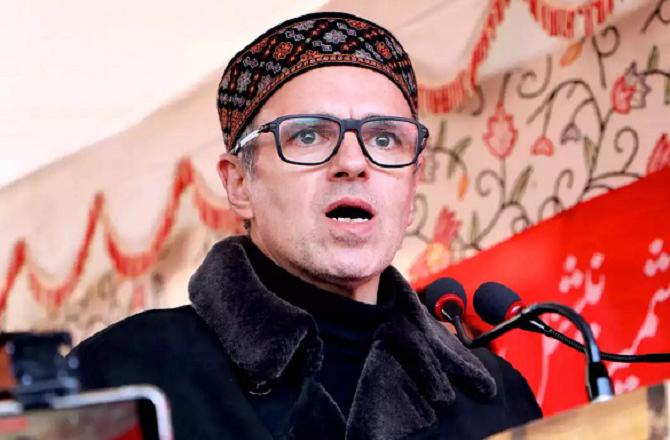 Jammu: In Indian illegally occupied Jammu and Kashmir (IIOJK), Chief Minister Omar Abdullah has demanded an explanation from the BJP-led Indian government for its continued delay in restoring the territory’s statehood, questioning whether the move was being withheld until the BJP returns to power in the region.
According to Kashmir Media Service, addressing a public rally in Mendhar town of Poonch district, Omar Abdullah said New Delhi’s repeated assurances that statehood would be restored at an “appropriate time” had provided no clarity, even though more than two years had passed since his elected government took office.
“If you do not intend to restore statehood until the BJP has its own chief minister in Jammu and Kashmir, then say so openly. Do not keep people under an illusion or subject us to repeated humiliation,” he said.
Unfulfilled assurances
Recalling assurances given by the Indian government before the Supreme Court of India during proceedings on Article 370, Omar Abdullah said statehood had been promised after the completion of delimitation, assembly elections and the formation of an elected government.
He said his government had passed a resolution seeking restoration of statehood at its very first Cabinet meeting and personally handed it over to Indian Prime Minister Narendra Modi. He added that he had repeatedly raised the issue with Modi during his visits to Jammu and Kashmir and had also taken it up with Indian Home Minister Amit Shah during meetings in Delhi.
Omar Abdullah questioned what criteria New Delhi was using to decide when the territory would regain statehood, pointing out that the conditions cited in its earlier assurances had already been fulfilled.
“Even after waiting for two years and one month, we are forced to ask where our state has gone and why its restoration is being delayed,” he said.
Security excuse rejected
He also rejected the use of security concerns as a justification for delaying statehood, arguing that his elected government had no authority over policing or law and order in Jammu and Kashmir.
“We have no control over the police or law and order, yet the Pahalgam attack is cited as a reason for delaying statehood. The same argument is repeated whenever an incident occurs in Kulgam, Reasi or Kishtwar,” he said.
He questioned why the people of occupied Jammu and Kashmir should bear the consequences of security failures when the elected government had fulfilled its responsibilities in the areas under its control. He challenged New Delhi to assess his government’s performance in areas such as infrastructure, healthcare, education and administration rather than holding it accountable for security matters beyond its jurisdiction.