 Islamabad: Indian social media influencers launched a hostile campaign against Pakistan’s Federal Minister Musadik Malik upon his arrival in Delhi, exploiting his previous remarks on Pakistan’s water rights to provoke controversy.
Indian social media accounts attempted to portray Musadik Malik’s presence in India as contradictory to his earlier strong position on the Indus Waters Treaty (IWT).
Indian media repeatedly attempted to divert the SCO multilateral engagement towards bilateral India-Pakistan disputes, particularly terrorism-related allegations.
Indian journalists questioned Musadik Malik on Pakistan’s alleged involvement in terrorism on three separate occasions, attempting to make terrorism the dominant subject of his media interactions.

India’s media approach reflected an attempt to use a multilateral diplomatic platform to advance its bilateral accusations against Pakistan.
Countering India’s terrorism narrative
Musadik Malik challenged India’s one-sided terrorism allegations, highlighting Pakistan’s thousands of casualties and sacrifices in combating terrorism over recent years.
He called for a transparent and mutually acceptable investigation mechanism instead of exchanging unsubstantiated accusations against each other.
His response challenged India’s attempt to portray Pakistan exclusively as a source of terrorism while overlooking Pakistan’s own enormous human losses.
He exposed the contradiction in India’s approach by advocating impartial investigations and equal accountability rather than politically motivated accusations.
His proposal for transparent investigations shifted the discussion from unilateral allegations towards evidence-based accountability.
Challenging RSS-BJP historical and ideological narratives
Musadik Malik challenged the exclusionary historical narrative associated with the RSS-BJP ideological framework, which portrays Muslims and outside communities negatively.
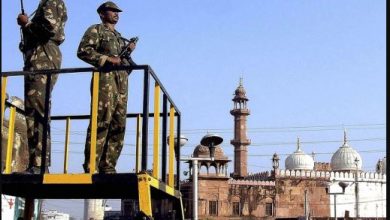
He indirectly challenged India’s nationalist historical narrative by referring to the origins and construction of Delhi’s Red Fort.
Responding to the Indian Culture Minister’s remarks about archaeological excavations at the Red Fort, he questioned whether these investigations would also uncover historical truths.
He highlighted that Delhi’s Red Fort was established and developed through contributions from outside rulers and communities.
His historical argument challenged attempts to portray external Muslim contributions as merely exploitative while overlooking their architectural, cultural and civilisational legacy.
He highlighted the historical contributions of Muslim rulers and outside communities to India’s architecture, civilisation and cultural heritage.
His remarks challenged the exclusion of Muslim historical contributions from India’s increasingly nationalist interpretation of history.
The historical references reinforced Pakistan’s position on Muslim identity, historical heritage and the ideological foundations associated with the Two-Nation Theory.
Urdu as an Instrument of Cultural Diplomacy
Musadik Malik deliberately used Urdu on Indian soil, asserting Pakistan’s linguistic, cultural and national identity before an Indian audience.
His use of sophisticated Urdu, concise expressions and literary references demonstrated the potential of the national language as an instrument of international diplomacy.
His references to Allama Ghalib and Urdu literary traditions added historical and cultural depth to his diplomatic communication.
His engagement challenged the assumption that effective international diplomacy necessarily requires English-language communication.
The interaction highlighted how Urdu can serve as an effective instrument for projecting Pakistan’s cultural identity and national narrative at international forums.
Strategic and diplomatic implications for India
India’s repeated attempts to corner Pakistan’s representative on terrorism failed to prevent the presentation of Pakistan’s counter-narrative.
Indian media’s focus on bilateral accusations provided an opportunity to highlight Pakistan’s terrorism-related casualties and demand transparent investigations.
India’s exclusionary nationalist narrative faced a historical counterargument highlighting the contributions of Muslim rulers and outside communities to Indian civilisation.
Musadik Malik’s historical references challenged the ideological foundations of narratives that marginalise Muslim contributions to the subcontinent’s heritage.
His use of Urdu reinforced Pakistan’s independent cultural identity and challenged the dominance of India’s preferred historical and political narratives.
The SCO engagement demonstrated the importance of countering India’s media narratives through historical context, evidence-based arguments and cultural diplomacy.
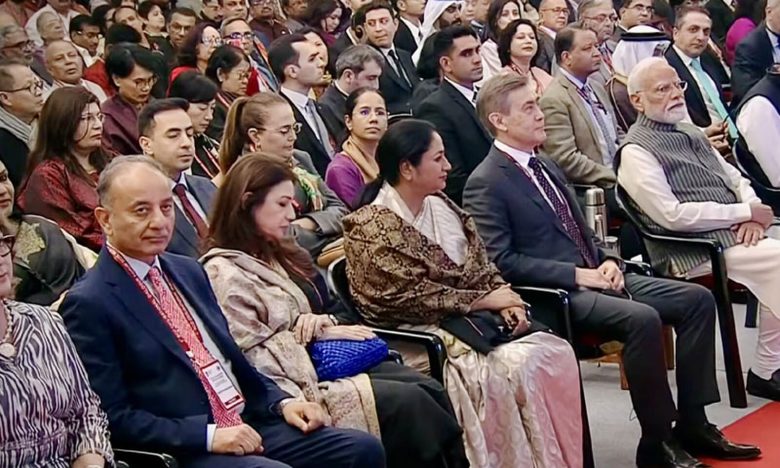
Pakistan’s participation in the SCO Cultural Dialogue was an opportunity to project its national identity, historical perspective and diplomatic position directly on Indian soil.
Musadik Malik proved to be a highly suitable representative of Pakistan, effectively presenting the country’s diplomatic, historical, cultural and ideological positions on Indian soil.
His intellectual depth, command of Urdu, historical awareness, ideological clarity and composed communication enabled him to counter Indian media narratives without getting drawn into unnecessary confrontation.
He defeated Indians on their own soil.