 Every year 25 November, marked as the International Day for the Elimination of violence against women. People together across the World to condemn violence against women. Governments issue statements, international organizations renew their commitments, do campaigns against the women violence and call for justice, dignity and equality.
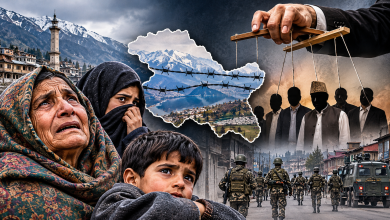
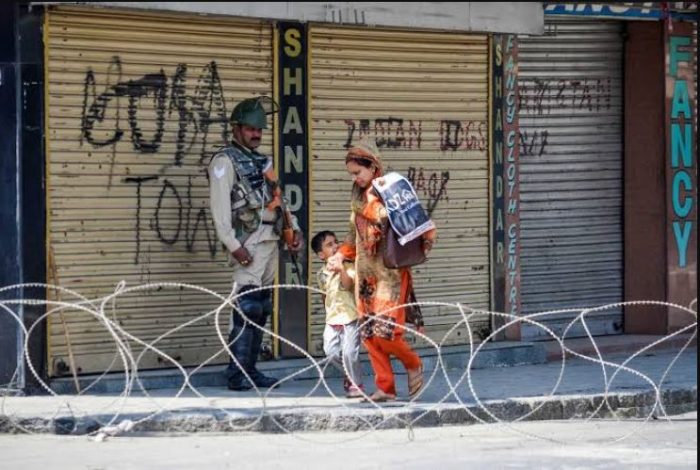
Yet in Indian Illegally Occupied Jammu and Kashmir (IIOJK), face disturbing contradiction continuously. what happens when institutions responsible for protecting citizens are themselves accused of violating their rights? For Kashmiri women, violence cannot be understood only through domestic abuse or patriarchal discrimination. Decades of militarization have exposed them to allegations of sexual violence, intimidation, arbitrary detention and institutional injustice. Their experiences raise a fundamental question about the relationship between state power and human security.
One of the most troubling dimensions of Kashmir’s conflict is the legacy of alleged sexual violence by security personnel. The Kunan-Poshpora incident of 23 February 1991, remains a painful incident. Women from two villages accused Indian soldiers of committing sexual assaults during a military operation. But the Indian Army and government denied these allegations. The United Nations Office of High Commissioner for Human Rights (OHCHR, 2018) highlighted the case and the survivors’ prolonged struggle for investigation and accountability. More than three decades later, the Kunan-Poshpora continues to raised questions about the treatment of survivors. This incident also illustrates how delayed justice can deepen the original trauma. When credible allegations involving state agents remain inadequately investigated. The consequences extend beyond individual survivors, undermining public confidence in institutions entrusted with protecting human dignity.
Legal structures further complicated the accountability. The Armed Forces Special Powers Act (AFSPA) of 1958 grants extraordinary powers to security personnel and requires central-government sanction for certain prosecutions. The United Nations Office of High Commissioner for Human Rights OHCHR (2019) identified such protections as significant obstacles for accountability. Meanwhile, the Public Safety Act (PSA) of 1978, also permits preventive detention. This law has raised questions over arbitrary detention and insufficient procedural safeguards.
Although these laws perform different functions but the report of UNHCR raised concerns about both laws, particularly their implications for accountability and individual liberties. Whether extraordinary security powers are accompanied by meaningful judicial oversight. National security cannot justify a system in which alleged violations become exceptionally difficult to investigate or prosecute. The consequences reach beyond physical violence. Surveillance, security raids, detentions, violation of basic rights and restrictions on civil freedoms can create an atmosphere of insecurity affecting women, familiesand communities.
After the April 2025 Pahalgam terrorist attack, widespread counter terrorism operations which again bought concerns about detentions and restrictions on civil liberties. The United Nations human-rights experts raised concerns about reported mass detentions, student surveillance and harassment during subsequent counterterrorism operations. While governments have a legitimate responsibility to investigate terrorism and protect civilians. Security responses must remain consistent with human-rights obligations. The collective suspicion risks transforming entire communities into subjects of permanent scrutiny.
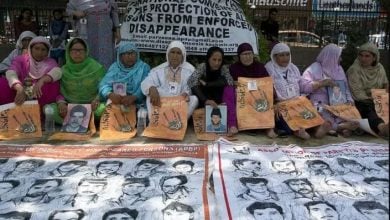
However, portraying Kashmiri women exclusively as victims would overlook their political agency and refused to remain silent. Women have organized campaigns, documented abuses and demanded accountability for disappeared relatives. Parveena Ahangar, associated with the Association of Parents of Disappeared Persons, represented the struggle of countless women for truth and recognition. Niharika Pandit’s research in Feminist Theory (2023) highlights how women’s activism challenges dominant narratives of conflict and creates political spaces for marginalized voices. Their resistance demonstrates that women are not passive observers of Kashmir’s political circumstances although they are active participants in shaping demands for justice.
Kashmiri women confront with deeply rooted patriarchal pressures. Sexual violence can carry social stigma. While economic dependency and restricted mobility may discourage survivors from seeking legal remedies. Research published in International Studies Review (2024) examines how militarization and patriarchy intersect in Kashmiri women’s everyday lives. This double burden exposes the limitations of approaches that treat violence against women as merely a private or domestic concern. Protecting women requires confronting both discriminatory social practices and abuses of institutional power.
Militarization and inequalities, leaving many women caught between societal pressures and an insecure political environment. Their experiences cannot be addressed through security policies alone. Security and accountability are not competing objectives. Lasting security depends upon public trust, impartial institutions and respect for fundamental rights.
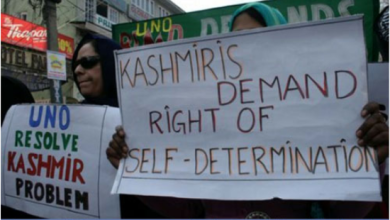
As the world observes November 25 as women day against violence. So the Kashmiri women deserve more than expressions of sympathy. Their demands call for credible independent investigations, accessible legal remedies, protection for survivors and meaningful participation in decisions affecting their lives. International institutions should continue examining allegations impartially and demanding accountability.
Ultimately, the credibility of any state’s commitment to women’s rights must be judged by its willingness to investigate allegations against its own institutions. For Kashmiri women, justice should not remain a promise repeated every November. It must become a reality they can experience in their everyday lives. Justice must mean more than surviving conflict, it must mean living with dignity, freedom, and protection under the law.
About Author
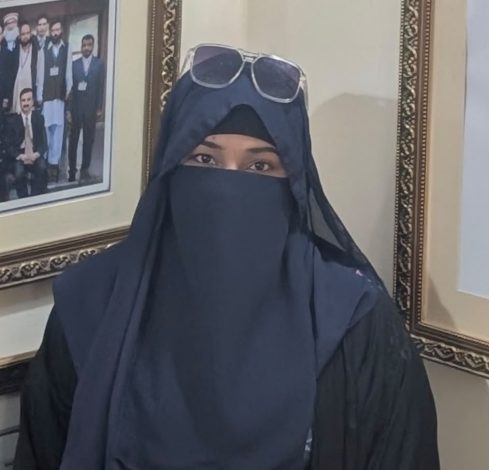
Laiba Tariq is a Student of Strategic Studies (SS), pursuing her Bachelor’s degree from National Defense University (NDU) Islamabad. She is research associate at Kasmir Institute of International Relation (KIIR) and interested about writing on different issuesaround the world.