New Delhi proposes 50% increase in IIOJK Assembly, Indian Lok Sabha seats
Delimitation seen as move to entrench Hindutva dominance in India, IIOJK
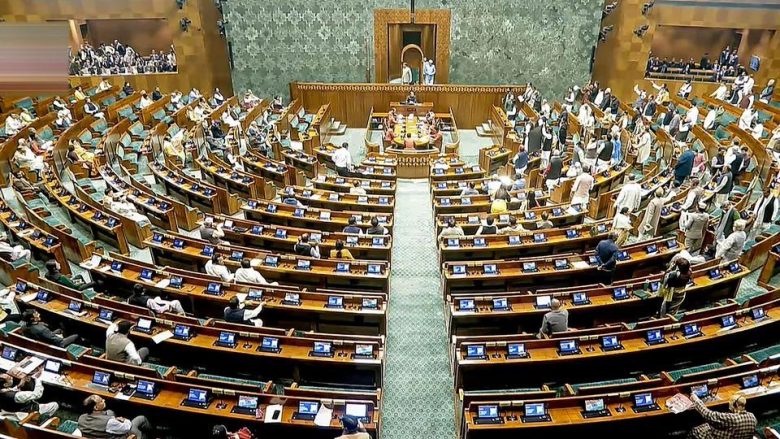
New Delhi: With the Indian BJP government’s Cabinet approving a fresh proposal to increase the number of Lok Sabha seats by 50 per cent, Indian illegally occupied Jammu and Kashmir is likely to see its representation rise from the existing five seats to eight.
The BJP government Cabinet, chaired by Narendra Modi, on Friday approved a proposal to increase the number of Lok Sabha seats by 50 per cent in all states. The revised maximum seat limit will remain in effect until 2050.
The Indian government has proposed a 50 per cent increase in the number of Legislative Assembly and Indian Lok Sabha seats allocated to occupied Jammu and Kashmir, besides extending voting rights in presidential elections to its elected legislators and implementing one-third reservation for women through a fresh delimitation exercise.
The proposals form part of the Constitution (One Hundred and Thirty-second Amendment) Bill, 2026, which is set to be introduced in the Lok Sabha.
IIOJK Lok Sabha seats will rise to 8
At present, occupied Jammu and Kashmir has five Lok Sabha seats, with two seats each in the Jammu and Kashmir regions and one seat shared between the two regions.
With the increase from five to eight seats, the Jammu and Kashmir regions are likely to get four seats each.
A copy of Bill No. 158 of 2026 reveals that New Delhi has proposed amendments to eight constitutional articles, with several provisions directly concerning Jammu and Kashmir’s electoral representation.
Under the proposed amendment to Article 334A, the first delimitation exercise undertaken after the commencement of the legislation shall provide for a 50 per cent increase in the number of Lok Sabha and Legislative Assembly seats allocated to each state and Union Territory.
IIOJK Assembly may have 135 seats
If applied to occupied Jammu and Kashmir’s existing 90 elected Assembly constituencies, the proposed formula could increase their number to 135, with 45 seats potentially reserved for women. However, the Bill does not explicitly specify Jammu and Kashmir’s revised Assembly strength, the distribution of additional constituencies between Jammu region and Kashmir Valley or the treatment of 24 seats kept vacant for Azad Jammu and Kashmir.
The proposed increase would also have implications for Jammu and Kashmir’s representation in the Lok Sabha, where the territory currently has five parliamentary constituencies. The Bill does not specify how fractional seat allocations arising from the proposed increase would be addressed.
“The objective of the present Bill is to give immediate effect to one-third reservation for women, including women belonging to the Scheduled Castes and the Scheduled Tribes, in the House of the People and the Legislative Assemblies of the States and the Union Territories,” reads the Statement of Objects and Reasons accompanying the Bill.
Previous move favoured Jammu
The proposal comes four years after the completion of the previous delimitation exercise in Jammu and Kashmir in 2022, which increased the number of elected Assembly constituencies from 83 to 90.
Of the seven additional constituencies created during that exercise, six were allocated to Jammu and one to Kashmir, taking their respective representation in the Legislative Assembly to 43 and 47 seats.
The proposed legislation also provides for the revised allocation of seats and division of territorial constituencies to continue until 2051.
The major decision comes just ahead of the special session of Parliament beginning on November 30, during which the BJP government is expected to introduce amendments to the Women’s Reservation Act in connection with delimitation.
The proposed increase in Lok Sabha seats is being seen as an attempt by the government to address concerns over the possible impact of delimitation on the parliamentary representation of southern states.
Earlier reports had also indicated that the government was considering a formula to increase the number of seats by 50 per cent in all states while maintaining their existing inter-state share based on the 1971 Census.
Women reservation from 2029 elections
The reservation is expected to be implemented for the first time in the 2029 general elections, as well as in select state Assembly elections scheduled for the same year. The provision will follow a vertical reservation model, ensuring that seats reserved for Scheduled Castes and Scheduled Tribes will also have a quota for women within those categories.
In addition to Parliament, similar reservations will be introduced in state legislative assemblies. The government is also expected to bring a separate Bill to amend the Delimitation Act, enabling a fresh allocation of seats based on updated parameters.
Sources indicate that the delimitation exercise may rely on the 2011 Census instead of waiting for the 2027 Census. The proposed changes will apply to all states and Union Territories, including Delhi, Puducherry and occupied Jammu and Kashmir.
According to reports, Uttar Pradesh is likely to witness the highest increase, with its Lok Sabha seats rising from 80 to 120, including 40 seats reserved for women. Maharashtra’s tally may go up from 48 to 72, with 24 seats earmarked for women.
Similarly, Bihar could see its seats increase from 40 to 60, with 20 reserved for women. Madhya Pradesh is expected to have 15 such seats, Tamil Nadu 20, Delhi four, and Jharkhand around seven seats reserved for women under the proposed arrangement.
The government is also considering amending the existing law, which provides for 33 per cent reservation for women in the Lok Sabha and state legislative assemblies. The proposed changes come after the Constitution (131st Amendment) Bill, 2026, failed to secure passage in the Lok Sabha in April.
The earlier Bill linked the implementation of women’s reservation to delimitation and proposed increasing the Lok Sabha’s existing strength of 543 seats to a maximum of 850.
BJP eyes 360 Lok Sabha magic number
The special session of Parliament will begin with the Lok Sabha sitting on November 30, while the Rajya Sabha will convene on December 2. Depending on the availability of government business, the session is expected to conclude on December 3.
Reports said the BJP-led NDA government is striving to reach the magic number of 360 to pass the Delimitation Bill. If all the equations and circumstances work in its favour, it could come very close to this figure.
As every single vote in the Lok Sabha matters in passing the Delimitation Bill, the resignation of rebel National Conference leader Aga Syed Ruhullah Mehdi from Parliament will also indirectly help the ruling NDA alliance in reaching the magic number.
At present, out of a total of 543 Lok Sabha seats, three seats are vacant, so the magic number for a two-thirds majority is 360.
The three vacant seats are Srinagar (IIOJK) due to the resignation of Agha Syed Ruhullah Mehdi, Shillong (Meghalaya) due to the death of MP Ricky Andrew J. Syngkon, and Basirhat (West Bengal) due to the death of MP Haji Nurul Islam.
Out of the total strength of 543 members in Lok Sabha, there are 540 active members; if all these active members vote, the two-thirds requirement is 360 votes compared to 361 out of 543.
Accounting for the Speaker (who votes only in a tie) and suspended Trinamool Congress MP Kalyan Banerjee, roughly 360 votes would be needed if all 539 participating members vote.
The BJP government’s efforts hinge on convincing the parties that previously opposed the bill, the DMK and the NCP (SP), to support it.
After splitting with the Congress in Tamil Nadu and withdrawing from the ‘INDIA’ alliance, the DMK, with 22 MPs, has also somewhat reduced its strong opposition to the bill.
In addition, two MPs, Sheikh Rashid, an independent from north Kashmir, and Amritpal Singh (‘Waris Punjab De’) from Punjab, are currently in jail.
There are also some smaller groups and independent MPs who are neither with the NDA nor the INDIA alliance. These include AAP (3), Independents (3), and ZPM, ASP, and AIMIM (1 MP each).
If some more MPs remain absent from the House or abstain from voting, the situation could tilt in the BJP government’s favour, as the majority will be determined by the number of members present on the day.
Hindutva dominance move
Political observers seem the proposed delimitation as not a neutral democratic exercise but a calculated move to consolidate Hindutva dominance both in India and in occupied Jammu and Kashmir. They argue that by increasing seats, manipulating constituencies and using women’s reservation as a cover, New Delhi seeks to dilute Kashmir’s Muslim-majority character, strengthen pro-Hindutva forces in Jammu, and permanently alter the political balance in favour of the BJP-RSS agenda in the disputed territory and across India.