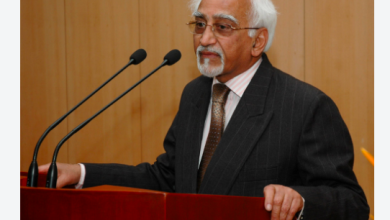
On 75th birthday, Modi branded ‘Modern-Day Hitler’ and threat to global peace
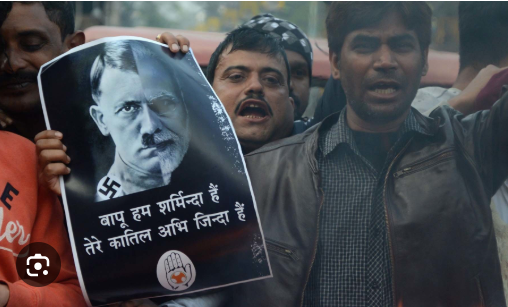 Srinagar: As Narendra Modi turns 75, voices from Indian illegally occupied Jammu and Kashmir (IIOJK) and beyond have described him as a “modern-day Hitler” and a “butcher of Muslims,” holding him responsible for crimes against humanity, communal violence, and policies that threaten global peace.
According to Kashmir Media Service, born in 1950, Modi’s political rise has been tied to the Rashtriya Swayamsevak Sangh (RSS), the Hindu extremist paramilitary organisation whose ideology mirrors European fascism of the 20th century. Political analysts argue that Modi’s career reflects the RSS vision of Hindu supremacy and the imposition of a singular cultural identity at the expense of India’s pluralistic traditions.
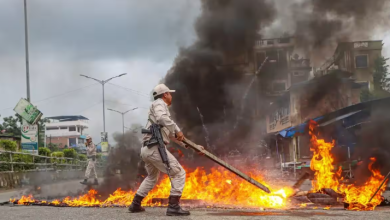
Modi’s record of atrocities against Muslims remains central to his legacy. As Chief Minister of Gujarat, he oversaw the 2002 anti-Muslim pogrom, which claimed thousands of innocent lives. In IIOJK, his government’s actions since 2019—including the revocation of Article 370, mass detentions, gag orders on press, and brutal crackdowns on civilians—have institutionalised state oppression against the Muslim majority. Rights organisations note that repression in Kashmir has peaked under Modi, with daily bloodshed and denial of fundamental freedoms.
Legal experts argue that Modi’s actions amount to crimes against humanity. From extrajudicial killings in Kashmir to discriminatory laws like the Citizenship Amendment Act (CAA) that explicitly marginalise Muslims, Modi has codified bigotry into the Indian state. The International Criminal Court defines persecution on religious grounds as a crime against humanity—criteria Modi’s regime continues to meet.
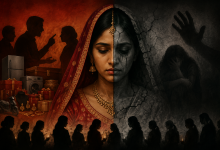

Critics warn that Modi’s Hindutva project is not confined to India’s borders. His policies destabilise South Asia, heightening the risk of conflict with Pakistan and China. The suppression of minorities, the militarisation of Kashmir, and the aggressive foreign policy stances rooted in domestic ultra-nationalism create volatility across the region. Analysts draw direct parallels between Hindutva under Modi and Nazism under Hitler: both movements seek cultural hegemony, scapegoat minorities, and glorify authoritarianism.
Furthermore, Modi’s India provides a model for other right-wing, majoritarian movements worldwide, emboldening authoritarian leaders elsewhere. This global rise of fascism poses a clear challenge to democracy, human rights, and international peace.
On his 75th birthday, human rights defenders warn that history will not remember Modi as a statesman but as an oppressor. His rule fuels instability in South Asia and beyond, while eroding democracy and spreading communal hatred at home. “Hell awaits Modi,” reads a message trending on social media, reflecting the anger of oppressed voices silenced under his regime.
The world must recognise Modi’s dangerous trajectory and rise against his fascism. Left unchecked, Modi’s Hindutva project threatens not only India’s secular fabric but also the stability of the wider world.