India’s State Terror in Kashmir Continues as the World Betrays Silence
Humayun Aziz Sandeela
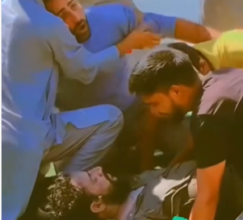 The death of Firdous Ahmad Mir, a father of three from Hajin in Bandipora, allegedly tortured to death while in the Indian Army’s custody and later found in the River Jhelum, has ignited protests, and not without reason. This tragedy cannot be dismissed as another isolated incident. It reflects a longstanding pattern of enforced disappearances, extrajudicial killings, and brutal repression that has scarred Indian illegally occupied Jammu and Kashmir (IIOJK) since 1989.
Indian forces have killed over 96,467 Kashmiris since 1989, including approximately 7,401 who died in custody or in staged “fake encounters”.
These statistics align with long-standing claims by local human rights groups, which document patterns of torture, disappearance, and deaths in detention. A 2019 report by the Association of Parents of Disappeared Persons (APDP) and the Jammu & Kashmir Coalition of Civil Society (JKCCS) described systemic torture and abuse under Indian security custody including cases of fatality.
The case of Firdous Ahmad Mir is especially chilling. He was reported missing; his body was later recovered from Jhelum with signs, as mourners claim, of physical abuse.
View this post on Instagram
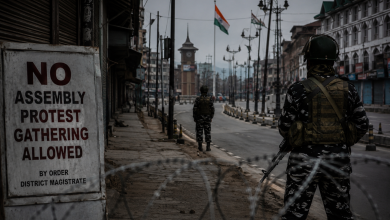
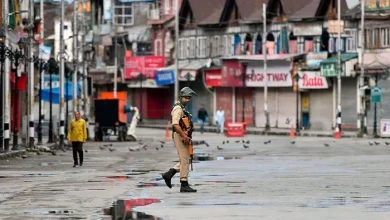
The reaction in Hajin was immediate and fierce as the people demanded justice, accountability, but they got in response was utter silence from the authorities. This scenario echoes the fatal encounter staged in Bandipora weeks prior, in which two Kashmiris were allegedly killed under dubious circumstances (officials claimed an encounter) while non-locals were unaffected. The permitted narrative always seems tailored: the state frames it as law and order, citizens view it as suppression.
These practices are not just moral outrages; they violate international law. The Geneva Conventions, particularly Common Article 3, which India is party to, forbids violence to life and person “in all circumstances”, including murders, cruel treatment, and torture of detainees. The International Covenant on Civil and Political Rights (ICCPR), to which India is a signatory, enshrines protection against arbitrary deprivation of life and torture. Under UN standards such as the UN Convention against Torture, enforced disappearances and custodial deaths are explicitly prohibited.
Furthermore, dozens of UN reports and resolutions on Kashmir, including the UN Human Rights Office report of 2018, have identified a chilling array of abuses: forced disappearances, the use of excessive force against civilian populations, extrajudicial killings, and impunity for perpetrators.
Some may argue these deaths are collateral or unfortunate, but the data and patterns tell another story: this is state policy by design. Since April 22, 2025, there have been reports of 44 Kashmiris martyred, over 3,190 arrests, and 81 homes razed following events in Pahalgam.
Kashmiris remain unbroken in their resolve. Protests in Hajin, in Sopore, in many hamlets and villages, testify to a people who refuse to be invisible. Their calls for justice, for accountability, for international intervention are not signs of weakness but of unquenchable spirit.
What must the global community do? First, demand independent investigations into every custodial death, every alleged fake encounter. India’s domestic bodies either lack impartiality or capacity or both to deliver redress. Second, the UN must move beyond reports and consider actions: fact-finding missions, monitoring mechanisms with access to the region, and calling out violations at the highest levels. Third, international legal bodies and civil society must pressure for accountability under international law: torture, extrajudicial killing and enforced disappearance are not administrative mishaps but war crimes and crimes against humanity when widespread and systematic.
In Firdous Ahmad Mir’s case, thousands see more than a tragic headline. They see another evidence of how, under the guise of ‘counterinsurgency’, the Indian state is trying to erase Kashmiris by eroding their rights, their dignity, perhaps their identity itself. This is not a fight for political slogans; it is a struggle for humanity. And the world must choose whether to bear witness, or to become complicit in a continuing atrocity with silence.