78 years on, Kashmiris await fulfillment of pledges made by UN, Indian leaders
Srinagar: At the end of British suzerainty over the Indian subcontinent in 1947, more than 550 princely states became independent, with the choice to accede either to Pakistan or India based on geographical contiguity and the will of their people.
According to Kashmir Media Service, except for a few, the princely states joined Pakistan or India without dispute. However, India also illegally annexed Hyderabad and Junagadh through political manipulation and the use of force. In the case of the Muslim-majority princely state of Jammu and Kashmir, the people wanted to accede to Pakistan, but the sinister designs of its Hindu ruler, Maharaja Hari Singh, and Indian National Congress leaders, backed by the British, shattered their aspirations. On October 27, 1947, India landed its troops at Srinagar airport and began the military occupation of the state in violation of the principles of partition.
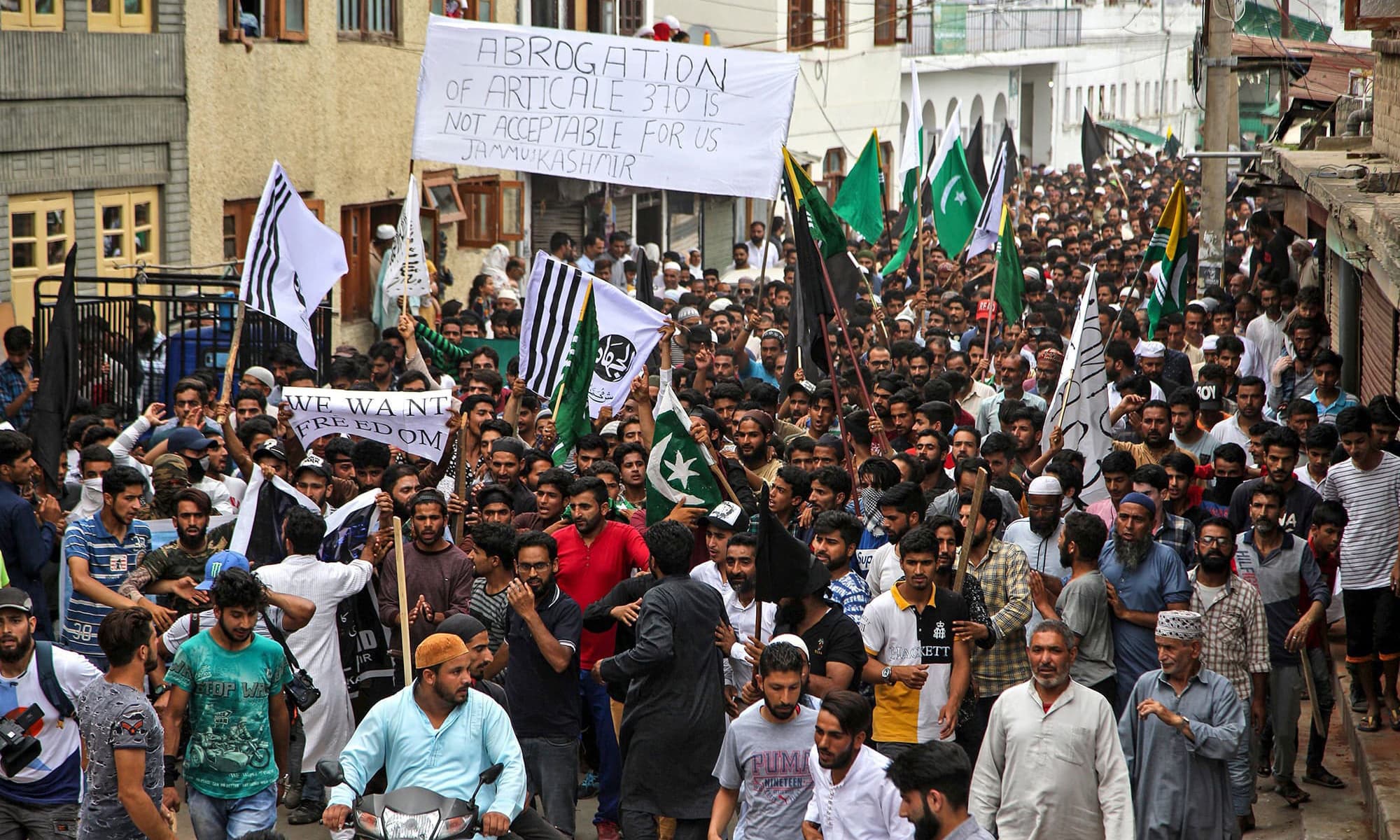
From the very first day, the people of Jammu and Kashmir rejected India’s illegal occupation and launched an exemplary struggle, which between 1947 and 1949 succeeded in liberating a vast area now known as Azad Jammu and Kashmir.
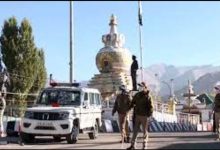
India’s naked military aggression and the ensuing resistance compelled Pakistan to send its forces into the state to halt India’s unlawful advance. Consequently, war broke out between the two countries in October 1947.
Sensing imminent defeat, India took the matter to the UN Security Council, seeking its intervention to settle the Kashmir dispute. The World Body, through its Resolution 47 adopted in January 1948, nullified India’s claim over Jammu and Kashmir and called for a ceasefire, stipulating that the final status of the territory would be decided through a UN-supervised free and impartial plebiscite to determine whether the people wished to accede to Pakistan or India.
Both countries accepted UN Security Council Resolution 47 and subsequent resolutions on the plebiscite. As a result, a ceasefire was established, leaving Indian illegally occupied Jammu and Kashmir (IIOJK) under India’s control, while the liberated part became Azad Jammu and Kashmir under Pakistan’s administration.
It is unfortunate that, due to India’s intransigence and hegemonic ambitions, the UN-mandated plebiscite remains unimplemented even after more than seven decades. This is despite categorical pledges made by top Indian leaders, including Mohandas Karamchand Gandhi and Jawaharlal Nehru, to allow the people of Kashmir to decide their own future.
Gandhi, while addressing a prayer meeting on July 29, 1947, said, “The people of Kashmir should be asked whether they want to join Pakistan or India. Let them do as they want. The ruler is nothing. People are everything.” Again, on October 26, 1947, he declared, “If the people of Kashmir are in favour of opting for Pakistan, no power on earth can stop them from doing so. They should be left free to decide for themselves.”
Similarly, India’s first Prime Minister, Jawaharlal Nehru, in a radio broadcast on November 2, 1947, stated, “We have decided that the fate of Kashmir is ultimately to be decided by the people of the state.” Earlier, on October 31, 1947, Nehru had assured Pakistan’s Prime Minister, Liaquat Ali Khan, that India’s pledge to hold a plebiscite in Kashmir was not merely a commitment to the Government of Pakistan but also to the people of Kashmir.
In a telegram to the UN Representative for India and Pakistan on August 16, 1950, Nehru reiterated, “It has always been our view that, in the event of a plebiscite, the people of Kashmir should decide their future for themselves.” Addressing the Indian Parliament on February 12, 1951, he reaffirmed, “We had given our pledge to the people of Kashmir and subsequently to the United Nations; we stood by it and we stand by it today. Let the people of Kashmir decide.”
Speaking at a public meeting in Srinagar on June 4, 1951, Nehru further said, “I want to repeat that the Government of India will stand by that pledge, whatever happens. That pledge stated that it is for the people of Kashmir to decide their fate without external interference. That assurance remains and will continue.” Again, in Parliament on August 7, 1952, he admitted, “I started with the presumption that it is for the people of Kashmir to decide their own future. We will not compel them. In that sense, the people of Kashmir are sovereign.”
However, these solemn commitments remain unfulfilled despite the passage of 78 years. India’s continued defiance of international law and its refusal to resolve the Kashmir dispute have kept the peace and stability of South Asia at perpetual risk. Since both Pakistan and India acquired nuclear capabilities in 1998, the unresolved dispute has turned Kashmir into a potential flashpoint.
The United Nations must take concrete steps to implement its resolutions and compel India to settle the Kashmir dispute for the sake of lasting peace and stability in the region and the world at large.