India pushes Hindi in IIOJK admin— another step toward Hindutva imposition
Move seen as part of Delhi’s bid to erase Kashmir’s cultural identity
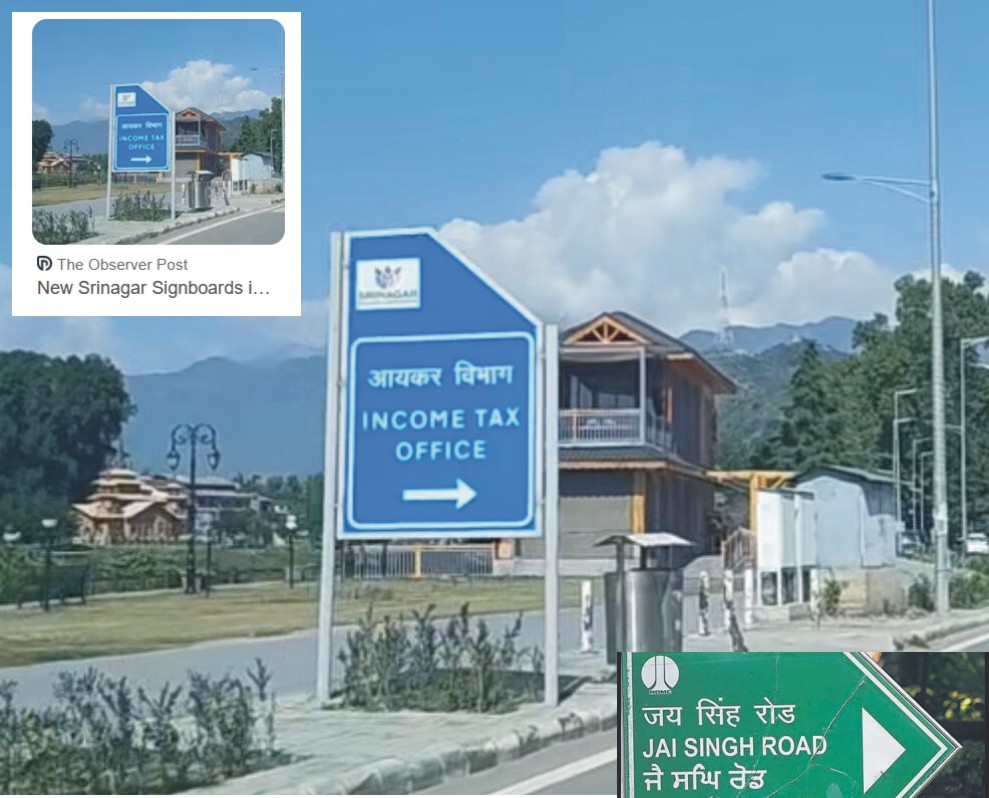 Srinagar: In another move viewed as part of India’s wider Hindutva-driven assimilation policy, the authorities in Indian illegally occupied Jammu and Kashmir have announced new measures to expand the use of Hindi across the administration, marking a sharp shift from the territory’s traditional linguistic and cultural landscape.
According to Kashmir Media Service, the occupation authorities stated that official websites of various departments and related portals are being made trilingual — in Hindi, Urdu, and English — under the pretext of “inclusivity” but with the apparent aim of mainstreaming Hindi in all official work.
In a written reply to BJP legislator Ranbir Singh Pathania, the regime informed the Assembly that all official correspondence received in Hindi is now being responded to bilingually — in both Hindi and English — in line with the Jammu and Kashmir Official Languages Act, 2020, which controversially recognized Hindi as one of the official languages of the occupied territory.
Observers see the move as part of a systematic effort to marginalize Urdu — the historical and administrative language of Jammu and Kashmir — and to align the region’s institutions with the broader Hindutva cultural framework propagated by the BJP and RSS.


A committee formed in 2022 to identify areas for the use of Hindi, Urdu, Kashmiri, Dogri, and English in administration has reportedly submitted its recommendations, which are being reviewed for implementation. The government further revealed that language cells in various departments are being expanded and that Hindi modules have been integrated into the e-office system to promote its gradual adoption.
Officials also said training workshops would be held in collaboration with the J&K Academy of Art, Culture and Languages to promote the use of Hindi in daily official correspondence, while public libraries across the occupied territory will establish dedicated Hindi sections.
The statement added that proficiency in Hindi may soon be made part of recruitment criteria for government jobs, further tightening cultural control over the occupied region’s bureaucratic structure.
Analysts note that the plan to promote Hindi, coupled with the government’s proposal to establish a Sanskrit academy, reflects New Delhi’s deliberate attempt to impose a uniform linguistic identity and erase Jammu and Kashmir’s distinct cultural and linguistic heritage.
Political observers and civil society voices in the region have described the step as another manifestation of India’s colonial policy in occupied Jammu and Kashmir — aimed not at inclusivity, but at enforcing Hindutva dominance through bureaucratic and cultural means.