India shuts Kashmir medical college after Muslims earned most admissions: Al Jazeera
Jammu: India has shut down a medical college in Indian illegally occupied Jammu and Kashmir in over the admission of an overwhelming number of Muslim students into the prestigious course, Al Jazeera said in its latest report.
According to Kashmir Media Service, India’s National Medical Commission (NMC), a central regulatory authority for medical education and practices, on January 6 revoked the recognition of Mata Vaishno Devi Medical Institute, located in Reasi, in Jammu region.
Of the 50 pupils who joined the five-year bachelor’s in medicine (MBBS) programme in November, Al Jazeera report said, 42 were Muslims, most of them residents of Kashmir, while seven were Hindus and one was a Sikh. It was the first MBBS batch that the private college had launched.
Like Saniya Jan, an 18-year-old resident of Kashmir’s Baramulla district, who recalls being overwhelmed with euphoria when she passed the NEET, making her eligible to study medicine. “It was a dream come true – to be a doctor,” Saniya told Al Jazeera.
When she joined a counselling session that determines which college a NEET qualifier joins, she chose MVDMI since it was about 316km (196 miles) from her home – relatively close for students in Kashmir, who often otherwise have to travel much farther to go to college.
Saniya’s thrilled parents drove to Reasi to drop her off at the college when the academic session started in November. “My daughter has been a topper since childhood ,” Saniya’s father, Gazanfar Ahmad, told Al Jazeera.
But things did not go as planned.
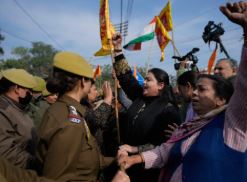
As soon as local Hindu groups found out about the religious composition of the college’s inaugural batch in November, they launched demonstrations demanding that the admission of Muslim students be scrapped.
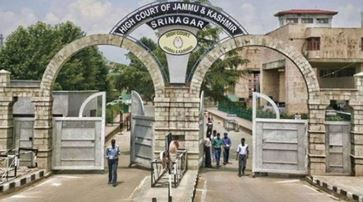
The agitations continued for weeks, with demonstrators amassing every day outside the iron gates of the college and raising slogans.
Meanwhile, legislators belonging to Indian Prime Minister Narendra Modi’s Bharatiya Janata Party (BJP) – which has been accused of pursuing anti-Muslim policies since coming to power in 2014 – even wrote petitions to Kashmir’s lieutenant governor, urging him to reserve admissions in MVDMI only for Hindu students.
As the protests intensified, the National Medical Commission on January 6 announced that it had rescinded the college’s authorisation. The next day, a “letter of permission”, which authorised the college to function and run courses, was withdrawn citing infrastructural deficit.
But most students Al Jazeera talked to said they did not see any shortcomings in the college and that it was well-equipped to run the medical course. “I don’t think the college lacked resources,” Jahan, a student who only gave her second name, said. “We have seen other colleges. Some of them only have one cadaver per batch, while this college has four of them. Every student got an opportunity to dissect that cadaver individually.”
Rafiq, a student who only gave his second name, said that he had cousins in sought-after government medical colleges in Srinagar, the biggest city in Indian-administered Kashmir. “Even they don’t have the kind of facilities that we had here,” he said.
Saniya’s father, Ahmad, also told Al Jazeera that when he dropped her off at the college, “everything seemed normal”.
“The college was good. The faculty was supportive. It looked like no one cared about religion inside the campus,” he said.
Zafar Choudhary, a political analyst based in Jammu, questioned how the medical regulatory body had sanctioned the college’s authorisation if there was an infrastructural deficit. “Logic dictates that their infrastructure would have only improved since the classes started. So we don’t know how these deficiencies arose all of a sudden,” he told Al Jazeera.
Choudhary said the demand of the Hindu groups was “absurd” given that selections into medical colleges in India are based on religion-neutral terms. “There is a system in place that determines it. A student is supposed to give preference, and a lot of parameters are factored in before the admission lists are announced. When students are asked for their choices, they give multiple selections rather than one. So how is it their fault?” he asked.
Al Jazeera reached out to MVDMI’s executive head, Yashpal Sharma, via telephone for comments. He did not respond to calls or text messages. The college has issued no public statement since the revocation of its authorisation to offer medical courses.
Salim Manzoor, another student, pointed out that Indian occupied Kashmir, a Muslim-majority region, also had a medical college where Hindu candidates are enrolled under a quota reserved for them and other communities that represent a minority in the region.
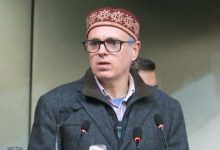
Last week, Omar Abdullah condemned the BJP and its allied Hindu groups for their campaign against Muslims joining the college. “People generally fight for having a medical college in their midst. But here, the fight was put up to have the medical college shut. You have played with the future of the medical students of [Kashmir]. If ruining the future of students brings you happiness, then celebrate it.”
Tanvir Sadiq, a regional legislator belonging to Abdullah’s National Conference party, said that the university that the medical college is part of received more than $13m in government aid since 2017 – making all Kashmiris, and not donors to the Vaishno Devi shrine – stakeholders. “This means that anyone who is lawfully domiciled can go and study there. In a few decades, the college would have churned out thousands of fresh medical graduates. If a lot of them are Muslims today, tomorrow they would have been Hindus as well,” he told Al Jazeera.
Nasir Khuehami, who heads the Jammu and Kashmir Students’ Association, told Al Jazeera the Hindu versus Muslim narrative threatened to “communalise” the territory’s education sector. “The narrative that because the college is run by one particular community, only students from that community alone will study there, is dangerous,” he said.
He pointed out that Muslim-run universities, not just in Kashmir but across India, that were recognised as minority institutions did not “have an official policy of excluding Hindus”.
Back at her home in Baramulla, Saniya is worried about her future. “I appeared for a competitive exam, which is one of the hardest, and was able to get a seat at a medical college,” she told Al Jazeera.
“Now everything seems to have crashed. I came back home. All this happened because of our identity. They turned our merit into religion.”