India skips BRICS naval exercise under US pressure, exposes subservient foreign policy
New Delhi: India has been forced to clarify its absence from the BRICS naval exercise in South African waters, exposing New Delhi’s selective and externally influenced approach to multilateral military engagements.
According to Kashmir Media Service, analysts say the decision reflects pressure from the United States, which views BRICS—featuring China, Russia, and Iran—as a rival bloc challenging Washington’s global dominance.
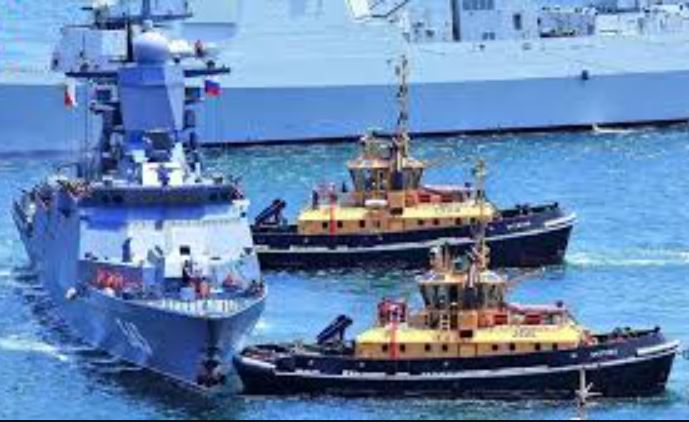
The exercise, “Will for Peace 2026,” held from January 9 to 16, 2026, in South African waters, was initiated by South Africa with participation from select BRICS members, including China, Russia, and Iran. India, citing a lack of “institutional approval,” chose not to participate, raising questions about its commitment to the BRICS grouping even as it assumes the organization’s rotating presidency.
A Ministry of External Affairs spokesperson, Randhir Jaiswal, stated that India’s position is consistent with past practice: participation in BRICS naval exercises is not mandated as a formal institutional initiative. India’s primary multilateral maritime exercise remains IBSAMAR, conducted with Brazil and South Africa, with the last edition held in October 2024.
Observers note that framing the exercise as a South African initiative allowed India to avoid direct participation while projecting adherence to protocol. Analysts, however, see a deeper dimension: New Delhi is carefully managing relations with China and Russia, wary of US scrutiny, and seeking to avoid actions that might antagonize Washington at a time when BRICS is emerging as a multipolar counterweight.
Experts say India’s selective engagement strategy exposes a foreign policy caught between ambitions of regional influence and subservience to Western interests. By skipping the naval drill, India signals that its BRICS presidency may be more about optics than meaningful military or strategic collaboration.
The incident underscores how New Delhi prioritizes alignment with the US and NATO over multilateral cohesion in alternative global forums, raising doubts about its ability to act independently in the evolving multipolar order.