Mirwaiz calls for dignified return of Pandits to homes, not segregated enclaves
Pays tribute to Pandit Bhushan Bazaz
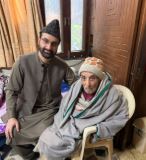
Srinagar, January 22 (KMS): Senior All Parties Hurriyat Conference (APHC) leader Mirwaiz Umar Farooq has reiterated the call for the dignified return of Kashmiri Pandits to their homes in the occupied Kashmir Valley, stressing that the issue transcends politics and represents a humanitarian and ethical obligation.
According to Kashmir Media Service, addressing a meeting in memory of senior Kashmiri Pandit intellectual Bhushan Bazaz in New Delhi, Mirwaiz said, “For Kashmiri Muslims, Kashmiri Pandits are not outsiders. They are part of our own memory, our own story, our own home.”


Reaffirming his long-held stand, the Mirwaiz said this truth carries a moral responsibility. “I have always maintained, and said so from the pulpit of Jamia Masjid, that the dignified return of Kashmiri Pandits is not merely a political matter. It is a humanitarian and ethical obligation,” he said. He stressed that Pandits must return not to guarded enclaves or segregated colonies, but to their rightful homes, to live as equal stakeholders in a shared future.
The Mirwaiz stressed that lasting peace in Kashmir required acknowledging each other’s pain — both the pain of conflict and the pain of displacement — and rebuilding trust patiently and honestly.
Paying rich tribute to Bhushan Bazaz, MIrwaiz said he devoted his life to this vision. As founder of the Jammu and Kashmir Democratic Front, his politics was never about exclusion but about building bridges — between communities, memories and wounded hearts. “He did not live to see that dream fulfilled,” Mirwaiz said, “But his manifest faith in it strengthens my own resolve.”
Pandit Bhushan Bazaz, the son of renowned writer and Kashmir historian Prem Nath Bazaz, passed away in Delhi earlier this week at the age of 91. His passing, Mirwaiz said, leaves behind not only a personal loss for him and his family but also “a deeper moral silence in Kashmir, a silence that feels heavier at a time when voices of conscience are becoming increasingly rare”.
Mirwaiz described the deceased as “a gentle elder, a moral compass and a cherished presence whose life embodied Kashmir’s finest plural and cultural traditions”. “There are some people who do not merely pass through our lives; they quietly become part of our inner world,” he said. “Pandit Bhushan Bazaz was one such person for me.”
Recalling his long association with the Bazaz family, Mirwaiz said his relationship with Bhushan Bazaz began in childhood through the latter’s enduring friendship with his late father, Mirwaiz Moulvi Muhammad Farooq. “In an unfamiliar city, it was Bazaz’s home in Delhi that offered us comfort over cups of kehwa, long conversations about Kashmir, and an atmosphere where faith never defined belonging,” the Mirwaiz said.
He noted that even after becoming Mirwaiz, he continued to stay at the Bazaz home during visits to Delhi, despite advice to the contrary at a time of widening communal divides.
Concluding his remarks, Mirwaiz Umar Farooq said he would continue to walk the bridges of trust, dialogue and shared belonging that Bhushan Bazaz spent his life building, calling it the truest tribute to his memory.