“Capitulation before brahminical pressure”: Indian SC’s stay on UGC equity rules sparks campus protests
New Delhi: The Indian Supreme Court’s stay on the newly notified University Grants Commission (UGC) Regulations, 2026, has sparked widespread protests and sharp criticism, with student organisations and rights advocates warning that the move weakens safeguards against caste-based discrimination in higher education.
According to Kashmir Media Service, the UGC (Promotion of Equity in Higher Education Institutions) Regulations, 2026 — introduced earlier this month following public interest litigation — were designed to address caste-based discrimination in universities and colleges across India. The regulations were challenged on the grounds that they primarily recognised Scheduled Castes (SCs), Scheduled Tribes (STs), and Other Backward Classes (OBCs) as victims of discrimination, allegedly excluding Upper Castes from similar safeguards.
The Supreme Court’s stay followed pressure and protests from upper-caste Hindu groups, who labelled the regulations discriminatory and socially divisive.

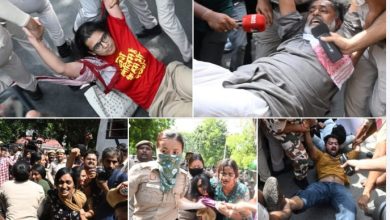
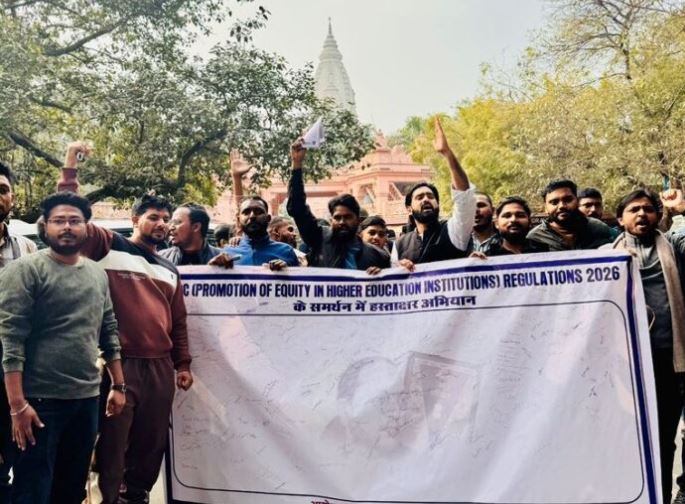
In response, protests erupted across major campuses, including Delhi University, Jawaharlal Nehru University (JNU), and Banaras Hindu University (BHU), where large numbers of SC, ST, and OBC students accused the BJP-led government of betraying marginalised communities and demanded full implementation of the UGC’s equity framework.
At BHU, SC, ST, and OBC students have launched a signature campaign calling for the enforcement of the UGC regulations. Addressing a protest organised by the JNU Students’ Union (JNUSU), its president Aditi said the union would continue its struggle until the Rohith Act is enacted.
Similar demonstrations were reported at Allahabad University, while in Rohtas district, Bihar, members of SC, ST, and OBC communities staged protests against the suspension of the new UGC provisions.
OBC student organisations, including the All India OBC Students’ Association (AIOBCSA), condemned the court’s intervention, arguing that it undermines long-overdue equity reforms. The All India Students’ Association (AISA) described the SC’s decision as a “capitulation before brahminical pressure.”
Protest organisers announced that more demonstrations will soon be held across central and state universities nationwide, asserting that while marginalised voices are often sidelined in institutions and courts, they will continue to assert their rights on the streets.