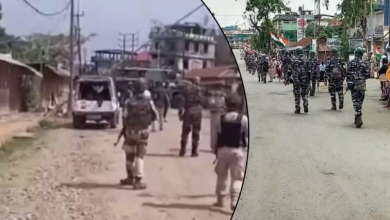
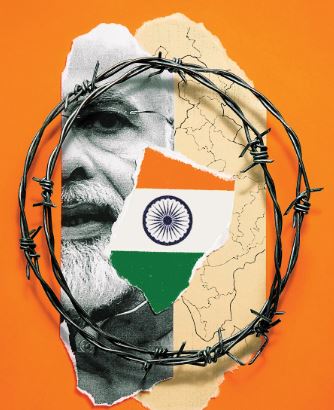
India has become hell for foreign independent journalists/researchers
Islamabad: French author and film director who was jailed in India published his Book: titled “J’avais un rêve indien. Dans l’enfer de la prison de Gorakhpur” in India.
According to Kashmir Media Service, on 15 January 2026, 32 year French author and film director, Valentin Hénault, published his memoir. The title translates directly into English as “I Had an Indian Dream: In the Hell of Gorakhpur Prison.”
In it he reflects on his 2023 trip to India, a journey that soon turned into a nightmare as he had to spend months in jail after attending a Dalit rights protest in 2023. Book is available only in French at present.

Valentin Hénault arrived in India on 10 August 2023 to make a documentary film focusing on atrocities committed against Dalit women. He travelled in Bihar and Jharkhand before reaching Uttar Pradesh.
On 10 October 2023, Hénault attended “Ambedkar’s people’s march” led by peasant women demanding land rights for Dalits.
He was surrounded by “local international agents” after a speaker at the podium earlier mentioned his name to recognise the presence of “international observers.”
He was accused of illegally financing the protest.
Police also accused him of “violation of visa conditions” under Article 14b of the Foreign Act and arrested him. He was sent to Gorakhpur prison.
Hénault was shifted to a cell meant for mentally unstable individuals.
He was barred from leaving the city for 7 months and left India in May 2024.
He was kept in a barrack with 300 people with no space to sleep or turn around and witnessed people dying inside jail which deeply affected him.
Caste and religion shaped life behind bars just as they do outside. Muslims were housed together in a separate barrack.
Upper-caste inmates occupied relatively better central areas while those from lower castes were pushed to the darker corners near the toilets.
In prison Brahmins were kept in the center and next to the toilets, where it was very dark, were dozens of people from lower castes.
He said many inmates did not know how long they would remain in jail with no hearings or court appearances scheduled.
The Foreigners Act is frequently used to detain foreigners for political activities such as attending protests and documenting social issues.
India is becoming a fortress where Godi media journalists, propagandists are welcome but independent researchers, journalists and activists face heightened surveillance.
Previous years incidents of implicating foreigners falsely by Indian government and law enforcement agencies
Valentin Hénault – Gorakhpur, Uttar Pradesh (2023–2024)
French documentary filmmaker detained after attending a Dalit rights protest and accused of visa violations and financing protests.
Vanessa Dougnac – India (2024)
Long-time resident French journalist forced to leave after the government moved to cancel her OCI status over alleged “negative reporting.”
Angad Singh – New Delhi Airport (Aug 2022)
An American journalist and documentary producer for Vice News was denied entry and deported immediately after arrival without a detailed explanation.
Foreign missionaries – Assam (Oct 2022)
Seven German nationals and three Swedish citizens were detained and deported for alleged religious preaching and conversion activities while on tourist visas.
Foreign Tablighi Jamaat members – India (2020)
Hundreds of foreign preachers from several countries were charged under visa and epidemic laws after attending a religious gathering during COVID-19. Many courts later dismissed the cases.
David Bergman – Bhopal (1986)
A British activist documenting the Bhopal disaster aftermath was detained under the Foreigners Act and National Security Act while involved in relief work.
Ian Stillman – Tamil Nadu (2001)
British aid worker arrested after drugs were allegedly found in a taxi he hired. Advocacy groups later argued he was a victim of miscarriage of justice.
Jagtar Singh Johal – Punjab (2017–present)
Scottish Sikh activist arrested on terrorism charges after visiting India; UN experts and human rights groups have raised concerns over prolonged detention without trial.
In addition to these specific cases, press-freedom groups report that foreign correspondents in India increasingly face visa delays, permit refusals, or deportation when covering politically sensitive topics such as Kashmir, protests, or minority rights.
India covers its HRVs with controlling the independent reporting and research.
India became hell for foreign independent journalists/researchers.