When the Base Camp Trembles: A Human Rights Defender’s Plea from Indian-Occupied Kashmir
Haseeb Akther
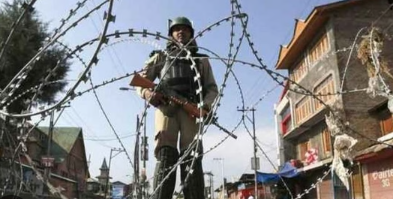
Writing from the militarized streets of Indian-Occupied Kashmir, where elected leaders remain detained, journalists endure relentless harassment, and daily life unfolds under the shadow of checkpoints and surveillance, I continue to follow the crisis unfolding in Azad Jammu and Kashmir with deepening concern. Though the Line of Control divides us, we share the same heartbeat. AJK has long served as the political and moral base camp of our freedom struggle—the platform from which our collective voice reaches the United Nations, foreign capitals, and global civil society. When that base camp falters, the tremors are felt by every Kashmiri on both sides of the divide.
Notwithstanding the demands of Joint Awami Action Party to help improve governance and bring some relief to the common people, the situation seems to have taken an ugly turn. The path of confrontation and agitation taken by the civil society representatives doesn’t help our combined cause. On the other hand, initial response of the AJK political establishment was disappointing. Instead of pursuing the dialogue, authorities chose confrontation, treating legitimate public grievances as a threat rather than an opportunity for better governance. Only after the unrest escalated and the Government of Pakistan intervened were immediate concerns addressed and a consultation process begun. By then, however, trust had eroded, and a more dangerous impasse had taken hold.
The AJK government bears a singular dual mandate: it must govern justly, protect fundamental rights, deliver development, and uphold the dignity of its own citizens while simultaneously serving as the international face of the unresolved Kashmir dispute. These responsibilities are inseparable. A government that loses the confidence of its people cannot credibly advocate for the voiceless across the Line of Control.

It is in this context that the rise of the Joint Awami Action Committee (JAAC) must be understood. Its core demands—relief from crushing inflation, subsidies on essentials, an end to nepotism and corruption, employment-generating development, and reform of an inequitable quota system—are not the slogans of an anti-state movement. They reflect the democratic right of citizens to demand accountable governance. Public support for JAAC did not signal rejection of the broader Kashmir cause; it underscored that people cannot pay bills with patriotic appeals alone.
The dispute over the twelve refugee seats in the AJK Assembly has become the clearest symbol of this broken trust. Some vested interests used it to drive a wedge between the people of AJK, refugees settled in Pakistan, and the wider bond Kashmiris share with Pakistan. While the Supreme Court of AJK ruled that the matter is constitutional and belongs before the assembly, JAAC has insisted on immediate abolition and taken to streets for a long march to Muzaffarabad. The resulting violence in Rawalakot, Kotli, and other areas—claiming lives and injuring both protesters and security personnel—is a tragedy that wounds us all.
Civil society movements earn legitimacy through peaceful, inclusive, and accountable action. When protests turn violent or tactics endanger daily wage earners, traders, and other vulnerable groups, they undermine their own moral standing. At the same time, law enforcement must uphold public order with necessity and proportionality. Allegations of excessive force or arbitrary arrests require independent investigation; accountability is not optional.
Both sides must now shoulder responsibility. JAAC should renounce violence, suspend the long march, and channel its grievances through constitutional and mediated processes, while broadening its platform to include technical experts in constitutional and administrative matters. Raising demands is legitimate, yet we must also offer alternatives to existing structures; no government can dismantle entrenched systems with a single stroke of the pen. The AJK government should lift the blanket ban on JAAC, opern dialogue on fiscal relief, anti-corruption measures, and allow the assembly to address constitutional questions. The Government of Pakistan, acting as facilitator, should encourage restraint and negotiated reform on all sides.
India’s media and political class will eagerly exploit any instability in AJK to delegitimize the wider Kashmir cause and divert attention from rights violations in the occupied territory. Internal discord only serves that purpose. Unity, restraint, and genuine reform are therefore not merely domestic imperatives but strategic necessities.
We remain one people and one struggle. The freedom of Kashmir demands that we resist fracture at the very moment our adversaries seek to divide us. AJK must once again become the stable, principled base camp our movement requires: a place where civil society acts responsibly, law enforcement protects impartially, and political leadership delivers justice. The eyes of the occupied remain fixed upon you. Our shared future depends on the wisdom and courage you demonstrate now.
Let this moment mark not the unraveling of trust, but its deliberate reconstruction—through dialogue, accountability, and an unwavering commitment to the dignity of every Kashmiri. Only then can the base camp stand firm against both internal failings and external designs.
The writer is a human rights activist and spokesperson of JKNF in Indian occupied Kashmir and can be reached at: whasib@gmail.com
Note: The views expressed in this article are solely those of the author and do not necessarily reflect the editorial position of KMS.