‘India’s Hindutva govt cannot change reality of Kashmir dispute through oppressive policies’

Islamabad, : Senior leaders of the All Parties Hurriyat Conference Azad Jammu and Kashmir (APHC-AJK) chapter have said that the Hindutva government of India cannot change the reality of the Kashmir dispute through its anti-Kashmir and oppressive policies.
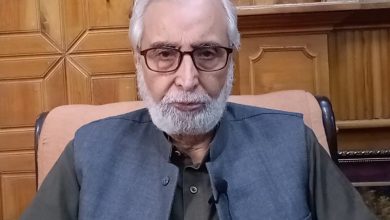
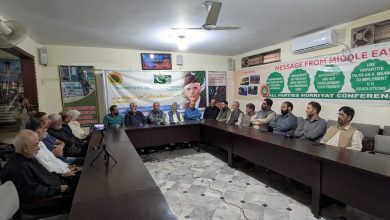
According to Kashmir Media Service, APHC-AJK leaders Muhammad Farooq Rahmani, Haji Sultan Butt and Chaudhry Shaheen Iqbal in a joint statement issued in Islamabad have stressed the need to resolve the Kashmir dispute in accordance with the United Nations resolutions. They said that India’s stubborn policy towards Kashmir has become a threat not only to South Asia but also to global peace and security.
They expressed concern that India has intensified the cycle of atrocities and violence, house raids, so-called siege and search operations, forced arrests and political vendettas to suppress the Kashmiris’ struggle for freedom based on their rights in occupied Jammu and Kashmir.

The Hurriyat leaders urged India to abandon its oppressive policy towards Kashmir and pave the way for a peaceful and lasting resolution of the Kashmir conflict by providing the Kashmiri people with their inalienable right to self-determination.
They said India has illegally imprisoned thousands of Kashmiri youth, including Hurriyat leadership, in false and baseless cases, but despite this, the spirit of freedom of the Kashmiri people could not be weakened.
They reiterated their resolve that the great sacrifices of Kashmiri martyrs will never go waste as the Kashmiri people are determined to take their just struggle to its logical conclusion.
The Hurriyat leaders called upon the United Nations and the international community to take notice of Indian military atrocities, serious human rights violations and political repression in occupied Jammu and Kashmir and play an effective role in resolving the Kashmir dispute in accordance with the aspirations of the Kashmiri people and relevant UN resolutions.