UN experts urge India to release Indigenous rights defenders arrested in Assam
Say detention could have a chilling effect on Indigenous rights advocacy
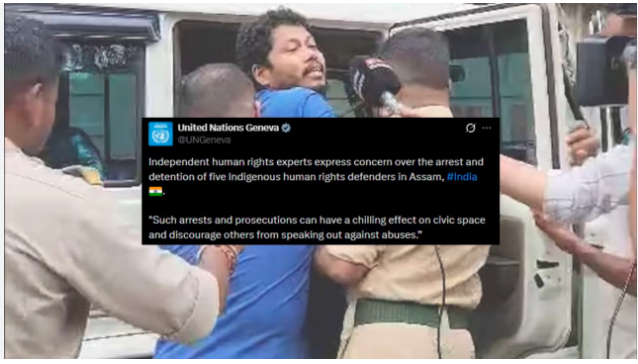 New Delhi: United Nations human rights experts have called on the BJP-led Indian government to release five Indigenous rights defenders arrested after protesting a luxury tourism project in Assam, warning that their detention could discourage Indigenous communities from defending their land, environmental and human rights.
According to Kashmir Media Service, the UN experts expressed deep concern that the activists appeared to have been detained solely for peacefully advocating on behalf of Indigenous communities affected by a proposed tourism project near Kaziranga National Park. The five activists — Pranab Doley, Rajib Pegu, Brijit Kutum, Amit Nag and Bhaskar Saikia — were arrested by Assam Police after participating in protests on June 29 against plans to develop a luxury tourism project in Inglay Pathar.
“We are deeply concerned by reports that Indigenous human rights defenders have been deprived of their liberty in connection with their peaceful advocacy on behalf of Indigenous communities’ lands and rights,” the experts said in a statement.
They warned that criminal prosecutions targeting peaceful activists can have a “chilling effect” on civil society by discouraging others from speaking out against human rights abuses or environmental harms. They also raised concerns over reports that the police unit involved in the arrests has previously faced allegations of torture and other forms of ill-treatment.

The experts urged Indian authorities to ensure the detained activists are treated with dignity and that their legal rights are fully protected while in custody. They stressed that the five activists should be released immediately if they are being held solely for peacefully exercising their fundamental rights.
They further called on authorities to suspend land acquisition and construction related to the tourism project until Indigenous communities have been meaningfully consulted and their free, prior and informed consent has been obtained in line with international human rights standards.
The intervention adds to growing international concern over India’s treatment of human rights defenders, environmental activists and Indigenous communities. UN experts and international human rights organizations have repeatedly expressed alarm over the criminalization of peaceful activism and the shrinking civic space in India, particularly in cases involving minority rights, environmental protests and large-scale development projects.