India’s shrinking fighter fleet exposes deep-rooted defence procurement crisis
Former air chief sounds alarm over declining squadrons as India struggles to meet its operational strength despite claims of becoming a global power
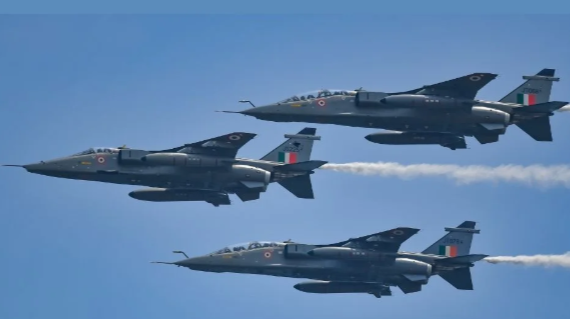
New Delhi: Former Indian Air Force Chief Air Chief Marshal Amar Preet Singh, in his final annual press conference on October 3 this year, acknowledged that the number of fighter squadrons in the Indian Air Force had fallen to just 29 against the sanctioned strength of 42.5, the lowest level in nearly six decades.
According to Kashmir Media Service, analysts’ warnings can be dismissed and criticism by the Indian opposition can be branded as politics. However, when the country’s own air chief publicly warns about declining squadron strength and delays in aircraft procurement, New Delhi’s narrative of possessing a modern and invincible air force faces serious questions.
Amar Preet Singh warned that the Indian Air Force needed 36 to 40 new fighter aircraft every year to reverse the decline. Describing procurement delays as a serious concern, he said, “Technology delayed is technology denied.” Speaking specifically about the Tejas Mk1A programme, he remarked bluntly: “There is some extra delay, and there is no doubt it is going to hurt us.”


In February 2021, India signed a contract worth Rs480 billion for 83 Tejas Mk1A fighter aircraft, with deliveries scheduled to begin in March 2024. Under the original timeline, two complete squadrons should by now have been inducted into the Indian Air Force. However, more than two and a half years after the scheduled start of deliveries, not a single aircraft has been handed over.
Following a second order for 97 aircraft, the total Tejas Mk1A procurement programme has expanded to 180 aircraft, with a combined estimated value of around Rs1.1 trillion. Despite this massive order, the newly appointed air chief is not expected to receive even the first complete squadron before March 2027.
The crisis extends beyond the Tejas programme. The Request for Information (RFI) for the procurement of 114 Multi-Role Fighter Aircraft (MRFA) was issued in 2018, but even after eight years, the formal Request for Proposal (RFP) has yet to be issued.
While India makes ambitious claims of emerging as a global power, it remains unable to maintain the required strength of its fighter squadrons. The former air chief has publicly acknowledged what sections of the Indian defence establishment have long been expressing in subdued terms: the gap between official rhetoric and actual air power widens every year.
The persistent delays in fighter aircraft procurement have also raised questions about the Indian government’s ability to translate massive defence spending into actual combat readiness. In the 2026-27 budget, India allocated a record Rs7.85 trillion for defence, an increase of 15.27 per cent over the previous year’s allocation of Rs6.81 trillion. While New Delhi repeatedly boasts of preparing for a two-front war, its fighter fleet continues to face a serious shortfall. Even Indian Defence Minister Rajnath Singh has reprimanded Hindustan Aeronautics Limited (HAL) over repeated delays in the Tejas Mk1A programme.
India continues to project itself as a major military power, but its defence procurement system remains unable to meet even basic operational requirements on time. Its repeated slogans of modernization and superiority cannot conceal the persistent erosion of its fighter strength.