Authoritarian Reengineering of occupied Jammu and Kashmir
 Abdul Wahab
Since the Hindutva government led by the Narendra Modi came into power Indian illegally occupied Jammu and Kashmir has witnessed a series of far reaching political, administrative and legal changes. All these measures have changed the constitutional position, governance structure and socio-political landscape of the territory, leading to the unprecedented centralization of power and restructuring without the consent of its Legislative assembly. One of the most consequential steps was the revocation of IIOJK’s special status on 5th August 2019, followed by the reorganization Act that divided the territory into two union territories. There were many objectives behind the revocation of special status.
One being that the Indian government wanted to fully ensure the full annexation of Jammu and Kashmir in a belief that this move would lead to an end of the long-standing Kashmir dispute. Second, the Hindutva government wanted to establish exclusive Hindu settlement in Jammu and Kashmir with the aim of altering its demographic composition from a Muslim Majority to Hindu Majority. Third, they wanted to change all those laws which were related to land ownership and residency status to encourage non-Muslims to settle in the disputed region. However, instead of ending the dispute and ensuring the integration of the disputed territory into the Indian Union, all the decisions and policies have deepened the sense of alienation. All the measures including the removal of special status reinforced the belief that the political future of Jammu and Kashmir is being decided without the consent of its people. Moreover, the Hindutva government framed the decisions as a step towards development but in reality the restrictions, military operations and political uncertainty have continued to affect trade, tourism and everyday livelihoods.
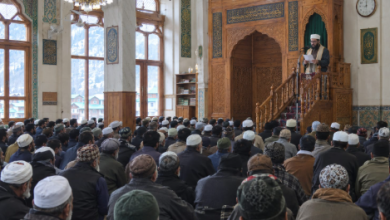
Alongside the revocation of Articles 370 and 35A and bifurcation of Jammu and Kashmir into two union territories, a range of colonial polices have been introduced including the new domicile laws, changes in land ownership rules, establishment of sainik and Pandith colonies, ban on socio-religious parties, expanded surveillance of religious institutions especially mosques, increased militarization and excessive use of repressive laws like Public Safety Act (PSA) and Unlawful Activities Prevention Act (UAPA) to suppress dissent. All these measures have totally reshaped the political and social dynamics of Jammu and Kashmir. These policies have curtailed the political activities of the Kashmiri people to advocate for their political aspirations and raised serious questions about the identity, dignity and future of the region.

Undoubtedly, all these policies are implemented by the Hindutva government led by the Narendra Modi in Jammu and Kashmir after coming into power, significantly altering political, administrative and demographic dynamics of Kashmir. However, the process of demographic change did not only originate after BJP came into power, its historical roots can be traced back to the period of the partition of the British India, particularly during the Jammu Massacre, when lakhs of Muslims were killed and displaced from the Jammu region. This early momentum that altered the demographic composition of the region and weakened its Muslim majority character reflects that ideological forces that later crystallized politically within the BJP and the boarder Hindutva framework were already present and inclined toward reshaping the demographic and political structure of the state. The early phase was marked largely by hard power tactics, violence, coercion and forced displacement which had immediate consequences and laid the foundations for subsequent political and demographic shifts within the region.
However, the strategy is widely perceived to have evolved from overt coercion to more institutionalized and policy driven mechanism. All the measures which were taken after the assumption of power are forms of soft power aimed to gradually reconfiguring the social and political character of Jammu and Kashmir. The transition from direct force to administrative and legal instruments reflects a broader shift in approach, where the objectives are pursued through structured policy interventions rather than explicit coercive measures.
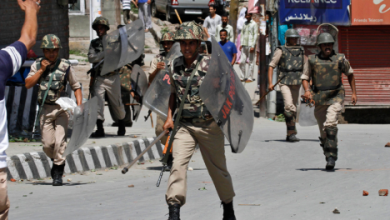
Moreover, the implementation of Hindutva Policies in Kashmir has relied exclusively on hard power tactics rather than dialogue or consent based governance. All the measures including the establishment of military and paramilitary colonies, land grab, ban on pro-resistance political parties demonstrates a realpolitik approach, the union government of India leverages coercion, surveillance, and demographic engineering to achieve its objectives. The strategy only prioritizes only control and compliance over legitimacy, relying on the use of force, arbitrary detention and systematic suppression of dissent. In essence, these policies are designed to consolidate territorial and political dominance through the application of state power, illustrating a calculated, hardline approach to integrating disputed territory of Jammu and Kashmir under a centralized Hindutva agenda. The absence of soft power tactics highlights Hindutva’s realistic approach rooted in coercion, signaling that the Hindutva Government considers use of force and administrative restructuring as primary tools for maintaining control in the disputed region.
Moreover, the implementation of Hindutva driven policies have raised serious concerns regarding the violations of international standards, human rights norms and democratic principles. Measures like revocation of semi-autonomous status, bifurcation of state, ban on socio-religious parties, mass detention, surveillance, establishment of military colonies and frequent communication blackouts have undermined the core democratic values and principles. The extensive use of military force, surveillance, restrictions on assembly and suppression of dissenting voices has created an environment where fundamental freedoms like freedom of expression, association and peaceful protests are severely constrained.
Furthermore, The United States Commission on International Religious Freedom (USCIRF) has recommended sanctions on the Hindutva’s government’s ideological and cultural wing, Rashtriya Swayamsevak Sangh (RSS) due to concerns about its role in promoting or enabling religious intolerance and human rights violations in India. These sanctions are closely linked to the policies implemented in Jammu and Kashmir by the Bharatiya Janata Party (BJP), the political wing of the RSS, reflecting a continuum from ideological influence to governance actions.
The RSS’s Hindu nationalist ideology fundamentally shapes the BJP’s political agenda, particularly in Jammu and Kashmir. This ideological foundation drives efforts to integrate the region fully into the Indian Union, aligning with the RSS’s vision of a unified Hindu-majority nation. The constitutional changes in Kashmir aimed to dissolve the region’s distinct political identity, leading to increased central control, widespread unrest, and heightened military measures.
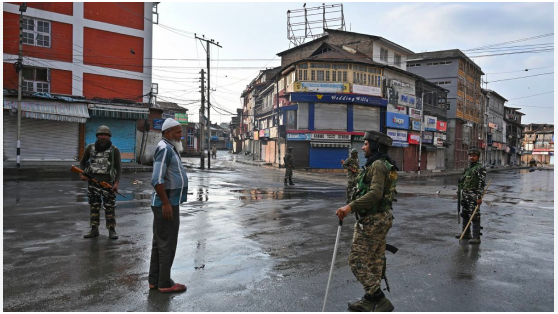
Following the revocation, extensive security protocols were imposed, including curfews, communication blackouts, and the detention of political leaders and activists. These measures have drawn international scrutiny for human rights concerns, mirroring USCIRF’s warnings about religious intolerance and abuses linked to RSS-affiliated entities. The situation in Kashmir exemplifies the type of state actions that underpin USCIRF’s rationale for recommending sanctions.
Moreover, the BJP’s policies, influenced by RSS ideology, have been criticized for exacerbating religious and ethnic tensions in Kashmir’s Muslim-majority population. These policies are perceived as marginalizing religious and cultural identities, undermining minority protections, and contributing to an environment of intolerance and repression.
USCIRF’s recommended sanctions on the RSS thus respond to broader patterns of ideological influence translating into governance actions with significant human rights implications. The Kashmir example illustrates how domestic policies aligned with RSS goals have provoked international concern, prompting calls for accountability and diplomatic pressure to uphold religious freedom and minority rights.
Moreover, these recommendations include designation under the Global Magnitsky Human Rights Accountability Act, allowing the U.S. government to impose asset freezes and travel bans on key RSS leaders and affiliated entities. Targeted financial sanctions are also proposed to block the property and financial interests of the RSS and its leaders within U.S. jurisdiction.
Additionally, USCIRF suggests visa restrictions to prevent RSS leaders and affiliates from traveling to the United States. Diplomatic measures form another aspect of the recommendations, urging the U.S. government to raise concerns about the RSS in bilateral discussions with India and to condition certain cooperation on improvements in religious freedom and human rights.
These sanctions seek to hold the RSS accountable for contributing to religious persecution and violence, particularly against minority communities Ultimately, the strategic implementation of Hindutva centric policies ranging from intensified militarization to the fundamental restructuring of land and residency frameworks has catalyzed a paradigm shift in the region’s socio-political landscape. By leveraging punitive legislative instruments and revising territorial statutes, the state has effectively recalibrated the political order, reflecting a governance strategy predicated on hegemonic consolidation and the rigid regulation of the public sphere.
The writer is a Kashmiri activist based in Islamabad.