When American Diplomacy Forgets Its Own Kashmir Record
Ambassador Sergio Gor’s remarks in Srinagar cannot displace the legal and diplomatic history that the United States helped to create
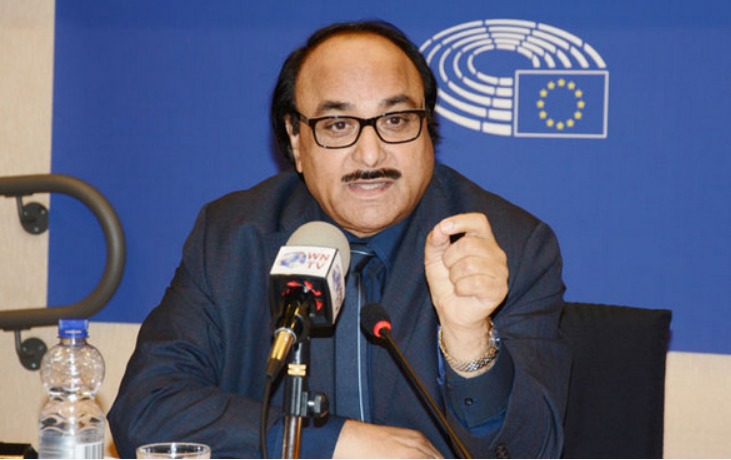
Dr Syed Nazir Gilani
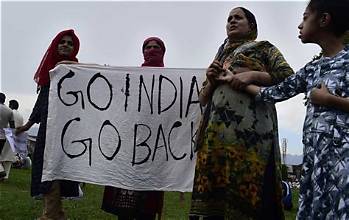
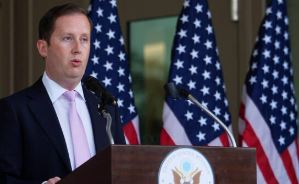
The description of Jammu and Kashmir as an “important part of India” by the United States Ambassador to India, Sergio Gor, during his visit to Srinagar on 19 August 2026 raises a question much larger than diplomatic phrasing. It brings into focus whether a contemporary representative of the United States can characterise the territory without regard to the extensive American role in constructing the United Nations framework under which its future status was to be determined.


Pakistan has protested the Ambassador’s formulation as inconsistent with the historically documented American position on Kashmir. The more fundamental difficulty, however, lies in the United States’ own diplomatic record. Washington was not a spectator in the Kashmir case. It was one of the principal actors involved in the Security Council’s consideration of the dispute and in the creation of machinery intended to enable the people of Jammu and Kashmir to determine their political future through a free and impartial plebiscite under United Nations auspices.
A new generation of American diplomats may not carry personal memory of the negotiations that shaped this framework. It nevertheless inherits the institutional responsibilities created by American diplomacy. A phrase spoken in Srinagar cannot rewrite that history, extinguish international undertakings or convert an unresolved political status into a final territorial settlement.
America was not a spectator
The United Nations process on Jammu and Kashmir was constructed precisely because the final disposition of the State remained to be determined. India and Pakistan participated in the development of this process, while the United States, the United Kingdom, Belgium, China, Syria and other members of the Security Council contributed at different stages to its design.
The American contribution was neither incidental nor rhetorical. One of its clearest expressions was the selection of the distinguished American naval commander Fleet Admiral Chester W. Nimitz as the United Nations Plebiscite Administrator for Jammu and Kashmir. That office was not ceremonial. It was created for the practical purpose of organising and conducting the agreed act of popular determination.
The circumstances surrounding the appointment were recalled with unusual candour at the 768th meeting of the UN Security Council on 15 February 1957, recorded as S/PV.768. The Colombian representative explained that his delegation had urged the selection of a neutral personality and had supported India’s suggestion that the President of the International Committee of the Red Cross undertake the role. Other delegations, he said, had instructions to press for a citizen of the United States.
The Colombian representative went further. Looking back on the failure to implement the settlement machinery, he suggested that if India’s proposal for the President of the International Committee of the Red Cross had been accepted, the plebiscite might already have taken place.
Whether or not one accepts that retrospective judgment, the intervention establishes an important point. The United States was so deeply involved in the architecture of the Kashmir settlement that even the nationality of the person charged with organising the plebiscite became a matter of international negotiation. Contemporary American diplomacy cannot credibly speak about the territorial status of Jammu and Kashmir as if that political and legal process had never existed.
Non-performance is not final settlement
The fact that the plebiscite was not held during Admiral Nimitz’s tenure does not mean that the political question it was intended to determine disappeared. Non-performance does not, by itself, transform an interim situation into a final disposition. Nor should the failure to implement an agreed mechanism be used to extinguish the right for which that mechanism was created.
The important questions are therefore not confined to whether the plebiscite took place. They include why it was not held, which undertakings survived its non-performance, who was responsible for the obstacles to implementation, and whether parties can benefit legally or politically from the failure to discharge obligations they had accepted.
These questions remain central to any serious examination of the Kashmir case. They cannot be answered by treating the passage of time as a substitute for law. International undertakings do not simply disappear because diplomacy has failed to secure their performance. The rights of a people cannot be reduced to the lifespan of a particular negotiator, official or administration.
At the same Security Council meeting of 15 February 1957, the United States maintained that the Council had a “positive duty” in relation to the Kashmir dispute. It argued that unless the parties agreed upon another solution, the solution recommended through the Security Council process should prevail. The United States also accepted that the Council should welcome another settlement agreed between the parties, provided that it remained consistent with the principles of the United Nations Charter.
That position was far more careful and legally sophisticated than an assertion that the territorial question had already been settled. It recognised both the Security Council’s responsibility and the possibility of an agreed alternative, without allowing unilateral terminology to replace a lawful process.
Accession was not treated as the end of the matter
The American historical record also demonstrates that the Instrument of Accession was not regarded as conclusively determining sovereignty over Jammu and Kashmir.
As early as 22 November 1947, British Prime Minister Clement Attlee proposed to the Prime Minister of Pakistan that private soundings might be taken from the President of the International Court of Justice on assembling international experts unconnected with India, Pakistan or the United Kingdom. Pakistan was then only months old and possessed nothing like its present institutional or international-law capacity.
More significantly for present purposes, the United States itself later considered an international judicial route. On 27 August 1951, the U.S. State Department’s Office of South Asian Affairs and Office of United Nations Political and Security Affairs prepared a secret policy paper entitled “Kashmir Dispute: Future Action”, now published in the official Foreign Relations of the United States historical series.
Paragraph 8 of that paper considered whether the Security Council might request an advisory opinion from the International Court of Justice concerning the legality of the Maharaja’s act of signing an Instrument of Accession to India. American officials were plainly not proceeding on the assumption that accession had conclusively and permanently settled sovereignty. They were contemplating scrutiny of its legality by the principal judicial organ of the United Nations.
The paper recognised both possible consequences. An opinion questioning the validity of the accession could remove one of India’s principal legal arguments; an opinion supporting India could weaken Pakistan’s case. The proposal remained tentative, in part because of this litigation risk and the delay that judicial proceedings could entail. Yet its significance is undiminished: the legality and effect of accession were regarded by American policymakers as open to judicial examination.
Whatever competing interpretations are advanced today, a central fact remains. India brought the Jammu and Kashmir question before the United Nations Security Council, and India and Pakistan subsequently participated in the construction of an international mechanism under which the future disposition of the State was to be decided through a UN-supervised vote. The resulting architecture cannot be wished away by contemporary diplomatic terminology.
Administration is not final disposition
Ambassador Gor’s statement must therefore be understood for what it is: a diplomatic statement made during a visit to territory administered by India. It is not an adjudication of title. It cannot amend a Security Council resolution, terminate undertakings accepted by the parties, abolish retrospectively the office and purpose of the UN Plebiscite Administrator, or substitute a diplomatic phrase for the process by which the people of Jammu and Kashmir were intended to express their political will.
The distinction between administration, claim, accession and final disposition is fundamental. Territory may be administered by a State while its ultimate status remains disputed. A claim may be asserted repeatedly without becoming an internationally adjudicated title. An instrument of accession may have legal consequences without necessarily resolving every question that the parties subsequently placed before an international organ. Above all, an unresolved right of self-determination cannot be extinguished by the vocabulary used during an official visit.
The historical record also includes the representations made by Kashmiri leadership before the United Nations. In his appearance before the Security Council on 5 February 1948, Sheikh Mohammad Abdullah sought to reassure the international community about the presence of Indian forces and the provisional character of the situation. The contemplated role of the United Nations Commission and the system of international supervision were therefore integral to the developing settlement machinery.
The later disappearance of effective international supervision is itself a jurisprudential issue requiring examination. Institutional neglect should not be mistaken for legal completion. If supervision has weakened, the correct response is to examine how and why the agreed safeguards were displaced—not to pretend that the issue they were designed to regulate has ceased to exist.
Washington should revisit its own archives
There is no objection in principle to an American Ambassador visiting Srinagar, meeting representatives, assessing conditions or encouraging contact. The concern is narrower and more fundamental: a representative of the United States should exercise particular care when characterising the status of Jammu and Kashmir because his country has an unusually substantial historical footprint in the construction of the UN Kashmir framework.
Ambassador Gor, the U.S. Embassy in New Delhi and the Department of State should revisit the proceedings of the United Nations Commission for India and Pakistan; the circumstances surrounding the selection of Admiral Nimitz; the Security Council record of 15 February 1957; the State Department paper “Kashmir Dispute: Future Action” of 27 August 1951; and the American contribution to the development of the plebiscite mechanism.
This history does not belong only to India and Pakistan. Above all, it concerns the people of Jammu and Kashmir, whose political status was the subject of the international process and whose rights cannot be reduced to a bilateral exchange of claims.
The question for Washington is straightforward. If the United States helped construct an international mechanism to determine the future status of Jammu and Kashmir, supported the appointment of an American as Plebiscite Administrator, participated in Security Council efforts to secure a free and impartial plebiscite, affirmed the Council’s positive duty, and contemplated an ICJ advisory opinion on the legality of the Maharaja’s accession, on what jurisprudential basis can its Ambassador now describe the territory awaiting that determination simply as an “important part of India”?
That question deserves an answer grounded in international law and the diplomatic record, not contemporary political convenience.
JKCHR will shortly publish The United Nations Template on Kashmir: A Country-by-Country Guide to the Construction of the UN-Supervised Plebiscite Framework. The study demonstrates that the UN framework was not an abstract aspiration. It was painstakingly negotiated and progressively constructed, and the United States occupies an important place in that history.
Ambassador Gor’s remarks should therefore become an opportunity for American diplomacy to revisit its own archives and rediscover the depth of its historic engagement with the rights, security, dignity and political future of the people of Jammu and Kashmir. A new generation of diplomats is entitled to bring fresh judgment to old disputes. It is not entitled to forget the obligations and institutional history it has inherited.
Dr Syed Nazir Gilani is President of the Jammu and Kashmir Council for Human Rights (JKCHR).