Thank You, Ambassador Gor—But Kashmir’s Beauty Should Not Eclipse Its History
Dr. Ghulam Nabi Fai
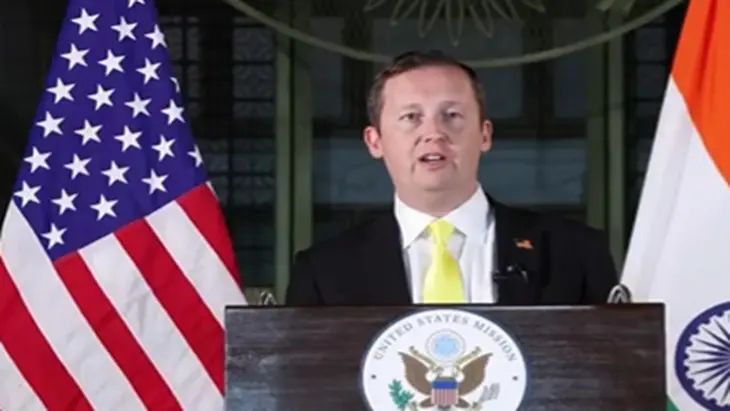
Let me begin by thanking U.S. Ambassador to India Sergio Gor for visiting Srinagar and for recognizing what generations of travelers, writers, diplomats and ordinary visitors have experienced: Kashmir is extraordinarily beautiful.
On August 19, 2026, during his first visit to Indian occupied Jammu and Kashmir, Ambassador Gor described the region as “an important part of India” and called it “an incredibly beautiful place.” His remarks came after his meeting with IOJK Chief Minister Omar Abdullah. He also indicated that Washington would review its travel advisory for the region.
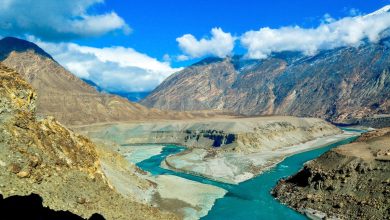
On the second point, there can be little disagreement. Kashmir’s valleys, lakes, mountains, forests and extraordinary landscapes have inspired descriptions of the region as a paradise on earth. Its natural beauty is not merely a matter of political interpretation. It is something visitors experience directly.
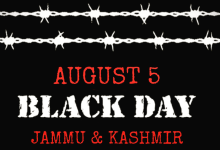
But precisely because Kashmir is so beautiful, its history deserves to be remembered with equal care.
Ambassador Gor is hardly the first distinguished American to be captivated by Kashmir. Adlai Stevenson visited Kashmir and met Sheikh Abdullah, grandfather of Omar Abdullah. Historical accounts record the impression the region made upon him.
Yet when American diplomats and statesmen addressed Kashmir officially, they generally understood that their words carried consequences far beyond the moment in which they were spoken. Kashmir was not simply a beautiful destination; it was, and remains, one of the most sensitive questions in South Asian diplomacy. That distinction matters.
In 1962, U.S. Ambassador Adlai Stevenson told the Security Council that the larger interests of South Asian peace and security required a settlement of Kashmir and that the issue could not be resolved unilaterally by either India or Pakistan. He emphasized agreement, compromise and consideration of the freely expressed will of the people concerned.
That was not a statement about scenery. It was diplomacy addressing a dispute whose consequences extended beyond the borders of the territory itself.
The historical record of American engagement with Kashmir is extensive.
When the Kashmir dispute reached the United Nations in 1948, the United States voted for Security Council Resolution 47, adopted on April 21, 1948. The resolution dealt with restoration of peace and order and contemplated a plebiscite concerning the future of Jammu and Kashmir.
The American position in the 1950s was also explicit. In a 1957 State Department record, Secretary of State John Foster Dulles reaffirmed that the United States regarded the prior United Nations decisions concerning a plebiscite as something that could not simply be disregarded unless the parties agreed upon another solution.
This history does not mean that American policy has remained frozen for nearly eight decades. It plainly has not. U.S. policy toward South Asia has evolved with changing circumstances, changing governments and changing strategic priorities.
But history remains relevant because diplomacy is built on precedents, records and carefully chosen language.
There is perhaps no better illustration than President George W. Bush. In February 2006, President Bush initially referred to a Kashmir settlement acceptable to “both sides.” He subsequently clarified his language and specifically stated that a solution should be acceptable to “all sides,” explaining that this meant India, Pakistan and the people living in Kashmir.
That was an important diplomatic lesson: when words create an ambiguity on an issue of extraordinary sensitivity, responsible diplomacy does not hide the ambiguity. It clarifies it.
This is why Ambassador Gor’s August 19 statement deserves thoughtful consideration rather than either celebration or condemnation.
Former Secretary of State Madeleine Albright also had a deeply personal connection to Kashmir through her father, Josef Korbel, who served as the Chairman of the United Nations Commission for India and Pakistan (UNCIP). Korbel’s work on Kashmir became an important part of his diplomatic and intellectual legacy.
Albright’s connection is a reminder of something larger: Kashmir has occupied a remarkable place in the history of American diplomacy, not merely as a picturesque Himalayan destination but as a question involving peace, security, international diplomacy and the political future of its people.
The same is true of the statements made over the years by successive American administrations.
President Donald Trump has repeatedly spoken about the Kashmir question and, at various points, offered U.S. assistance or mediation. He said on November 10, 2016, that if elected, he would be willing to play the mediator in addressing the “very, very hot tinderbox” of Kashmir between India and Pakistan. Then again, he said on July 22, 2019, that. “If I can help, I would love to be a mediator.” Then on May 10, 2025 “I will work with you both (India & Pakistan) to see if, after a ‘thousand years’, a solution can be arrived at concerning Kashmir.” Then on Jue 13, 2025 “I told them, India and Pakistan — they have a longtime rivalry over Kashmir — I said, I can solve anything,” he told reporters. “I’ll be your arbitrator.”
It is clear that diplomatic language matters. Different parties can hear the same words very differently. This is not an argument for America to take India’s side, Pakistan’s side or any other side. It is an argument for America to remember its own diplomatic vocabulary.
Kashmir can simultaneously be a place of extraordinary natural beauty and a territory at the center of a longstanding political dispute. Recognizing one reality does not require denying the other.
It simply recognizes the historical record. The United Nations record cannot be wished away. Resolution 47 exists. The subsequent UN resolutions and UNCIP documents exist. The statements of American presidents, secretaries of state, ambassadors and military leaders exist. They are part of the diplomatic archive.
And I believe that archives of both UN and US diplomatic engagement matter. They matter because today’s diplomats inherit yesterday’s commitments, arguments and lessons. They matter because language used in a disputed region can have consequences far beyond the speaker’s immediate intention.
Ambassador Gor therefore deserves thanks for coming to Kashmir and for appreciating its beauty. But perhaps Kashmir itself offers him—and all of us—a useful diplomatic lesson. Its mountains are permanent; political formulations are not. Its rivers cross boundaries; human aspirations do not always fit neatly within them. Its beauty belongs to everyone who sees it; its political future remains a question that diplomacy has wrestled with for generations.
The appropriate response, therefore, is neither to magnify one sentence nor to dismiss it. It is to use the moment as an opportunity to revisit the historical record and ask what lessons it contains for the future.
As Dr. Syed Nazir Gilani, an eminent jurist has suggested, Ambassador Gor’s remarks can become an opportunity rather than an obstacle: an opportunity for Washington to revisit its own diplomatic archives and reconsider the depth of its historic engagement with the rights, security, dignity and political future of the people of Jammu and Kashmir.
That would be constructive diplomacy.
The senior officials of the U.S. Department of State need not choose between appreciating Kashmir’s beauty and remembering Kashmir’s history. They can do both.
And perhaps that is the most diplomatic way forward: to strengthen U.S.-India relations, encourage peace between India and Pakistan, respect the sensitivities of all parties, and ensure that the people of Kashmir are not forgotten in conversations about the land they call home.
So, thank you, Ambassador Gor, for visiting Kashmir. Thank you for seeing its beauty. And now, as an American diplomat standing in a place where every word carries historical weight, I respectfully invite you to look once more—not only at Kashmir’s magnificent mountains and valleys, but also at the diplomatic record that has surrounded them for nearly eight decades.
The beauty of Kashmir deserves to be celebrated. Its history deserves to be remembered. And its future deserves thoughtful, peaceful and responsible diplomacy.
Dr. Ghulam Nabi Fai is Chairman of the US-based World Forum for Peace & Justice. He can be reached at [email protected]