Reckless development threatening IIOJK’s fragile Himalayan ecology: Mirwaiz
Calls for balance between development and ecological preservation
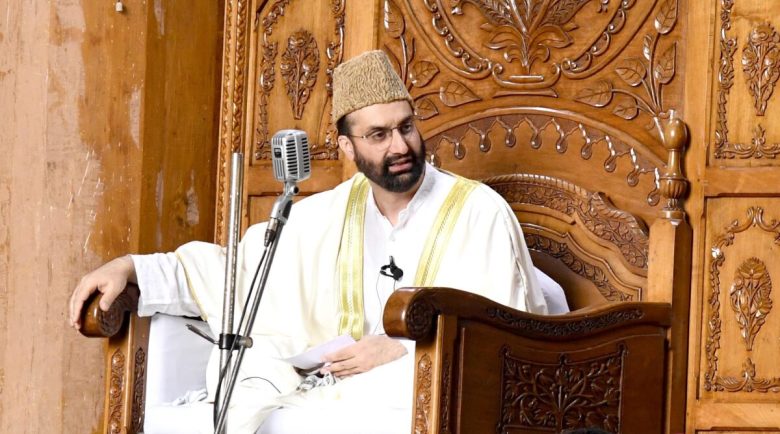
Srinagar : Senior All Parties Hurriyat Conference (APHC) leader Mirwaiz Umar Farooq has expressed grave concern over the reckless exploitation of the natural environment in Indian illegally occupied Jammu and Kashmir (IIOJK) in the name of development, warning that indiscriminate cutting of mountains and forests could have devastating consequences for the fragile Himalayan region.
According to Kashmir Media Service, addressing the Friday congregational gathering at the historic Jamia Masjid in Srinagar, Mirwaiz said mountains and forests in IIOJK were being indiscriminately cut for roads, tunnels and other construction projects without adequate regard for environmental consequences.
“If this continues without proper scientific and environmental safeguards, we are creating conditions for far greater disasters in the future,” he warned. “Climate change is undoubtedly a major factor, but we must also ask whether our own pattern of development is making the situation more dangerous,” he said.


Mirwaiz said that gifted with the natural beauty of mountains, lakes and rivers, Kashmir attracts tourists and travellers and is a source of sustenance to a large population in the territory. “But the manner in which we are recklessly exploiting this ecology for commerce and in the name of development is very worrying,” he said.
He also highlighted the continued encroachment of wetlands, lakes and flood channels. Referring to Dal Lake, he said its deteriorating condition was a stark example of the consequences of prolonged encroachment, construction and environmental neglect. “It is shrinking day by day while we look the other way as if it’s no concern of ours,” he said.
Calling environmental protection a collective responsibility, Mirwaiz said authorities, planners, businesses and citizens must recognize the risks associated with unregulated infrastructure and tourism projects in a fragile Himalayan ecosystem. “We have to strike a balance between ecology preservation and human intervention in the name of progress,” he said.
Expressing deep sorrow over the destruction and loss of life caused by floods in Nepal, Mirwaiz conveyed heartfelt solidarity with the affected people and prayed for those who had lost their lives, the safety and early recovery of those still missing, and relief and strength for all those affected. He said the devastation in Nepal and elsewhere across the Himalayan region should serve as a warning to people living in other vulnerable mountain areas. “The tragedy in Nepal must be seen as a warning close to home. We too live in the Himalayas. If we continue to disturb the natural balance of our mountains, forests, wetlands and waterways, the consequences may one day be irreversible,” Mirwaiz cautioned.
Mirwaiz stressed that environmental protection today was not merely about conserving natural resources but also about protecting human lives, homes and the future of coming generations.