Kashmir Under Securitisation: The BJP’s Political Assault on IIOJK
 Jawad Khan
 Seven years have passed since 5 August 2019, when the Indian government revoked Jammu and Kashmir’s special constitutional status and reorganised the former state into two Union Territories. Yet the central political question of Kashmir, an internationally disputed territory, remains unresolved. The region has experienced profound institutional change, but questions of political rights, political agency and a durable settlement remain. The real question, therefore, is not simply what changed in 2019, but whether the changes brought Kashmir closer to peace.
The BJP’s approach to Indian illegally occupied Jammu and Kashmir (IIOJK) did not emerge without warning. Its 2019 election manifesto explicitly reiterated its commitment to abrogating Article 370 and annulling Article 35A. The subsequent constitutional transformation was therefore consistent with a longstanding political programme. The problem, however, is not only constitutional change. It is the increasingly security-centred way a deeply political dispute has been addressed.
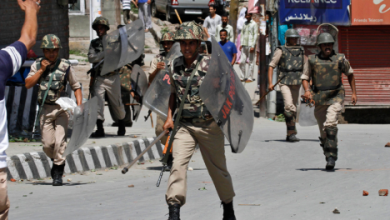
IIOJK has long been securitised through the language of terrorism, separatism, national security and territorial integrity. Recent academic research identifies a cycle in which political issues and social relationships in IIOJK were progressively framed as security threats, contributing to alienation and eventually culminating in the 2019 revocation of autonomy. When political disagreement is increasingly treated through a security lens, political engagement risks being displaced by security management. A government may control a conflict through force and restrictions, but control is not the same as conflict resolution.
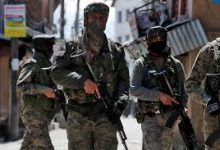
The consequences for political and civil liberties remain deeply concerning. Human-rights organisations documented serious restrictions following the 2019 changes, while more recent assessments continue to identify significant constraints on political rights and civil liberties. Freedom House’s 2026 assessment rates IIOJK as “Partly Free”, scoring it 38 out of 100, and notes continuing restrictions alongside limited political participation. These conditions raise a fundamental question: what does political stability mean if the people most affected by the conflict cannot exercise meaningful political agency?
Kashmir cannot be reduced to a territorial contest between India and Pakistan. Kashmiris are also stakeholders whose political voices must matter. Elections, administration, and development may be important, but they do not, by themselves, settle the wider political dispute or remove questions surrounding representation and rights. A lasting peace cannot be produced simply by silencing political disagreement or treating every demand through the language of security.
Nor can the international and bilateral dimensions of Kashmir be ignored. United Nations Security Council Resolution 47, adopted on 21 April 1948, addressed the restoration of peace and order and a proposed plebiscite in Kashmir. The 1972 Simla Agreement, meanwhile, committed India and Pakistan to peaceful means and required both sides to respect the Line of Control without unilateral alteration, while envisaging a future settlement of Kashmir. These frameworks remain part of the history against which the continuing dispute must be understood.
The consequences extend beyond Kashmir. India and Pakistan remain nuclear-armed states, and the risks of confrontation are therefore regional as well as bilateral. SIPRI’s 2026 assessment notes that both countries continued to modernise their nuclear forces and that the 2025 India-Pakistan conflict challenged assumptions about nuclear deterrence. Continued securitisation and confrontation are therefore not merely obstacles to Kashmiri peace; they also risk destabilising South Asia.
India and Pakistan need a different approach: responsible rhetoric, sustained political dialogue, crisis-management mechanisms and meaningful confidence-building measures. Such CBMs should not only build confidence between governments; they should also improve human contact, mobility and security for Kashmiris.
Seven years after 2019, IIOJK needs more than security management. It needs political space, dialogue and a peace process in which the people living through the conflict are not treated as spectators. Force may contain a political conflict, but it cannot by itself resolve its political roots.
The writer is a Research Assistant at the Kashmir Institute of International Relations (KIIR).