Humayun Aziz Sandeela
There is something deeply disturbing about watching a mosque disappear beneath a bulldozer. To an official record, it may be a structure standing on disputed land. To those who prayed there, it can mean something entirely different: the place where a child learnt his first verses of the Quran, where neighbours met every Friday, where families gathered on Eid and where generations came to mourn their dead. The same is true of a dargah, madrasa or graveyard. Such places acquire meaning over time. Their importance cannot always be captured in ownership papers, revenue records or municipal maps. They become part of the memory of a community. That is why India’s growing controversy over Waqf property and the demolition of Muslim religious sites deserves to be viewed as more than a dispute over land.
Indian government generally describe the demolitions as anti-encroachment operations. Their argument is straightforward: structures built illegally or on government, forest, railway or other public land cannot be allowed to remain simply because they are religious.
There is a legitimate principle here. A place of worship cannot place its occupants above the law. But that is not where the argument should end.

The harder question is whether the law is being enforced consistently and with adequate safeguards. When a disproportionately large number of structures belong to one religious minority, it is reasonable to ask whether enforcement is genuinely neutral or whether some communities are carrying a heavier burden.
The controversy has intensified since the passage of the Waqf (Amendment) Act, 2025. According to official figures, India has more than 872,000 immovable Waqf properties covering about 3.82 million acres. They include mosques and graveyards, but also schools, madrasas, dargahs and charitable properties.
Waqf, therefore, is not simply an administrative category for land. For millions of Muslims, it is connected with worship, education, charity and community life.
The amended law introduced stricter registration and verification requirements, changed the role of government officials in certain disputes and altered the legal position of “Waqf by user”. The Bharatiya Janata Party-led Indian government says the changes are intended to improve ‘transparency’ and ‘accountability’.
The political opposition sees the legislation differently.
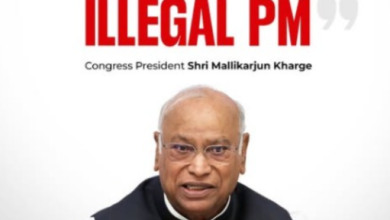
Congress leader Rahul Gandhi described it as a “weapon aimed at marginalising Muslims and usurping their personal laws and property rights”. Congress president Mallikarjun Kharge said it was “not for any reform, but for control”.
Samajwadi Party chief Akhilesh Yadav questioned the proposed inclusion of non-Muslims on Waqf boards, while RJD leader Manoj Jha said the legislation could provide “a legal cover for bulldozers”.
That phrase has particular resonance because the bulldozer has itself become a powerful symbol in India’s political vocabulary.
Across several BJP-ruled states and territories, reports have emerged of demolitions involving mosques, mazars, dargahs, madrasas, Eidgahs and Muslim graveyards. One compilation puts the reported number at 861 sites: 57 mosques, 563 mazars, six dargahs, 226 madrasas, six Eidgahs, one graveyard and two minarets.
The individual cases are difficult to ignore.
Delhi’s Akhoondji Masjid in Mehrauli, believed to be 600 to 700 years old, was demolished in January 2024. In Varanasi, the Ajgaib Shaheed Mosque was demolished in June 2026, while a demolition notice was issued against the older Ganj Shaheeda Mosque. Four mosque demolitions were reported in Barmer in June, while three were reported in Ujjain.
The latest and particularly contentious case is the Saharanpur Collectorate Mosque, reportedly between 100 and 150 years old, with a power-bill reference dating back to 1911. The mosque was demolished at around 5am on September 5, 2026, following a High Court decision.
Uttarakhand has seen extensive anti-encroachment operations involving mazars, with different compilations putting the number of reported demolitions between 538 and 572 from 2023 to 2026. Assam has also witnessed extensive action, with one compilation reporting 48 mosque demolitions between 2023 and July 2025.
The authorities maintain that these structures occupied public, forest, railway or other government land without lawful authorisation.
That explanation cannot simply be dismissed. If a structure is illegally occupying public land, the state has the right to enforce the law.
But enforcement is not only about the final decision. It is also about the process that leads to it.
Were adequate notices served? Were old revenue and property records properly examined? Were claims of ownership or historical use heard? Did those affected have a genuine opportunity to challenge the decision before the demolition machinery arrived?
These questions matter because demolition is different from most administrative remedies. Once a building has been reduced to rubble, a successful appeal cannot restore what has been destroyed.
A mosque can be rebuilt. But the old mosque, with its particular history, familiar walls and memories accumulated over decades or centuries, cannot simply be recreated.
Indian Supreme Court’s intervention in the wider Waqf litigation has also highlighted the importance of procedural safeguards in disputes over such properties.
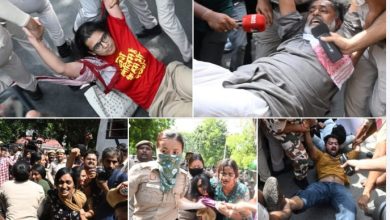
The political reaction to individual demolitions has been sharp. After the Saharanpur demolition, BSP leader Mayawati criticised what she described as the hasty declaration of mosques as illegal. Congress MP Imran Masood called it a “black day” for Saharanpur and an attack on the Constitution. SP MP Iqra Hasan said she was placed under house arrest while attempting to travel to the area.
Some may disagree with these politicians, but their reactions point to an anxiety that extends beyond individual buildings.
The concern is about accumulation.
A single demolition may be explained as an encroachment case. Several hundred can still be presented as separate administrative actions. But when such actions repeatedly affect the religious and community spaces of the same minority, their cumulative impact becomes a legitimate subject of public debate.
India is home to more than 200 million Muslims, who constitute about 14.2 per cent of the population. Yet only 24 Muslims were elected to the 543-member Lok Sabha in 2024. Muslim labour-force participation has also remained below that of Hindus.
These figures do not, by themselves, establish discrimination in the demolition of religious sites. Nor do they prove a centrally coordinated campaign against Muslim institutions. Claims of that magnitude require evidence of intent and coordination.
But democracies should not wait until damage becomes irreversible before minority concerns are taken seriously. This is ultimately a test of India’s constitutional promise.
India presents itself as a pluralistic democracy in which citizens of different faiths enjoy equal rights. That promise is tested not when the majority’s institutions are secure, but when the property, religious sites and historical claims of a minority come into conflict with state power.
The question is not whether every mosque, madrasa, dargah or mazar that has been demolished was legally entitled to remain. Some may not have been.
The question is whether the same standards are being applied to everyone; whether due process is more than a formality; and whether the state should destroy a contested religious site before those claiming an interest in it have had a meaningful chance to be heard.
A mosque begins as a building, bricks, stone, timber and plaster assembled for worship. Then time does something no architect can plan.
People pray there. Children grow up there. Weddings are announced, funerals are mourned, friendships are formed and generations pass through its doors. Eventually, the building becomes part of a community’s identity. That is why a bulldozer does not always destroy only walls. Sometimes, it destroys a piece of memory.