US House passes Russia sanctions bill, raising alarm for India
Bill gives US president authority to impose up to 100% tariffs on countries buying Russian oil
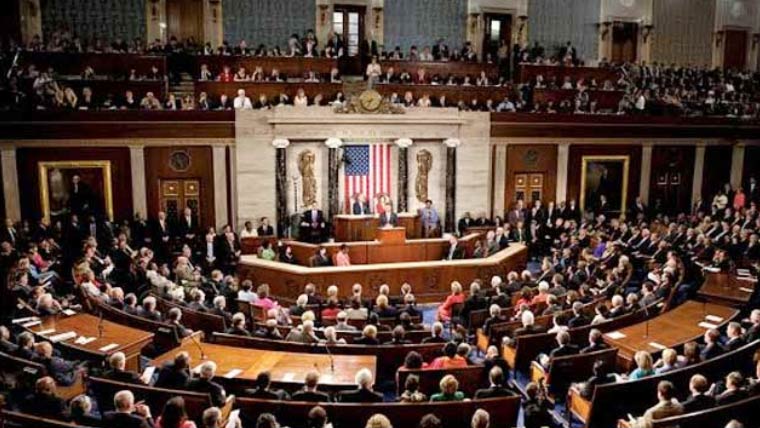 Washington: The US House of Representatives has passed a sanctions and tariff bill targeting Russia, raising concerns for India over the potential impact of its continued purchases of Russian energy.
According to Kashmir Media Service, the legislation gives President Donald Trump authority to impose additional tariffs of up to 100 per cent on countries purchasing Russian oil and gas. It also provides for further sanctions targeting Russian officials, financial institutions, the energy sector and the network of oil tankers used to circumvent sanctions.
India and China, among the major buyers of Russian energy, could therefore come within the scope of the tariff provisions. However, the bill does not itself impose a 100 per cent tariff, rather, it gives the US president discretionary authority to impose tariffs of up to that level.
The legislation also provides for additional sanctions targeting Iranian entities involved in defence cooperation with Russia.

The bill, officially titled the Lindsey O. Graham Sanctioning Russia and Iran Act of 2026, was passed by the House by 262 votes to 159. It has now been sent to the White House for President Trump’s signature.
The legislation provides the Trump administration with a new legal mechanism to impose tariffs on India, China and other countries in an effort to reduce their dependence on Russian oil and gas. Following the House vote, Democratic Senator Richard Blumenthal, addressing to China and India, said, “You’d be better off buying your oil and gas somewhere else.”
For India, the legislation creates a potential route for Washington to impose tariffs of up to 100 per cent on Indian imports in response to New Delhi’s continued purchases of Russian energy. The actual tariff rate, product coverage and implementation would depend on any action subsequently taken by the US administration.
The US Senate had earlier approved the legislation by an 86-11 vote on August 7. Its progress in the House subsequently slowed amid disagreements over the tariff provisions and the extent of presidential authority.
With House approval now complete, the legislation awaits President Trump’s signature. If enacted, it would expand the administration’s sanctions and tariff powers and increase economic pressure on Russia and countries that continue to purchase Russian energy.