Maharashtra: 3.75 million voters left out of draft rolls in Muslim-heavy seats
SIR exercise records high ‘uncollectable’ rates in 38 Assembly constituencies
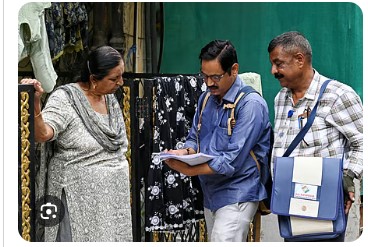 Mumbai: A large number of voters have been left out of Maharashtra’s draft electoral rolls following the Special Intensive Revision (SIR) exercise, , with particularly high numbers reported in 38 Assembly constituencies where Muslims account for more than 20 per cent of the population.
According to Kashmir Media Service, an analysis by The Indian Express found that nearly 3.75 million voters across 38 Assembly constituencies were classified as ‘uncollectable’ — meaning voters whose enumeration forms could not be collected and their names were therefore not carried forward to the draft rolls.
The analysis found that 77.49 per cent of enumeration forms had been collected across these constituencies, compared with 21.14 per cent across Maharashtra as a whole.
The figures have drawn particular attention because several of the affected constituencies are among the most densely populated parts of Mumbai and the Mumbai Metropolitan Region (MMR).

The analysis showed particularly high proportions of voters classified as ‘uncollectable’ in several Assembly constituencies. In Bhiwandi East, the proportion was at 10.49 per cent, while it stood at 72.44 per cent in Bhiwandi West. In Mumbra-Kalwa, 91.42 per cent of voters were classified as ‘uncollectable’, while the figure was 31.42 per cent in Mankhurd Shivaji Nagar. Mumbai’s Chandivali Assembly constituency recorded a rate of 44.41 per cent, while Sion Koliwada and Pune Cantonment also recorded rates of around 40 per cent.
The figures point to a substantial impact on the draft electoral rolls in some of the state’s most densely populated urban constituencies.
The large-scale classification of voters as ‘uncollectable’ in several densely populated constituencies, particularly in Mumbai and the MMR, is likely to become a significant political issue during the claims and objection process.
The key question now is how many names will be restored after claims, objections and verification are completed and the final electoral rolls are published.
Notably, the Election Commission of India began the Special Intensive Revision (SIR) exercise in phases, describing it as a process aimed at updating electoral rolls and identifying duplicate, deceased and otherwise ineligible entries. The exercise has sparked controversy in several states, with large numbers of voters left out of draft rolls. In West Bengal, the process became a major political issue, with millions of names reportedly left out of the draft rolls and opposition parties and civil society groups raising concerns over its potential impact on marginalised communities, including Muslims. The Bharatiya Janata Party (BJP) won the May 2026 West Bengal Assembly elections, ending 15 years of rule by Mamata Banerjee’s All India Trinamool Congress (TMC). Some experts and critics have said that Muslims were disproportionately affected by the voter deletions and argued that the exercise could have influenced the electoral landscape, particularly in constituencies with large Muslim populations.