Rivers as Sacrifice Zones: The Case for Strategic Environmental Assessment in IIOJK
Muhammad Waleed Akhtar
 “Who owns this land? Who owns its rivers? Its forests? Its fish?” Arundhati Roy, “The Greater Common Good” (1999)
In the Chenab and Jhelum river basins of Indian illegally occupied Jammu and Kashmir, a different kind of dispossession is underway. It does not arrive through demolition orders or detention warrants. It arrives through tunnel-boring machines, muck disposal sites, and diverted river channels. India’s aggressive hydropower expansion across the Western Rivers of the Indus system has produced ecological consequences that individual project approvals were never designed to capture and that the existing international framework has proven structurally unable to address. The result is a territory whose rivers, forests and communities bear the accumulated cost of an energy strategy decided in New Delhi, for consumers far from the valleys being sacrificed to serve them.
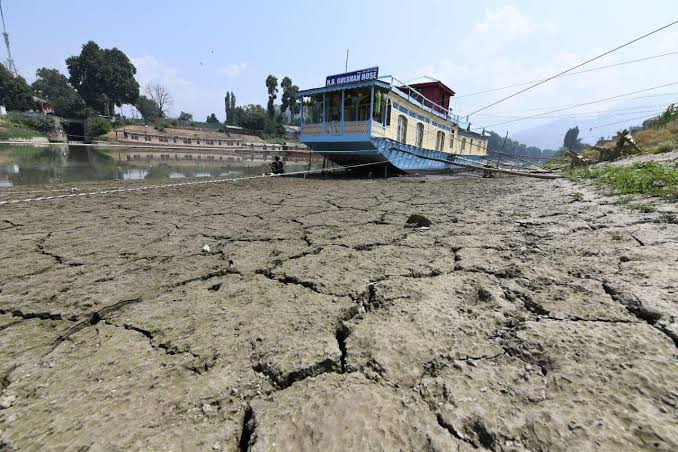
The scale of the problem is not hypothetical. The Chenab basin alone hosts dozens of hydropower projects at various stages of completion, construction and planning, including Kishanganga, Ratle, Pakal Dul, Dulhasti Stage-II and Sawalkote, with combined capacity exceeding 13,000 megawatts across the western rivers system. Each project undergoes individual environmental clearance. None is evaluated against the cumulative toll of all the others. Small hydropower projects below 25 megawatts are frequently exempt from full Environmental Impact Assessment altogether under Indian regulatory practice. The consequence is a cascade of individually approved projects producing collectively irreversible damage: river fragmentation across entire stretches, blocked sediment transport, disrupted aquatic habitats, elevated suspended solids from construction muck that render water unsafe for drinking and washing as documented around the Kishanganga site, increased seismic and Glacial Lake Outburst Flood risk in an already earthquake-prone Himalayan zone, and the displacement of communities whose agricultural land, fishing grounds and water sources disappear beneath project footprints.

Indian authorities maintain that these projects comply with the technical requirements of the Indus Waters Treaty of 1960 and that the dispute resolution mechanisms embedded in that treaty, including Neutral Expert rulings and Court of Arbitration decisions, provide adequate international oversight. The Baglihar ruling of 2007 and subsequent proceedings on Kishanganga and Ratle have addressed questions of pondage, spillway design and minimum downstream flows. These rulings have kept the treaty functional and have secured some baseline flow protections. What they have not done, and what their narrow technical mandate structurally prevents them from doing, is evaluate whether the cumulative scale of hydropower development on Western Rivers is ecologically sustainable for the territory and population bearing its consequences. A Neutral Expert can rule on whether a spillway meets Annexure D specifications. No mechanism in the existing framework requires anyone to ask whether the combined effect of seventy projects on a single river basin is compatible with the survival of that basin’s ecosystems.
This gap is not accidental. It is the predictable outcome of a regulatory architecture that evaluates development project by project while treating cumulative impact as nobody’s specific responsibility. In international environmental governance, the standard remedy for this failure is Strategic Environmental Assessment. Unlike project-level EIA, SEA evaluates the environmental consequences of entire policies, plans and programmes before individual projects are approved. The UNECE Kiev Protocol of 2003 and the EU SEA Directive of 2001 both mandate SEA for energy sector planning, requiring baseline analysis across entire river basins, scenario modelling of alternatives including lower-impact renewable options, and mandatory consultation with affected communities at a stage when outcomes can still be meaningfully influenced. The World Bank’s own performance standards recommend SEA for sector-wide hydropower portfolios. India applies none of these frameworks to its hydropower push in Indian-Occupied Kashmir.
Implementing SEA for the Chenab and Jhelum basins would change the nature of the conversation. It would require a genuine comparison between the current high-dam trajectory and alternatives including expanded solar and wind capacity, efficiency improvements to existing infrastructure, and designation of ecologically sensitive no-go zones where project development should not proceed regardless of treaty-permitted technical feasibility. It would require that Kashmiri communities, including women and marginalized groups whose livelihoods depend most directly on river health, participate in decisions that currently happen above them. It would require the World Bank, as the treaty’s facilitating institution, to condition its mediation role on adoption of environmental standards that reflect six decades of progress in international environmental governance since 1960.
The environmental racism framing is analytically precise here, not rhetorical. A politically constrained population in a disputed territory bears disproportionate ecological cost for energy that powers mainland India’s grid, under a regulatory system that provides no mechanism for that population’s cumulative burden to be assessed, weighed or limited. Power, in both senses of the word, flows in one direction.
Kashmir’s rivers are not infrastructure inputs. They are living systems that sustain agriculture, fisheries, culture and identity across generations. Treating them as sacrifice zones for national energy targets, without the strategic oversight that international environmental standards require, is a failure of governance that compounds the political dispossession the territory has already experienced. Mandatory Strategic Environmental Assessment is not a technical preference. It is the minimum condition for approaching what is being done to Kashmir’s rivers honestly.
The author is a graduate in International Relations from the International Islamic University, Islamabad and is currently serving as a researcher at the Kashmir Institute of International Relations, Islamabad.