In the shifting theatre of South Asian politics, certain moments transcend military calculations and enter the realm of historical symbolism. Marka-e-Haq was one such moment. Beyond the rhetoric of victory and strategic signalling, it reopened a question the world has repeatedly attempted to sideline: Kashmir remains the unfinished dispute of the subcontinent, and its continued neglect threatens not merely regional stability but the conscience of the international order itself.
For years, global attention towards Kashmir has oscillated between indifference and diplomatic caution. International powers have preferred to frame tensions between Pakistan and India through the narrow lens of counterterrorism, trade, or geopolitical alignment. Yet Marka-e-Haq disrupted that carefully maintained silence. It forced Kashmir back into international discourse not as a peripheral irritant, but as the central fault line between two nuclear-armed neighbours.
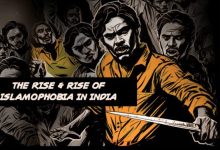
The timing of the operation was significant. It followed the Pahalgam incident, after which the Indian state responded not with transparency or impartial inquiry, but with a sweeping campaign across Indian-occupied Jammu and Kashmir. Reports emerging from the valley spoke of mass detentions, midnight raids, intimidation of families, and the demolition of civilian homes. Entire communities once again found themselves living under the shadow of collective punishment. The pattern was painfully familiar to Kashmiris, who have endured decades of militarisation, surveillance, and political disenfranchisement.
What made the aftermath particularly alarming was not only the severity of the crackdown, but the relative silence that greeted it internationally. In many parts of the world, the destruction of civilian property without due process or the detention of large numbers of people absent transparent legal safeguards would provoke sustained scrutiny. In Kashmir, however, such actions are too often absorbed into the normalised vocabulary of “security operations”. This normalisation is perhaps one of the gravest tragedies of the conflict.
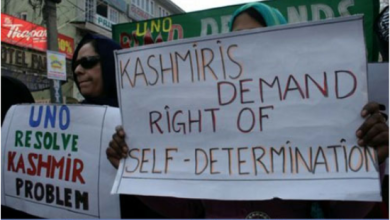
Marka-e-Haq therefore resonated far beyond strategic circles because it challenged the illusion that Kashmir can simply be managed indefinitely through force. The operation revived an uncomfortable truth for the international community: peace in South Asia cannot be achieved by suppressing the dispute or reducing it to a bilateral irritant. The conflict is rooted in history, identity, political aspiration, and the unfulfilled promises surrounding the right of self-determination.
For ordinary Kashmiris, the renewed attention carried emotional significance. In recent years, many in Kashmir have felt abandoned by the world. Following the revocation of the special constitutional status of Indian illegally occupied Jammu and Kashmir in 2019, the region witnessed prolonged communications blackouts, political detentions, and intensified restrictions on civic life. Yet international responses largely remained cautious and muted. Against that backdrop, Marka-e-Haq was perceived by many not merely as a geopolitical development, but as evidence that Kashmir had not disappeared from regional consciousness.
This psychological dimension should not be underestimated. Freedom movements are sustained not only by political leadership or diplomatic advocacy, but by collective memory and moral endurance. When people living under prolonged conflict believe their suffering has been forgotten, despair deepens. Conversely, when their cause re-enters global conversation, even symbolically, it revives a sense of visibility and dignity. Marka-e-Haq appeared to rekindle precisely that sentiment among the Kashmiri population.
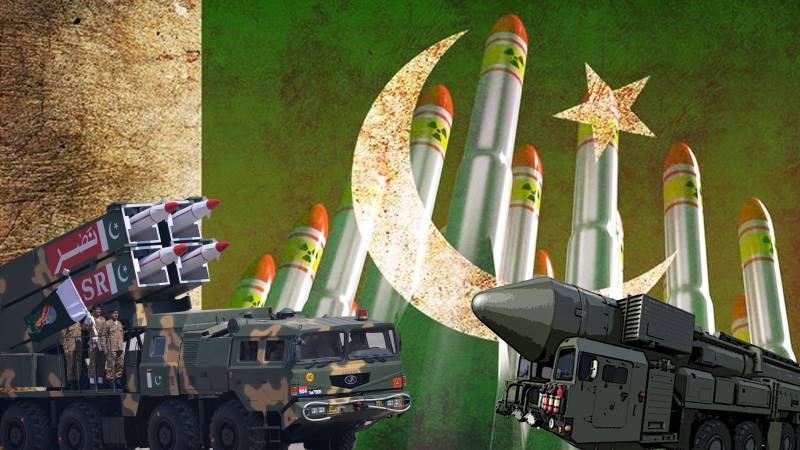
At the same time, the episode exposed the dangerous fragility of South Asian stability. India and Pakistan are not conventional rivals separated by manageable strategic buffers. They are nuclear powers with a long history of wars, border skirmishes, and political hostility. Every escalation carries risks that extend far beyond territorial confrontation. The world cannot afford to view Kashmir as a frozen dispute whose volatility can be contained indefinitely.
The international community’s habitual approach, urging “restraint on both sides” while avoiding substantive engagement with the underlying conflict, has repeatedly failed. Temporary de-escalation may prevent immediate crises, but it does not resolve the conditions that produce them. In fact, prolonged diplomatic avoidance arguably increases the danger by allowing resentment, militarisation, and mistrust to accumulate beneath the surface.
Equally important is the recognition that Kashmir is not solely a territorial issue between states; it is fundamentally a human issue. Behind every headline are families fractured by decades of violence, young people raised amidst checkpoints and uncertainty, and communities trapped between competing national narratives. A sustainable peace cannot emerge from military superiority alone. It requires political courage, acknowledgement of grievances, and meaningful engagement with the aspirations of the Kashmiri people themselves.
For Pakistan, Marka-e-Haq also reinforced another long-standing national belief: that a strong, stable, and united Pakistan remains essential to sustaining diplomatic and moral support for Kashmir. Internal political instability, economic weakness, and institutional fragmentation inevitably diminish Pakistan’s ability to advocate effectively on international platforms. Conversely, national cohesion strengthens both credibility and influence.
Yet this lesson should not be interpreted narrowly through militaristic terms. The true strength of a state in the modern world lies not merely in military capability, but in democratic resilience, economic progress, institutional integrity, and social unity.
There is, ultimately, a deeper warning embedded within the resurgence of the Kashmir question after Marka-e-Haq. Conflicts ignored do not disappear; they evolve. Suppressed political disputes often return in more dangerous forms precisely because avenues for dialogue and redress remain closed. The international community’s selective engagement with human rights and self-determination issues weakens the moral consistency upon which global diplomacy claims to rest.
Kashmir today stands once again at the intersection of memory, resistance, and geopolitical anxiety. The valley remains beautiful in landscape yet burdened by grief. Its people continue to live amidst uncertainty while global powers calculate interests and strategic partnerships. But history repeatedly demonstrates that unresolved injustices rarely remain contained forever.
Marka-e-Haq did not create the Kashmir dispute, nor will any single operation resolve it. What it undeniably did, however, was force the region and indeed the world to confront a reality too often obscured by diplomatic convenience: Kashmir remains the core dispute between Pakistan and India, and until it is addressed through a just and peaceful, and internationally recognized process in accordance with United Nations resolutions, South Asia will continue to live under the shadow of recurring confrontation and the ever-present risk of catastrophe.