International Day of Non-Violence: Indian BJP govt’s war crimes in IIOJK
Decades of killings, arbitrary detentions and human rights abuses mark Kashmiris’ plight
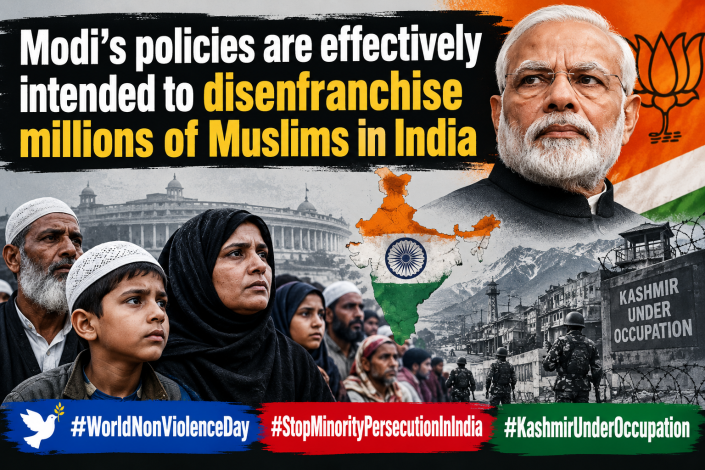
Islamabad : As the International Day of Non-Violence is being observed across the globe today, the Indian Bharatiya Janata Party (BJP) government, led by Narendra Modi and Home Minister Amit Shah, continues to face accusations of grave human rights violations in Indian illegally occupied Jammu and Kashmir (IIOJK) and widespread discrimination and violence against minorities across India.
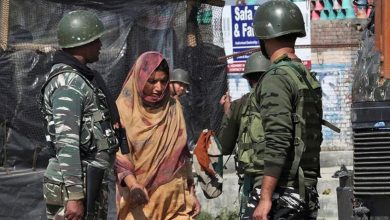
A report released by Kashmir Media Service today said the International Day of Non-Violence holds little meaning for the people of occupied Jammu and Kashmir, who have faced political injustice, violence and human rights violations under Indian occupation for decades. It said Kashmiris have been subjected to killings, restrictions, harassment, arbitrary arrests and other coercive measures, particularly under draconian laws.

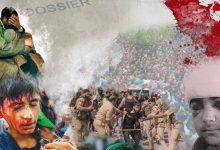
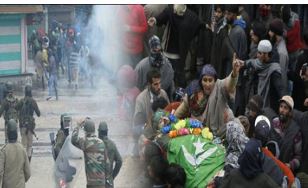
The report said 96,507 Kashmiris, including men, women and children, have been killed by Indian forces in IIOJK since January 1989. It said extrajudicial killings, deaths in custody and fake encounters, excessive use of force and other forms of violence have caused immense suffering among the Kashmiri people in the internationally recognized disputed territory.
The report highlighted the stark contrast between India’s observance of Mahatma Gandhi’s birthday and the violence and discrimination faced by Kashmiris and minority communities in India. It questions how the principles associated with Gandhi’s philosophy of non-violence could be reconciled with decades of restrictions, arrests and killings in IIOJK.
The report further said Muslims and other minority communities, including Dalits, Adivasis, Sikhs and Christians, have faced discrimination, prejudice and violence in different parts of India. It said concerns over the treatment of minorities have particularly intensified under successive BJP governments since 2014.
The report said the BJP government’s policies, which it linked to the broader Hindutva political agenda associated with the RSS, have contributed to an increasingly restrictive environment for Kashmiris and other minorities in India. It said the authorities were using so-called security measures and administrative policies to suppress Kashmiris’ political voice, undermine their distinct identity and weaken their attachment to their homeland.
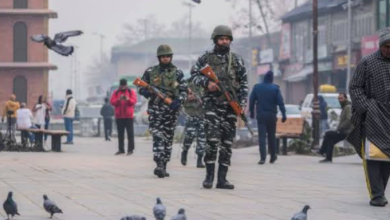
The report said the continued deployment of Indian military and paramilitary personnel, restrictions on political activity, arrests of political leaders and activists, and the use of black laws like Armed Forces Special Powers Act (AFSPA), Public Safety Act (PSA) and Unlawful Activities (Prevention) Act (UAPA) have further deepened the climate of fear and repression in IIOJK.
The report urged the international community, human rights organisations and the United Nations to take notice of human rights violations and political injustices faced by the people of the occupied territory and press India to respect international human rights and humanitarian standards.
The report further said India’s military-oriented approach to the Kashmir dispute and continued reliance of the use of force could not resolve the long-pending political dispute. It maintained that a peaceful political process addressing the aspirations and rights of the Kashmiri people was necessary for a durable resolution.
Referring to the actions of August 5, 2019, the report said that the Indian BJP government’s decision to revoke occupied Jammu and Kashmir’s special constitutional status and divide the territory into two Union Territories was followed by extensive restrictions and a massive deployment of Indian forces across IIOJK.
The report measures imposed after August 2019 further curtailed political activity, freedom of expression and public assembly in the territory.
It said these developments highlighted the contradiction between India’s public invocation of non-violence and its military policies in IIOJK.
The report called upon India to end its coercive policies, release political prisoners and restore fundamental freedoms in the occupied territory.
It said that the observance of the International Day of Non-Violence should serve as an opportunity to reaffirm the principles of peace, human dignity, political freedom and respect for human rights, rather than remain merely a symbolic occasion.