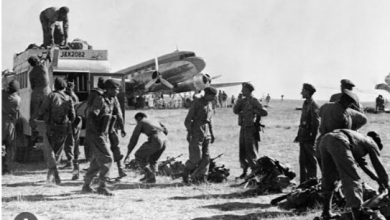
 Indian occupation forces reached Srinagar on October 27, 1947. On the same day, Governor-General Lord Mountbatten stated that the issue of the state’s accession should be settled through a referendum once peace and order had been restored. This statement by India’s own head of state symbolizes the heart of the Kashmir issue. Black Day is observed in Pakistan because that assurance has never been fulfilled.
This promise soon acquired international legal significance. UN Security Council Resolution 47 of April 1948, along with the resolutions of the UN Commission on India and Pakistan in 1948 and 1949, called for a free and impartial plebiscite under UN auspices. None of these resolutions has been withdrawn. The plebiscite process depends on establishing a voter list, which is now being altered.
In August 2019, India revoked Articles 370 and 35A, dividing occupied Jammu and Kashmir into two union territories. In 2020, revised domicile rules allowed outsiders to claim residency in Kashmir, granting them access to government jobs and property rights previously restricted to state subjects under a law dating back to 1927. Pakistan views these changes as demographic engineering. Article 49 of the Fourth Geneva Convention prohibits an occupying power from transferring parts of its own civilian population into the occupied territory.
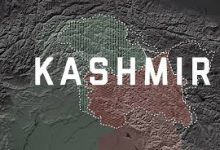

This is the point most often overlooked in commentary. The dispute concerns not only territory but also the question of who qualifies as a Kashmiri. A plebiscite conducted using an electoral roll expanded by new arrivals could have its outcome determined before the first ballot is cast. Every year of delay brings that possibility closer; time, therefore, becomes a weapon of occupation.
The response is a starting point. Pakistan should formally request the UN Secretary-General and the UN Security Council to stipulate that any future vote must refer to the register of state subjects and their descendants as it was available on 4th August 2019. In this case, the Foreign Office can take a practical step of working with Kashmiri families and organisations inside and outside Pakistan for the purpose of creating a verified public archive of records related to state subjects, which is very important since many families were displaced back in 1947 and in later decades. The creation of such an archive will allow the conversion of a legal issue into a document that can be held by diplomats.
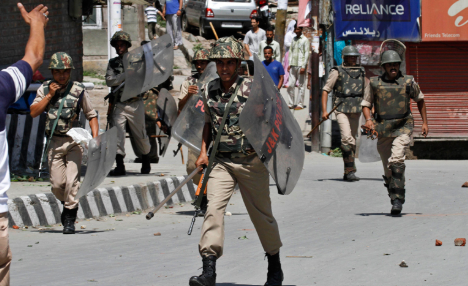
Evidence supporting the assertion is already evident within the territory. On September 28, the assembly in Kashmir, which is under Indian control, adopted a resolution calling on New Delhi to restore full statehood. Although this decision is non-binding and members of the governing BJP opposed it and left the assembly calling it “anti-national,” it indicates that even a body operating within the Indian system is rejecting the post-2019 regime. With a population of about 13 million and half a million Indian troops deployed there, the issue is a major one.
The diplomatic environment reveals why quickness is necessary. In August, the American ambassador in New Delhi called Jammu and Kashmir an important region of India, and later that day, the Pakistani government summoned the American ambassador to deny that assertion. On September 7, the Pakistani foreign office repeated its call for a UN-supervised plebiscite after India claimed that maps that depict the region must show it as part of India. The rhetoric is becoming tougher and a recorded baseline will prevent the UN from altering its language.
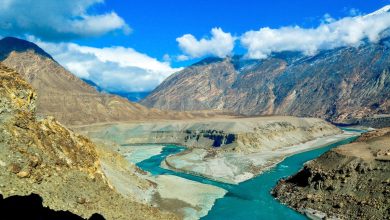
Law can still deliver. The Permanent Court of Arbitration decided on 31 August that the Indus Waters Treaty is entirely valid, even though India has put it aside The connection to Kashmir is direct as the Indus, Jhelum, and Chenab run through this territory. Whoever decides on its status also decides on the water supply of the agricultural sector in Pakistan.
India will assert that the Simla Accord has made the Kashmir issue a bilateral one and that its Supreme Court has validated the abrogation of Article 370. The response to that is in the accord itself, which states in its first clause that both countries will abide by the principles of the UN Charter, and the situation may not be changed unilaterally by either party until the settlement is finalized. A domestic judicial process cannot override an international obligation.
Black Day is marked with a minute of silence, which is appropriate. However, Pakistan should also remind the world what that silence is about; the vote that has been pending for seventy-nine years should not be pre-determined. Protecting the voter list of Kashmiris should be the focus of all of Pakistan’s Kashmir diplomacy, as the integrity of any plebiscite depends on this register.
The author is a student of International Relations at the International Islamic University Islamabad and is serving as a researcher at the Kashmir Institute of International Relations.