Dalit Man Assaulted, Locked Inside Temple in BJP-Ruled Uttar Pradesh
Victim subjected to casteist abuse, threatened with death over presence at religious site
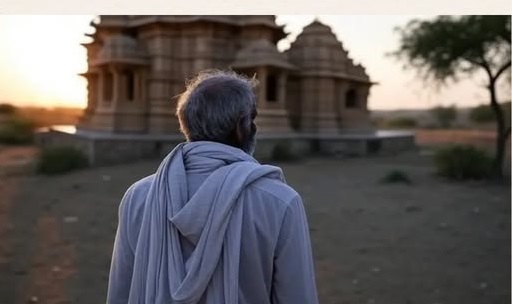 Lucknow: Dalits in India continue to face caste-based persecution, social exclusion, and violence despite constitutional guarantees of equality. A recent incident in Uttar Pradesh highlights the discrimination they endure even in religious spaces. A Dalit man was assaulted, subjected to casteist abuse, and locked inside a Hindu temple in the BJP-ruled state after two men objected to his living and worshipping there.
The incident occurred in Sardaspur village of Ballia district, where the victim, identified as Nagina Ram, had been residing at a temple and regularly performing religious rituals.
Police said two men, identified as Vishal Singh and Ankit Singh, confronted Ram over his presence at the temple, hurled casteist slurs at him, and physically assaulted him.
The assault reportedly continued until agricultural workers from a nearby field arrived at the scene.


The two men allegedly locked the temple gate, confining Ram inside the premises. According to the police complaint, they later visited his residence and threatened to kill him.
Following Ram’s complaint, police registered a case against the two men under relevant provisions of India’s Bharatiya Nyaya Sanhita, the country’s criminal code, and the Scheduled Castes and Scheduled Tribes (Prevention of Atrocities) Act. The latter law provides safeguards against caste-based violence, humiliation, and intimidation targeting historically oppressed communities.
Rasra police station chief Sushil Kumar confirmed that an investigation had been launched.
Dalits Denied Equal Rights
The incident reflects the continuing struggle of Dalits, who occupy the lowest position in India’s caste hierarchy, to exercise equal rights and access religious spaces despite constitutional guarantees and legal protections against caste-based discrimination.
Untouchability Persists Despite Legal Safeguards
For centuries, Dalits have faced untouchability and social exclusion, including restrictions on access to temples, religious ceremonies, public wells, and other shared spaces.
India’s Constitution, adopted in 1949 and brought into force on January 26, 1950, abolished untouchability under Article 17 and established constitutional safeguards against caste-based discrimination.
Despite these protections, caste-based discrimination, exclusion, and violence continue to be reported in various parts of India.