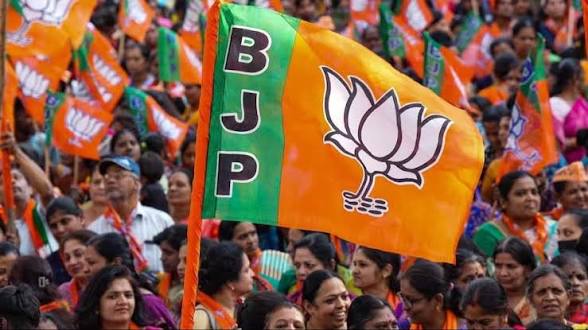
BJP govt slammed for making biometrics, voter ID essential for welfare
Party terms move 'surgical strike' on Muslims, other marginalized communities
New Delhi: The Communist Party of India-Marxist has unequivocally condemned the Indian government’s decision to replace Aadhaar with biometrics and voter ID (EPIC) as the basis for welfare payments.
According to Kashmir Media Service, the party termed the move, announced by Minister of Panchayat Raj, Rajiv Ranjan Singh, a “further assault” on the rural poor.
It has been repeatedly exposed how biometric authentication denies access to agricultural workers in rural employment schemes. Many elderly women workers have been denied benefits because machines failed to capture their iris.


Manual labourers are also being excluded because their worn-out thumbprints cannot be matched by the biometric system. E-KYC requires smartphones that most rural households do not own, the party said in a statement.
It said the government assured the Supreme Court earlier that Aadhaar would not be compulsory, only to surreptitiously impose it across welfare schemes. Now, having touted Aadhaar as foolproof, the government itself is discarding it.
This must be seen alongside the exclusionary Special Intensive Revision (SIR) process, which is a ‘surgical strike’ on voting rights and a systematic exercise in mass disenfranchisement. It is estimated that more than 13.4 crore voters have been excluded, with marginalised communities, Muslims, women, and the economically vulnerable disproportionately impacted.
Now, demanding Voter ID for welfare will make these schemes even more exclusive. Already, certain state governments are denying ration and other benefits on the pretext that names have been deleted through SIR, a clear violation of the Supreme Court’s ruling that electoral roll exclusion cannot affect social welfare entitlements.
All these designs point to a concerted effort to deny benefits to a vast majority of the people. The CPI-M demanded immediate withdrawal of this exclusionary decision and insisted that welfare entitlements be delivered universally, without conditioning them on technology or documents that the rural poor cannot access.