Indian Air Force officer ‘sells war secrets’ for nude photographs: Delhi police
Portraying ‘espionage’ merely as Pakistani honey trap exposes Indian military discipline
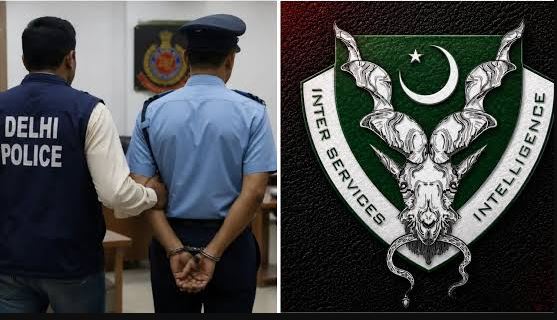
New Delhi: An Indian Air Force (IAF) Wing Commander allegedly shared classified war plans, fighter aircraft deployment details and sensitive drone technology with a suspected Pakistani intelligence operative in exchange for nude photographs.
A Delhi court has directed police to obtain the requisite government sanction for prosecuting Wing Commander Manorath Singh Sabharwal. The officer was arrested on May 30 following an IAF complaint. The Patiala House Court also directed the concerned Deputy Commissioner of Police (DCP) to expedite the sanction process.
The matter is scheduled for December 5.


Exchanged for photographs
According to the Delhi Police chargesheet, Sabharwal communicated with the suspected operative through WhatsApp between January 12 and April 1, 2026. Police alleged that he disclosed sensitive information concerning India’s military preparations and operational capabilities.
The information reportedly included fighter aircraft deployments in Leh and military exercises at the Mahajan Field Firing Range in Suratgarh.He also allegedly disclosed details about a classified drone unit. These included its strength, organisational structure and operational capabilities.
The chargesheet further mentioned drone trial results, weapon endurance and targeting mechanisms. It also reportedly contained information about potential deployment locations during hostilities. Investigators alleged that the officer uploaded a classified war-plan page after receiving an explicit photograph. He reportedly offered additional pages in exchange for more photographs.
Five subordinate officers targeted
The investigation has uncovered another disturbing dimension of the alleged espionage operation.
Police alleged that the suspected operative supplied malware and spyware applications. These applications could access confidential information stored on electronic devices.
According to the chargesheet, Sabharwal allegedly facilitated their installation on devices belonging to five subordinate officers.
Investigators suspect this could have exposed sensitive data and official communications. The alleged operation therefore extended beyond the accused officer’s personal devices.
Police also cited extensive digital communications between the two individuals.
WhatsApp records reportedly revealed 3,008 text messages and 65 images. They also included 65 reactions and 42 voice calls. The records further showed four video calls and six exchanged URLs.
Unauthorized smartphone
The officer reportedly attracted attention after carrying an unauthorized iPhone into his workplace.
Security personnel at his Race Course office reportedly discovered the device. Its examination allegedly revealed communications with the suspected Pakistani operative. Police claimed that the woman used an Indian mobile SIM. The SIM was reportedly issued in Gujarat, although investigators alleged she operated from Pakistan. The IAF had earlier stated that the officer was under surveillance. He was subsequently handed over to law enforcement agencies.
The Delhi Police Special Cell’s Counter Intelligence Unit filed the chargesheet on July 30.
The officer faces charges under the Official Secrets Act, 1923. Other relevant legal provisions have also been invoked.
The allegations have not yet been established through a judicial determination.
Questions about India’s military security
The scandal has exposed serious vulnerabilities within India’s military security apparatus. It has also raised questions about the effectiveness of India’s counterintelligence mechanisms.
The alleged targeting of five subordinate officers makes the case particularly significant. It suggests that the suspected intelligence operation potentially sought wider access.
The incident also raises questions about the monitoring of sensitive military personnel. It highlights the importance of stronger cybersecurity and counterintelligence safeguards.
The court is scheduled to consider the matter on December 5.
Deeper institutional vulnerability?
The honey-trap narrative may divert attention from institutional failures.
Indian media coverage has prominently highlighted nude photographs. This framing makes the case appear primarily personal. It portrays the officer as an individual victim of sexual manipulation.
However, the alleged disclosures involve much more. They reportedly include classified war plans and operational military capabilities.
The alleged spyware installation on five subordinates is particularly revealing. This suggests a potentially wider intelligence-gathering operation.
Consequently, concentrating exclusively on explicit photographs risks obscuring institutional questions.
2. The alleged exchange raises questions about personnel vulnerability.
If the chargesheet’s allegations are substantiated, the officer displayed extraordinary recklessness.
A Wing Commander is not an ordinary military employee. Such an officer holds significant responsibilities and access.
Exchanging military secrets for intimate photographs suggests serious judgment failures. It also raises concerns about personnel screening and security awareness.
Nevertheless, one accused officer cannot establish widespread weakness. Further evidence would be necessary to establish a systemic problem.
3. The most disturbing question concerns the alleged security breaches.
Reported sequence of events:
– An officer allegedly maintained contact for several months.
– Classified military information was allegedly transferred.
– An unauthorized smartphone reportedly entered a sensitive workplace.
– Spyware was allegedly installed on five subordinate officers’ devices.
– The suspected intelligence operation allegedly continued before detection.
If established, these allegations would indicate serious security shortcomings.
They would raise questions about device restrictions, access controls and monitoring. They would also demand scrutiny of internal counterintelligence procedures.
4. India concealing military embarrassment
There is insufficient evidence to establish a deliberate cover-up. Nor does the available reporting establish such an intention.
However, the emphasis on sexual inducement has an important narrative effect. It personalises responsibility and shifts attention towards individual misconduct.
That framing can overshadow questions about institutional accountability.
India’s military establishment must explain how such alleged disclosures became possible. It must also address the alleged compromise of subordinate personnel.
The central issue is not the price of the photographs. It is the extraordinary sensitivity of the information allegedly exchanged.
If the allegations are substantiated, the case will represent more than another honey-trap incident. It will expose serious vulnerabilities within India’s military security apparatus.
An officer entrusted with sensitive military information allegedly exchanged it for personal gratification. Even more disturbing are allegations of attempts to compromise five subordinate officers’ devices.
The episode raises uncomfortable questions about India’s military discipline, cybersecurity and counterintelligence capabilities. Portraying it merely as a Pakistani honey trap cannot answer those questions.
The real embarrassment for India’s military establishment is not the alleged price of its secrets. It is how such sensitive information could allegedly be accessed, compromised and transferred in the first place.