Sheshnag Glacier Under Threat: Is Kashmir’s Natural Heritage Being Sacrificed in the Name of Development?
Mushtaq Hussain
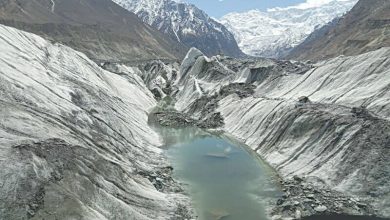
Kashmir is far more than a landscape of snow-capped mountains, verdant valleys, and breathtaking scenery. Its glaciers, forests, rivers, and fragile alpine ecosystems sustain water supplies, livelihoods, and countless forms of life. Yet growing concerns over infrastructure development in Indian illegally occupied Jammu and Kashmir have raised an urgent question: at what cost is this region’s natural heritage being transformed? The reported use of heavy machinery near Sheshnag, in the upper reaches of Pahalgam, brings that question into sharp focus.
A video circulating on social media appears to show excavation work being carried out by heavy machinery in this ecologically sensitive area. The activity has prompted concerns about the potential consequences for Sheshnag’s fragile environment. The issue demands more than a passing news report. It calls for independent scientific scrutiny, public disclosure of the project’s approvals, and international attention before potentially irreversible damage occurs.
Sheshnag: A Fragile Ecosystem at Risk
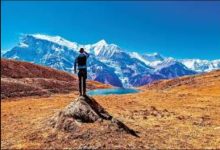
Sheshnag is not merely a scenic destination along the Amarnath pilgrimage route. Its high-altitude lake and surrounding terrain form part of the wider Himalayan ecological system, where glaciers, unstable slopes, glacial deposits, and natural drainage channels interact in delicate balance. The area is also connected to the Lidder River’s watershed, making the protection of its natural processes important for downstream environments and communities.
Excavation, slope cutting, poorly managed construction debris, and alterations to natural drainage can increase soil erosion, destabilize vulnerable terrain, and disrupt local water systems. Depending on the location and scale of the work, such disturbances may also aggravate existing environmental risks. These are credible concerns that warrant investigation, not conclusions that should be reached without scientific evidence.
The wider Himalayan region is already experiencing the effects of climate change, including glacier retreat and growing concerns over glacial lake outburst floods. In such a vulnerable environment, infrastructure projects must be assessed against the highest standards of environmental protection. Any construction near Sheshnag should therefore be preceded by a transparent, independent assessment of its potential effects on the lake, surrounding slopes, watercourses, and downstream communities.
A Pattern of Environmental Concerns, Not an Isolated Incident
The Sheshnag controversy cannot be examined in isolation from the wider debate over infrastructure development in Kashmir. Previous projects have raised concerns about tree felling, forestland diversion, the loss of fruit orchards, and the livelihoods of local communities.
In March 2025, Kashmir Times reported concerns surrounding the proposed Srinagar–Pahalgam road, including the reported felling of 845 trees and the diversion of approximately 108 kanals of forestland, figures attributed to the Environmental Policy Group. In January 2026, the newspaper also reported concerns over the proposed Awantipora–Shopian railway line and its potential implications for orchards, fruit growers, and local livelihoods.
These cases underscore a fundamental point: roads, railways, tunnels, and other infrastructure cannot be evaluated solely in terms of engineering achievements or transport efficiency. Their environmental and socioeconomic consequences must also be assessed, particularly when they pass through ecologically fragile mountain landscapes.
The concern is not that every infrastructure project necessarily causes environmental destruction. It is that the cumulative effects of multiple projects may be overlooked when each is assessed separately, without adequately examining the broader ecological consequences.
The Environmental Cost of the Amarnath Pilgrimage
The environmental impact of the annual Amarnath pilgrimage has also attracted scrutiny from environmental researchers and civil society organizations. A 2023 report by the Jammu and Kashmir Coalition of Civil Society and EQUATIONS examined environmental concerns associated with the pilgrimage and its management, including pressures on forests, pollution, and environmental governance.
Religious freedom and the safety of pilgrims deserve respect. But facilitating a pilgrimage cannot justify compromising the ecological integrity of the region through which it passes. The real test of responsible administration is whether religious access, public safety, and environmental protection can be reconciled through sound planning and enforceable safeguards.
If the work near Sheshnag is intended to widen, repair, or stabilize an existing pilgrimage route, the relevant authorities should publicly disclose its precise scope, environmental clearances, technical justification, and safeguards. The disposal of excavated material, protection of natural drainage channels, and stabilization of disturbed slopes should all be independently examined.
The Border Roads Organisation has characterized the activity as work on the existing pilgrimage route rather than the construction of an entirely new road. That explanation makes independent verification even more important. Transparent documentation would help establish whether the work complies with environmental requirements and whether less damaging alternatives are available.
Development for Whom—and at Whose Expense?
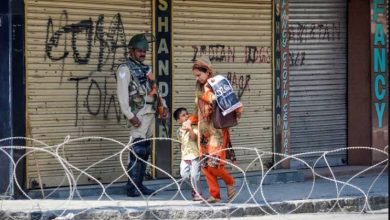
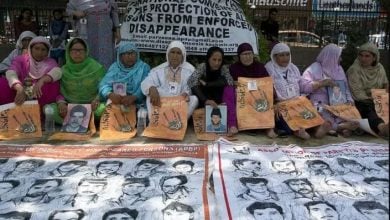
For the people of Kashmir, the debate extends beyond one lake or one road. Under Indian rule, Kashmiris have repeatedly raised concerns over restrictions on civil liberties, detentions, property seizures, demolitions, employment insecurity, and decisions affecting their land and natural resources. In this context, meaningful public consultation and transparent environmental governance are essential.
When orchards are threatened, forestland is diverted, or fragile mountain terrain is disturbed, the consequences are borne not only by the environment but also by farmers, workers, and families whose livelihoods depend on the land. Development that overlooks these costs risks undermining the very communities it is supposed to serve.
The strategic and economic value of infrastructure cannot be assessed in isolation from its ecological footprint. A road may improve access, a railway may reduce travel times, and a tunnel may facilitate connectivity. But if the cumulative consequences include damaged watersheds, degraded forests, disrupted livelihoods, and heightened environmental hazards, the benefits must be weighed against the long-term costs.
An Urgent Call for International Scrutiny
The immediate priority should be an independent environmental assessment of the work near Sheshnag. Where credible risks of serious or irreversible harm exist, potentially damaging activities should be suspended until qualified experts have examined the site and established appropriate safeguards.
The United Nations Environment Programme, international glaciological experts, disaster-risk specialists, and organizations working on mountain ecosystem protection should be encouraged to review the available evidence and recommend appropriate action. The relevant authorities should publish the project’s approvals and environmental assessments, disclose the safeguards in place, and explain how local communities have been consulted.
A broader, cumulative-impact assessment of major infrastructure projects in Kashmir’s ecologically sensitive areas is also necessary. Such an assessment should examine roads, railway corridors, tunnels, forestland diversion, and construction near glaciers and high-altitude lakes, taking account of their combined effects on water resources, biodiversity, slope stability, and local livelihoods.
Sheshnag’s protection is not a matter of political rhetoric. It is a question of water security, environmental resilience, public safety, and intergenerational responsibility. Kashmir’s glaciers, forests, and rivers are an irreplaceable natural inheritance whose value extends far beyond the boundaries of the region.
Development must not become a license to endanger that inheritance. Sheshnag deserves independent scrutiny, transparent decision-making, and protection before avoidable damage becomes irreversible. The world must pay attention—not after the harm is done, but while there is still time to prevent it.